Showing posts with label america. Show all posts

Sunday, February 1, 2015

Whitewater Kayaking in South Korea

Greetings! Today, I will take you on another splendid journey through time. You have the honor of accompanying me as I recount my personal quest to go whitewater kayaking in South Korea. Is it possible? Is it popular? How can it be done? Not only will these questions be answered, but they will also be placed in a cultural context. Do you think you know everything there is to know about Korea? Have you thought about how recent Korean history may have shaped whitewater activity in the country? If you find yourself unable to answer these questions, continue reading.

Kayaking Becomes a Part of My Life


In my home state of Tennessee, whitewater activity generates millions of dollars in economic growth each year as a result of local tour businesses, the sale of locally-made equipment, and profits generated by the Tennessee Valley Authority (TVA). The TVA releases water from dams periodically in controlled amounts in order to provide whitewater for sport while conserving the state's resources. Arguably the most popular of such rivers, the Ocoee river generated over 40 million dollars in the space of a single year due to guided rafting trips alone. Two geographic features make this sport possible: mountains and moving water.

[caption id="attachment_3526" align="aligncenter" width="1452"]IMG_6207 resized I promise there's a raft in there somewhere.[/caption]

I had gone whitewater rafting on the Ocoee every Spring and Summer for a couple of years. One day, I brought my father along and my family was forever changed. Suddenly, my dear old dad put down his xbox controller and each member of my family had a kayak of his or her own. I like to joke that he hit his mid-life crisis, and instead of finding a younger woman and buying a sports car, he decided to throw us all in the river.

With our new kayaks (liquidlogic xp9's and an xp10 for my dad), we set out to learn everything we could. I had just gotten into the sport, having paddled a couple of small whitewater rivers in the area, when I surprised everyone and graduated from my university. Ready to step out into the great big world, I found myself in contact with a recruiter for teachers to go teach English as a foreign language in South Korea.

[caption id="attachment_3528" align="aligncenter" width="1304"]1557598_10154155800180427_8147608077929357128_n Apparently, this is what aging looks like.[/caption]

Moving to South Korea


When asked where in Korea I'd like to live, I said it didn't matter much to me- but that I liked the outdoors. I signed a contract with a school in the city of Chuncheon. “Chuncheon” means “spring river,” and is described as being one of Korea's best cities for nature and the outdoors. It's also called the city of three rivers, because of the three rivers that wind through it. Nestled in a mountain range in a mountainous country, it seemed like I would find whitewater there.

I lived in Korea for a total of 25 months. I am not sure if I ever saw a single kayak while there.

The Quest Begins: River Rafting and Sea Kayaking


I tried finding whitewater. I found dams, rivers, and waterfalls, but never heard of anyone actually kayaking whitewater. I learned that in the city of Inje, one can sign up for a rafting trip. Curious about how “big” the water would be, I did a search to see how the river was classed. Whitewater ranges in levels from class I-VI. Class I is very easy water to paddle. Class VI is something people rarely attempt, as rescue may be impossible and death likely. I wasn't able to find out what class the river rafting trip in Inje would be, so I decided to go and find out for myself.

[caption id="attachment_3532" align="aligncenter" width="1320"]Niagara Falls Do you recognize this class VI river? [The answer is at the end of the article].[/caption]River rafting in Inje would probably have been very enjoyable if I had not already been paddling larger water. If I had to make a guess, I'd say that Inje was a class I-II river. I was not satisfied, and I set out to find something bigger. Unfortunately, my Google searches were yielding nothing. I learned about a trip to a place called “Pirate's Island,” in Namhae. It was about as far away as possible from my home in the province of Gangwon-do, but among the other activities, the trip listed sea kayaking. I signed up to go on the trip and promptly fell ill. I had to cancel.

The next year, the same travel company advertised the same trip. I signed up and went. After travelling two hours by train to meet the travel company in Seoul, we drove overnight in a bus for five hours toward our destination. At this point, I had travelled seven hours. We started the morning by hiking up a mountain to the most beautiful temple I have ever seen in South Korea: Boriam Temple. We watched the sun rise over the sea. Its brightness spread across the sky and cleared away the twinkling lights of the ships at sea near the coastline along the stars perched in the sky above them. It was breathtakingly beautiful but I was distraced by my excitement for sea kayaking later in the day.

We left the temple and boarded the bus. After another hour of driving through winding mountain roads, while I coped with my fatigue and car sickness, we arrived at a beach. A tour guide left the bus, said he'd return, and after a few minutes he came back. He explained to everyone on the bus that due to choppy seas, we would not be kayaking.

Making a Greater Effort


The rest of the trip was enjoyable and I am glad I saw the temple, but after having travelled all night long and all morning, I was tired and disappointed. Upon returning home, I again searched for a place to go kayaking and came up with nothing. During a conversation with my dad, he told me that one of his friends working for Jackson Kayak, a company which designs and builds kayaks and equipment based in Tennessee, was a customer service representative. Apparently, he worked with a Korean business that sells kayaking gear and equipment. It became my new goal to track them down.

With all of the mountains, rivers, and people dressed in outdoor equipment, I knew that real whitewater had to be somewhere. Finally, it was winter. In Tennessee, kayaking can be considered a winter sport. There is more water in the rivers during winter, so people gear up in special winter equipment and throw themselves down water-filled ravines, often with snow on the rocks beside them. I appealed to my Korean friends on Facebook, asking if anyone knew of a place where I could go whitewater kayaking in Korea. A very, very helpful friend told me about Inje. I explained that I'd already been there and was looking for something bigger, and not rafting. He told me it sounded strange that I wanted to go kayaking in the dead of winter, so I explained that I was used to the idea of paddling in the snow. Finally, he found me a link to a kayaking school. If I remember correctly, they were affiliated with the same company that my dad's friend worked with.

When I went to their website, I learned that they would take people on kayaking trips through their school, but in order to paddle with them on Class III water (which was my goal at the time), I would first have to paddle with them on flat water, Class I, and Class II water. At each level, I would have to be certified by them before advancing to the next level. The classes were very, very expensive.

I gave up and threw myself into a new sport, which I had fallen in love with in Korea: cycling. I've biked in the US, France, and in the Netherlands. It is my very strong opinion that no country so far rivals Korea in cycling infrastructure. It is by far my favorite activity in South Korea. I hope to write about its merits one day.

Asking Why I Failed


I am living in France now, and I've learned that kayaking competitions are sometimes held in a town nearby. It should be easy for me to find a place to kayak here. So, in Tennessee, the eastern half of which is mountainous, I can go kayaking. In Normandy, which is not mountainous but does have rolling hills, I can go kayaking. But in Gangwon-do, South Korea, a region of mountains, valleys, and rushing water, it took me two years of searching for a place to go kayaking and I never truly found what I was looking for.

Why?

Why have whitewater sports taken such deep roots in Appalachia and in Normandy, but have not done so in South Korea? One of the first things that outsiders will often notice when they visit Korea for the first time is the droves of people dressed fashionably in outdoor clothing: hiking boots, sturdy hiking pants, windbreakers, and waterproof hats with wide brims. Hiking into the mountains is an extremely popular activity in Korea, and the trails are generally well-maintained and beautiful. Personally, I am impressed with them. Hundreds of miles of beautiful running, walking, and cycling paths stretch across the country from east to west, north to south, and along the eastern coastline. Along these paths, one will often discover people exercising on equipment installed there for public use.

Tennis courts, driving ranges, soccer fields, swimming pools, gyms, and public parks are found everywhere. It has always appeared to me that healthy eating and exercise are large considerations in Korean society. So, why have whitewater sports not caught on in a country which, geographically, seems to be made for it? Why especially have they not caught on in a country which seems to enjoy outdoor sports to a vast degree?
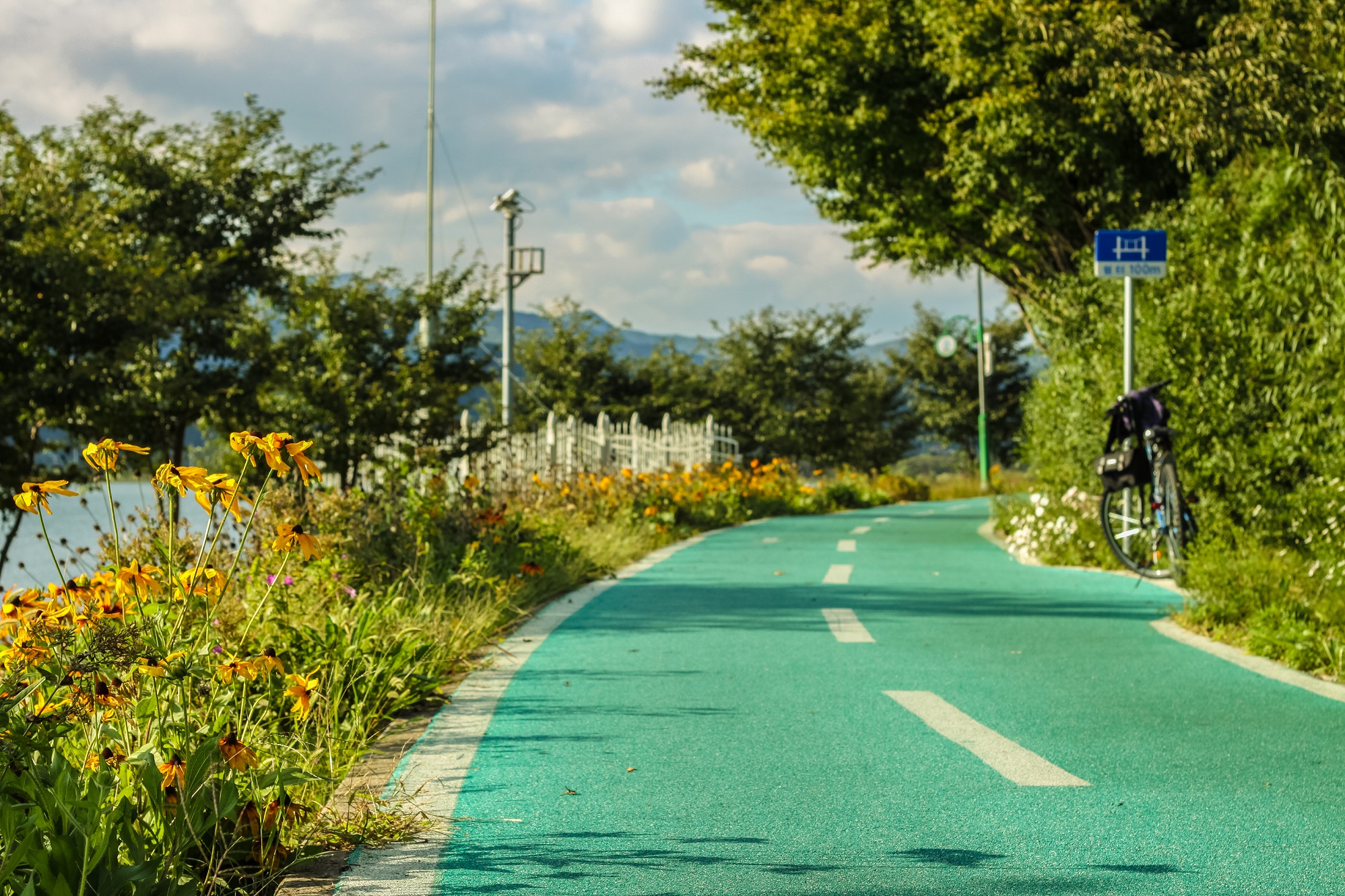
IMG_1566_bike path_resized

Maybe It's Cultural


One of the jobs of an expatriot ought to be discovering not only how other cultures differ, but also ask himself or herself the question of why it is different. I remember a conversation I had with another American in Korea; we were discussing the idea that “Koreans can't swim.” It's not a good idea to make broad generalizations, but this statement danced around inside my head like a carrot in front of a horse for a long time. If I were to accept the idea that Koreans swim less often or less well than their American counterparts do, this might help explain the curious lack of interest in Korean whitewater.

The first thing I began doing was questioning what I knew about Korean swimming habits. Contrary to what my friend said, I knew that many of my students attended swimming classes, and I knew of a few swimming pools in my city. I suggested to my friend that he might be mistaken, and he countered with the idea that Korean children are now learning to swim perhaps because their parents could not. He suggested that maybe their parents wanted to make sure that their children had the opportunity to learn a skill they were not able to learn in their youth.

He told me a story about the time when Park Geun-Hye's father was a dictator in the newly-recreated nation. He claimed that he read about the Han River in Seoul being surrounded by fences and access to it forbidden. My friend said that since the time of the Korean War, people were discouraged from swimming and from visiting beaches because of the opportunity it might present to defect to either side. Given that the country is so mountainous and the border so heavily guarded, the beach might present a much safer passage across the border. In addition, crossing the border sometimes means crossing a river. Crossing a river means that the defector may have to swim.

Are the Rumors True?


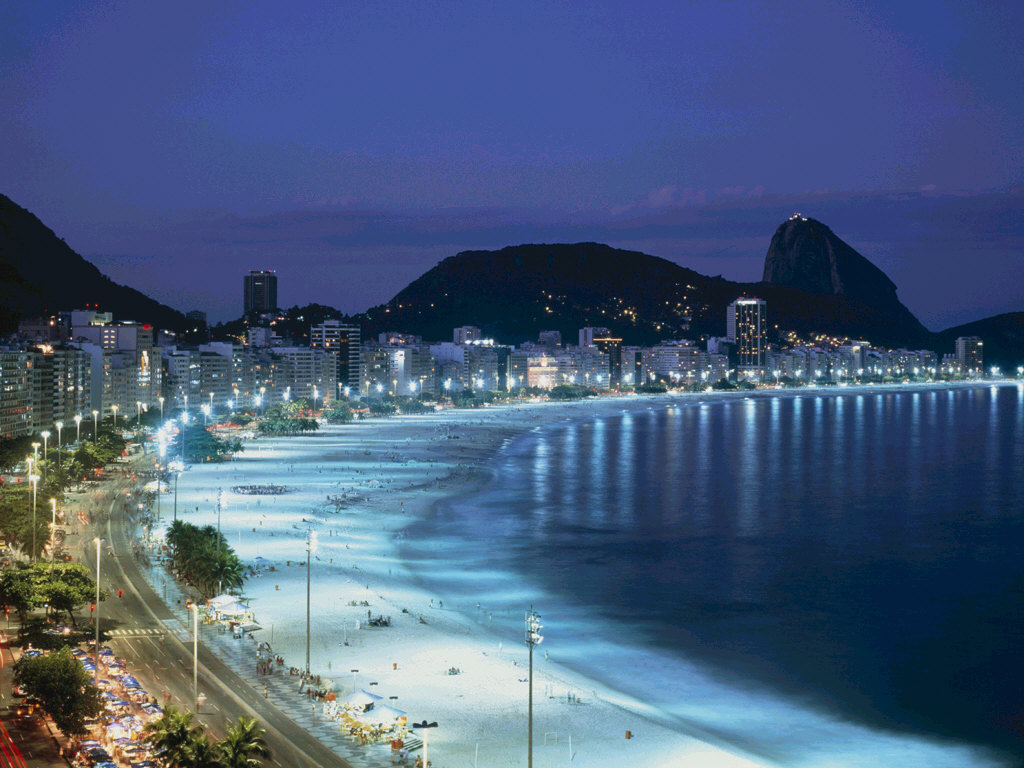
Even now, at night on certain beaches, you'll find that they are sometimes lit up like the top of a birthday cake before the candles are blown out. I was born in Florida and attended middle school there. I had a particularly vocal biology teacher who lamented the city lights on our coasts because they encouraged hatchling sea turtles to move toward the lights and cross into the road instead of following the reflection of the moon into the sea, as is their instinct. So, when I visited a certain beach at night in Korea, and I saw the flood lights stretched as far as I could see in either direction, I wondered about the effect it might have on the nearby wildlife. What would drive a city to install floodlights on a beach that isn't used at night?

It made me wonder if the stories about using the beaches to defect were true and it made me wonder if stories about older Koreans not knowing how to swim might actually have some merit. The next day, I went swimming in a very small area of the beach that was roped off and guarded vigilantly by two very fit lifeguards. Most people simply bobbed around where they could still stand up if they needed to, and nobody was trying to do laps. When my friend and I ventured further out to the edge of the barrier, the lifeguards immediately came near to us. Did they think we were in danger of drowning? I'll never know without asking.

[caption id="attachment_3531" align="aligncenter" width="1414"]Haeundae_Busan Haeundae Beach at night.[/caption]

What Do You Think?


I urge the readers of this article to tell me about their experiences with Korean beaches at night. I also ask that you share with me your thoughts on Korean swimming habits and culture. I do not think that a simple, “general inability to swim” can explain the lack of whitewater activity in South Korea. As I said before, geographically, Korea is as perfect for whitewater as a hand is to a glove.

The image of the Class VI waterfall is Niagara Falls.

Friday, December 5, 2014

Glocalization: Taking the edge off Globalization


- Do you know what they call a Quarter Pounder with cheese in France?
- They don't call it a quarter pounder with cheese?
- Hell no, they got the metric system. They don't know what the fuck a quarter pound is. They call it a royale with cheese.


The term globalization is becoming increasingly common around the world. For some it represents the future and how the world may change to become more equal, with merging cultures, ethnicities, economic systems, social justices and political ideals. For others, it is a pernicious force that poses a danger to local markets, domestic culture and unique customs. Either way, no matter what you think, it is happening.

Sometimes, foreign customs may seep into a culture naturally. When something is practical, it makes sense to follow suit. For example, using knives and forks began somewhere and spread throughout the Western world and eventually spread overseas and across distant continents. Actually it is thought that forks were developed in ancient Egypt and knives were a product of France, yet this perfect couple met somewhere along the lines of history and we take their practical use for granted.

On the other hand, global trends may barge in on a culture regardless of their ultimate use. Think of the McDonalds and Starbucks around the world. We see them everywhere whether we want to or not. Franchises are not always welcome and small Italian city showed this when locals opted to continue eating local goods back in 2002. After opening in 2001, the McDonalds restaurant in Altamura shut its doors in only 2002 (1).  In light of the various attitudes regarding embracing globalization or protecting traditional heritage, there is one thing that helps bridge that divide: ‘glocalization.’

Glocalization is, as the name suggests, the mix of both globalization and localization. This process involves localizing a foreign ‘product’ to keep local elements intact. Glocalization takes the edge off the product and makes it more palatable for native mouths, eyes, ears and minds. The most common place we see this is in food. Let’s go back to McDonalds and Starbucks, two experts in glocalization. South Korea is home to the Bulgogi Burger, the Kimchi Burger and the Shanghai Spicy Chicken Burger (2). In Thailand, Ronald McDonald is seen bowing down to local customers, as is local custom (3). Going one step further, McDonalds in France got rid of poor Ronald and replaced him with Asterix, the well-known French kids cartoon character (4).

[caption id="" align="aligncenter" width="500" class=" "] Glocal goodies await inside![/caption]

Similarly, Starbucks is another fox when it comes to entering foreign farms. Living in Korea, I have noticed that Insadong in Seoul is a major tourist zone, bustling with traditional arts, crafts and food. When Starbucks tried to set up shop here, local residents and store keepers were greatly annoyed, as referenced in this. In order to succeed, the store name Starbucks has been written in the Korean script hangeul. The interior also matches the local mood, with Korean rice cakes (deok) and lemon teas on sale inside.

On its latest expedition, Starbucks also made a foray into the Muslim world but angered locals in Saudi Arabia with its smiling mermaid logo. As local residents have strict views on the role and place of women in soceity, the logo has now been edited with the mermaid removed (5).

Starbucks has even managed to set up a store right in the Forbidden City, Beijing, China. Starbucks attempted to adjust smoothly by making things appear somewhat local, however this particular example shows how glocalization doesn't always succeed; Starbucks eventually shut up shop after intense protests from Chinese locals.

[caption id="" align="aligncenter" width="420" class=" "] Fobidden City. Forbidden Cafe? Nope[/caption]


Glocalization is not only limited to food. In the music world, South Korea, which for me is majorly over-globalized, is another expert at localizing foreign products. The success of Korean pop, or K-pop as it is better known, has spread to other Asian nations like Vietnam, China and Taiwan. The spread of K-pop brings economic and cultural advantages for South Korea but undermines local talent elsewhere.  In fact, due to K-pop, which is supposedly Korean, is being limited in China as it is bringing in Western fashion styles, music and consumerism with it. However, clever marketers in Korea saw a perfect chance to seize upon; EXO - the Chinese/Korean boy group (6).

Moving onto the film world, Hollywood also smartly conceals localized content in its films to boost worldwide sales. For example, it may be hire a Korean actor in a Hollywood blockbuster to shore up sales in Asia. The actor may not be the best for the position, but it will guarantee big cinema attendances in Korea (7).

Even if you have watched the same movie, drunk the same cup of Starbucks’ coffee or had the same Mcburger in two countries, perhaps you could see that not every aspect of your experience was identical in both. Glocalization may seem like something sneaky that is used to make more money, and yes it may be. But like the knife and the fork, new things can be practical for us and we need to embrace them. As globalization increases, I think we should enjoy watching how a product or service adapts to local needs.

Thursday, November 20, 2014

Pop Culture: Enjoy... But Be Cautious

Stuck in Stereotypes

I once read that the majority of Americans don’t have a passport. As a European, I thought this was an incredibly shocking, if not dismaying, piece of trivia. On the other hand, presumably even those without passports know that Italians eat pizza and pasta and the typical French person cycles around with a baguette, wearing a black beret. An Irish citizen wears green and stumbles drunk down the street. Australians throw boomerangs at kangaroos. All the classic stereotypes.

These examples seem perhaps quite harmless at first glance, but what about the others---all Arabs are Muslim, all Blacks are poor, all Jews are greedy.

Stereotypes influence our decision making and are difficult to unlearn. Where do we form these ideas? How do we come to know---or think we know---so much about countries and cultures we have never experienced firsthand? The answer is through popular culture – the media of film, books, magazines, music and videos.

Mass Media: The Importance of Popular Culture

We cannot underestimate the power of mass media and pop culture in shaping our perceptions, ideals or prejudices of another culture. When it comes to ‘exporting culture’, there is both “High Culture" and "Low Culture" (a.k.a. Pop Culture). High Culture includes opera and ballet but reaches a smaller audience. Pop culture is much more ubiquitous and as a result arguably more influential. Let’s look at the most popular example---violence on our screens.

It is well documented that watching violence in film and on television could negatively influence the viewer. There is evidence to suggest this is true. Recently, a young man in the USA killed and dismembered his girlfriend after being inspired by a popular show about a serial killer, Dexter. On the other hand, Norway is regarded as a very peaceful country with low internal conflict. Is it a coincidence that the same country attempts to control, avoid and limit negative influences from its media? Crime is not sensationalized, television has little violence, boxing is banned from television. Even E.T. was rated too violent for viewers under 12.

Violence on television is a widely debated topic in the public eye. Why then, is less thought put into monitoring and researching the power of pop culture? Most people would look down at the importance of studying pop culture, believing it to be insignificant. Pop culture can be fun and educating but at the same time, it is a major factor in building prejudices and creating stereotypes. When original content is made by one culture and exported to another, we need to examine it carefully and make an educated decision on whether or not it is accurately portraying a culture’s image.

[caption id="" align="aligncenter" width="329"] How are Asians usually represented in film? The men traditionally played the role of the villain such as Ming in Flash Gordon. On the hand, women tend to be painted as soft, feminine and desirable.[/caption]

Film: Learning about Cultures without Personal Experience

While I have yet to visit most of the countries in the world, it seems that I already know so much about them. You probably feel the same. Those who have yet to visit Paris, New York or London all have wonderful images and notions of their streets and alleys. Bustling Asian markets, piranhas in the Amazon and tribes in Africa. We are all constantly learning about cultures without firsthand personal experience. This increases the risk of misshaping our attitudes.

Through mass media, I know that India, for example, is a colorful place with a rich history, delicious food and with wonderful landscapes and locals. I do however, also know that a series of high-profile rape cases have tarnished the country’s image over the past few years. This has lead to a decrease in tourism. I know this from reading the news or watching a documentary but often it is film that is the most widespread channel in delivering gateways into other cultures. Looking at India again, the film Slumdog Millionaire was criticized by Indians for showing the country in such a dim light. Yet friends who have visited there can’t speak highly enough of such a beautiful place. Who to trust more, media sources or those who have been there and done that?

[caption id="" align="aligncenter" width="556" class=" "] Slumdog Millionaire presented the slums of Mumbai in a brutal but honest light. Still, it would most likely turn viewers away from India.[/caption]

Taken, the Hollywood blockbuster about human trafficking in Paris, apparently led to a decline in annual tourism in France. Parents told the movie’s leading front man Liam Neeson, “I’ll never send my kids to Europe.” To Asia, after the movie The Beach was released showing Leonardo Di Caprio’s adventures in Thailand, tourism soared there. People saw what an interesting culture Thailand had to offer with friendly locals, crazy parties and pristine beaches. They also expected shots of snake blood, shark infested-waters and drugs growing out of thin air on their arrival.

Heading north, to eastern Asia and Korea, a French actress Brigitte Bardot highlighted that Koreans eat dog in the French media prior to the 2002 FIFA World Cup. This spread across the global media and painted Koreans in a barbaric way, despite their huge advances in modern technology and innovation. The eating of dog, although a separate topic, is a custom that has lasted centuries and is ingrained in local culture here. We shouldn't compare cultures as being right or wrong, simply different. On a better note, Korean dramas have recently become huge in Cuba, of all places.

[caption id="" align="aligncenter" width="488"] Phi Phi island in Thailand. Since the Beach, the area has received an incredible boost to tourism but local culture and the surrounding environment have taken a battering.[/caption]

Media: Objective or Subjective?

In general, we often believe that the media---whether a newspaper, a television show or a documentary---is objective and reflect their subjects much like a mirror would do. However, in fact the media is more like a window. It is mostly subjective and only offers us one viewpoint. Another window from the same building may cast a different light. This is to say that when we consume foreign pop culture we must do so with an open mind. What we are seeing, reading and hearing may not represent the true culture of a nation. The media is usually affected by local constraints that we are not aware of such as religious, political, historical or gender differences.

Korean director Kim Ki-Duk has had great success at international film festivals but his movies have never been widely appreciated in his homeland. If someone was to watch just one of his films, they would have a misrepresentation of Korea. Traditionally African-American women were portrayed as domestic stereotypes like in Tom and Jerry (which now carries a racial warning to viewers). Often media that is ‘factual’ or ‘based on a true story’ is only telling one side of a tale. Others rewrite history altogether; Disney’s Pocahontas, for example, all but overhauled the tragic history between natives and European adventurers.

[caption id="attachment_3259" align="aligncenter" width="250" class=" "]Media framing - what we see may not be a true reflection Media framing - what we see may not be a true reflection[/caption]

Keep an Open Mind

As technology improves, culture is spreading more and more. However, there is also a major global imbalance. Individuals from less populous cultural groups tend to import huge amounts of foreign content as it isn't plausible to consume only their own. Societies that watch too much foreign media may lose touch with their own. On the other hand, major nations like America, tend to view or consume little or no foreign content.

Finally, for many of us, some cultures and some nations exist only through popular culture. Mass media and pop culture are major powers in building our perceptions of other cultures and can often be only somewhat correct and educational. Those who do use media as their primary source of learning about other cultures thus need to consume as much as possible with an open mind in order to see a wider, probably more accurate picture of a nation, group or culture. Still, the best way to learn is still to get out there and mingle with real people.

Monday, October 27, 2014

Korean Memes vs. American Memes

Meme – n. a cultural item in the form of an image, video, phrase, etc., that is spread via the Internet and often altered in a creative or humorous way. (dictionary.com)

Memes are designed to make us laugh. But depending on where you’re from, some memes will have you gasping for air, and some will simply not resonate. While some cultures have different perspectives on what's funny or not, some memes just simply have people xD/MDR/ㅋㅋㅋ/LOLing anywhere in the world. I’ve had a lot of trouble getting Korean people to laugh at some of the memes from America, and vice versa, but sometimes I would hit the jackpot and have both the East and the West bursting out in laughter. Let's take a look at  some of the similarities and differences I found between Korean and American memes, and how the Korean and American people are wired when it comes to comedy.


  1. Pop culture


    The biggest contributors to memes are figures from pop culture. In Korea, celebrities such as Yoo Jae-Seok (유재석) or Park Myung-Soo (박명수) are used to deliver image-based memes. They're the icons of Korean comedy, and their notorious for their starring roles in Infinite Challenge (무한도전). Viewers really like the show. And when I mean "really like the show," I mean eight years worth of liking the show. The first episode aired in 2006, and the program has been running nonstop ever since.
    In America, a series has seasons like Seinfeld, Modern Family, or Community. But Korea doesn't have seasons. They just run the show every week until it finally dies out on its own.
    As the title says, Infinite Challenge has endless obstacles for the cast to overcome, and in their quest to overcome these challenges, they often find themselves in humorous situations. In their horror specials (much like The Treehouse of Horror on the Simpsons), they go through a maze filled with ghosts and other scary monsters, hoping to complete the tasks assigned to them. One of the more memorable episodes had a member of the cast try to balance himself on a surfboard, but he failed miserably. Koreans especially love laughing at comedians performing body humor, so when they see some of their favorite comedians getting hit on the head, falling down, or making weird funny faces, they can't help but laugh.

    [caption id="" align="aligncenter" width="320" class=" "] "Shut up" - Yoo Jae-Seok[/caption]

    At one point, Chuck Norris was all the rage in America, and recently, Jonathan Goldsmith is the biggest image for memes in America. While Korea loves slapstick comedy, Americans can't help but poke fun at almost anything which can range from politics to celebrities. America doesn't rely heavily on body humor, and thus, anything can be used for satire or parodies. Go ahead, name anything in America that people haven't already tried to make fun of. There are thousands of videos about racism, even when human rights activists try so hard to promote equality. Just watch an episode of South Park, and you'll have a general idea of how anything can be used for humor. I didn't think anyone could or would use Christopher Reeves (Superman) as the butt of their joke, but alas, I stood corrected.
    The Daily Show and the Colbert Report are really popular because they can find the humor in anything such as mainstream news medias like Fox News. And there are many other shows that satirically comment on social issues like racism and politics which show Americans generally find humor in situations that don't seem to be funny on the surface. But when American humor digs under that surface, they can laugh at what they find.

    [caption id="" align="aligncenter" width="320" class=" "] Chuck Noris just got served, which is funny 'cuz he's the one that's supposed to be serving.[/caption]
    Though the content may be different, the fact remains pop culture plays a big role in memes. It’s the biggest common factor to which almost everyone can relate. It’s easy to recognize and deliver to audiences, which in turn, goes viral. However, the same cannot be said about…


  2. Video-based memes


    Vine, an app that allows users to shoot a 6 second video, is one of the most popular mediums to deliver short funny videos in America. Koreans, however, rarely use the app. Instead, they cut out certain scenes from sketch comedy programs like Gag Concert or dramas. There aren't many original videos Korean people make. In fact, many of the memes Korean people share are actually ones from abroad, and even then, they're usually videos about people getting hurt or some form of slapstick. There is only so much slapstick people can do without landing themselves in a hospital ward. Thus, most video memes go viral in Korea if they can provide body humor, to which Koreans are so accustomed.
    [youtube http://www.youtube.com/watch?v=0itk4pUcIvA]
    On the other hand, a lot of the video memes in America are shot by average people hoping to go viral. They have a lot of material to their advantage such as other videos taken from movies or even news footage. One of the most famous to spread throughout the Internet at the moment is the P-O-P clip, in which a young woman leaves a message for her mom and crew as she is hauled away by the police. It's funny because she tries to act tough while in handcuffs, but suddenly breaks down as she gives a shout out to her associates. In America, almost anything and anyone can be used to deliver humor, whereas in Korea, it would be taboo to speak out (even comically)  against social issues.
    [youtube http://www.youtube.com/watch?v=9-rVEs5RLZQ]
    Whether or not the video revolves around slapstick, parody, or satire, these clips need to be delivered. And the best way to spread these memes are…


  3. Facebook and You Tube


    I’ll admit I probably couldn't live without Facebook. I probably check my wall every thirty minutes or so. When I do scroll through Facebook, I generally find myself lost in an endless maze of videos. Sure, Facebook is popular in America, but it’s the biggest growing social network in Korea, and almost everyone has an account. Seven years ago, everyone I knew in Korea had a Cyworld account, but by 2010, they had discarded that social network for Facebook. Back then, everyone would ask for their Cyworld address, but now, they ask whether you're on Facebook or not. Another big distributor of memes is You Tube.
    [youtube http://www.youtube.com/watch?v=wLL2EAR5Yjg]
    Though the contents people watch are different in Korea and America, if anyone needs to find a video for anything, they go to You Tube. The top You Tube videos in Korea are usually clips from TV programs.
    [youtube http://www.youtube.com/watch?v=9v9sMU3FrDg]
    Americans can use almost any video to set as a meme, so there are no guarantees for what will be the next big thing to go viral. Who knew a chubby little kid would obtain notoriety as he gracefully showed the world his refined swordplay with a fake lightsaber?
    [youtube http://www.youtube.com/watch?v=HPPj6viIBmU]


Memes put a smile on our faces when we’re procrastinating at work, studying for mid-terms, or just generally when we’re faced with boredom. And they’re a great way to spread humor and laughter around the world, especially with the global connections we have today. Though memes vary in each culture, the slow yet gradual overflow of one culture’s memes into another will help us to laugh together, regardless of distance. With all the conflicts and issues throughout the world, wouldn’t it be great to have some humor to uplift this gloomy atmosphere? After all, laughter is the best medicine.

[youtube http://www.youtube.com/watch?v=-iz_mVgEzqg]

Thursday, September 25, 2014

Take a Soloro Trip

My dream is to travel overseas and experience the many vast cultures of our world. I want to personally examine the Great Pyramids of Egypt, take a long spiritual dip in the Ganges River of Varanasi, and then enjoy cooking and eating dinner with a family in Mongolia. I want to dance in Japan’s underground world, I want to touch the face of an Old Italian man, and I want to hear stories of someone’s grandmother in a tribe of West Africa. More than anything, I want to see, hear, touch, taste, and feel what other people around the world do in their daily life. I want to learn life lessons and techniques from these people, their land, and their history.

My dreams are attainable, but it will take some time and money getting there. In the meantime, I am able to explore most all of the United States without spending too much money and still staying close to my current jobs. In fact, in over the past five years, I have been able to travel up and down and around the United States one to two times a year. It became important to me quickly that when you are traveling in a car, one must be sure to stop and spend quality time exploring each city, its history, its people, and its value. See a sign to catch a free tour of the Mammoth Caves in Southern Kentucky, jump on it. Barely any gasoline left in your gas tank but have the option to continue driving up a winding, beautiful scenic drive in the hills of North Carolina, do it.  Stop and pick out colorful rocks while looking for gold near a natural waterfall. Visit an old, possibly haunted penitentiary in West Virginia while it’s dark and rainy outside by chance. If you have around $500, extra blankets, a good cd collection, and a positive open-mind, a road trip can change your life.

This past summer, I worked over 50-60 hours a week serving, writing, and helping on film projects. I was able to save all of my $1 bills and put them towards an ‘end-of-summer Road trip’ and call it my Soloro Trip. My destination was Nashville, Tennessee, a place I’ve been thinking about moving to in the next year or so. As soon as the summer came to its end in early September, I took my $1 bills out and recounted them. I had enough to get on the road, but this time, I’d be heading out alone – hence, Solo-Ro trip.

Before my week long departure, I had messaged a few friends in random states and let them know I’d be passing through and would like to get together. I only really knew that I’d be driving around Lake Michigan and heading down towards Nashville, but nothing was written in stone. I told my roommates where I was heading, packed my bags, packed some snacks, made sure I brought my massive cd collection, filled up my gas tank, and went on my way.

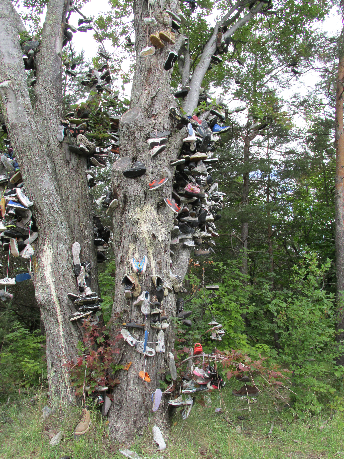
The first ‘cool thing’ I came across was this beautiful, shoe tree. The tree is located near Kalkaska, Michigan on route US-131. Legend has it that graduating seniors, locals, and any random passerby will toss their shoes up on the tree. The tree had lost a branch in the past due to the weight of the shoes and snow in the winter time. Shoes are even growing on other trees surrounding the Shoe Tree. It was really quite magical to come across.

Shoe Tree Shoe Tree

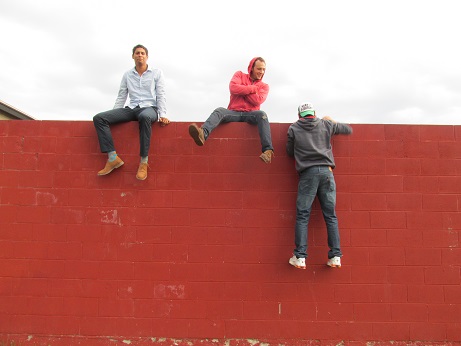
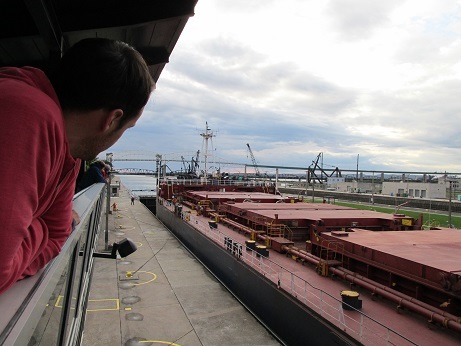
Friends in Sault Ste. Marie of Michigan’s Upper Peninsula took me around town, which bordered Canada, and introduced me to more new friends, including James, who would help put me in touch with someone who managed a brewery in Milwaukee, Wisconsin. We all had a great night out, touring the abandoned tourist town and climbing and jumping off of walls, nearly breaking my left knee cap. We woke up early to catch the sunrise peering from Canada’s border and onto Michigan. After some homemade biscuits and gravy, I headed out to get lost on the extremely scenic route across Michigan’s Upper Peninsula, coming across hidden beaches, richly-colored trees, old-Indian burial sites, and majestic natural waterfalls.

IMG_0181 br

After enjoying a beautiful walk back to my car from the waterfall, I sipped from a Michigan Blueberry-Wheat craft beer, spoke with locals about the town, and headed on out down towards Wisconsin. The ride was peaceful, scenic, and rather quite long. With Wisconsin trees to my right, Lake Michigan was on my left for most of the ride. The weather was rainy, but the sun was still shining.  I sang, I danced, I thought, I didn't think. It was, great.

I had spoken with the brewery manager, Ryan, earlier that day about meeting up in Milwaukee at the Lakefront Brewery.  Moments before I reached the city of Milwaukee, my cellphone died, I ran through the wrong tollbooth, and I realized I might have been lost. Also, the sky went from dusk to really dark in just a few short minutes. I felt a little bit anxious. After stopping at a random fast-food restaurant to charge my phone, I was able to find the address and head on over to the brewery.

The Lakefront Brewery of Milwaukee, Wisconsin was closing at 9:00pm, as I had walked in around 9:09pm. I met one of the managers, Ryan, and some of his coworkers. They offered me a free craft beer on their tap and let me stay with them while they closed up; I was able to charge my phone for the rest of my ride. After mopping during closing time, the small group of talented and light-filled individuals then gave me an entire tour of the brewery house and I learned all about how the beer was made, where it goes to, where extra co2 goes, and how the beer is then bottled and packed up. The tour was so unexpected, so much fun, and so interesting, I need to go again. Before I left, I was even given an entire case of beer to take home. My roommates would be pleased, and I had made new friends.

Next stop was Chicago, Illinois, and I had to get back on the road. I reached my friend Natalie’s place after 12am and stayed up late conversing with her and a friend from her acting and improv class. I shared one of my new Milwaukee crafted beers with this new friend, telling him I heard it was one if the best rated in Canada. The next morning, Natalie and I went to brunch and enjoyed a unique twist on bagels at Reno in Logan Square. I tried the Hook:  Togarashi lox with a delicious artichoke cream cheese, avocado, cucumber, and red onion, mmmm. We got on a train to head downtown, but I suggested we get off at a random stop and walk the rest of the way. It was a thirty minute walk through beautiful, artistic, maybe-not-be-here-at-night, sceneries until we reached the skyscrapers and the Michigan Mile (art, food, and shopping for miles).

We spent time in one of my favorite parks to visit, where the flower baskets hang and the man-made waterfall holds pennies of wishes. We got a cheap cab back to her place, and our cab driver made the entire trip to Chicago worth going. He grew up in a mansion in Nigeria, and all of his children were born here in the United States. He, his wife, and their three children all received their masters in doctoral sciences. He could not take his smile off of his face. He kept talking about being a good person, being kind to others, not judging others, and to just be thankful and peaceful. He believed that everything happened for a reason, and that one is never too old to do good work. My heart is still gleaming just thinking about that man and his smile, his beliefs, and his wonderful stories and life lessons. That felt good.

After Natalie and I hugged goodbye, I got in my car to head south, but first, I’d drive a bit more through artistic areas of Chicago I had not yet seen before. This was good, insightful, intriguing, but also very time consuming as I hit almost every single red light. Next thing I know, I’m getting onto the highway heading towards Indianapolis in 5 o’clock traffic. Oy vey.

The ride from Chicago to Indianapolis provided a stretch of road bombarded by corn fields, some houses, and hundreds and hundreds of large wind-turbines. I had just changed over to loud rap, which played somewhat perfectly as I felt intimidated by the alien seeming wind-turbines. Finally, I stopped to get gas at a Family Matters gas station, and the attendant, Kandi, made my day even brighter. She was so kind, thoughtful, funny, cheery, and just perfect as herself. It was a good day to run into kind people.

I stopped in Indianapolis to visit with my childhood friend Charlie and his mother. Charlie jumped in the car with me and we headed down to Louisville, Kentucky. Disappointed by the lack of the nightlife we were once so excited to go see, we decided to keep on driving until we reached Cave City. We found a hotel that was only $50 a night for two queen sized beds, so that was only $25 each. The next morning, we got some old-fashioned country breakfast, visited a rather interesting museum that housed insects, butterflies, and stuffed animals that lived in Kentucky from the 1800s to today. Next stop, Nashville.

When we got to Nashville, we drove around the east side, the west side, and even twenty minutes south to Franklin, Tennessee. In Franklin, we walked around a scenic park for about 5 miles and took photographs of the nature, the trees, and the small lake we encountered (there are not as many lakes in the central south of the United States as there certainly are in North Michigan).

In Nashville, we went our separate ways for a few short hours to really take in the area personally. He wanted to go to a bar and restaurant and I wanted to walked around and up and down the hills in-between buildings and people. Finally, we met back up and with a close friend of mine, Breanna, who had just moved to the area. The three of us got drinks and appetizers at three different bars around and in downtown Nashville. We waltzed the streets and sidewalks and listened to music which played loudly in each bar we walked past. After then visiting with Breanna in her apartment, Charlie and I headed back towards Kentucky as the trip was coming to its end, and the work week was soon to pick back up.

Charlie was left in Indianapolis, helping an elderly woman right away, and I drove back to Grand Rapids, Michigan in five or more hours. The sun was going down, the weather was just right, and the music off was a nice touch to review my findings.

You see, it seemed for a moment that this road trip was maybe taken because I had the time and the resources, perhaps I was even running or driving away from my problems. But in an optimistic way, perhaps these small daring Soloro trips are just steps to getting closer to all of these exotic dreams I have. Small encounters with lovely and lively people just across the lake may suffice traveling thousands of miles just to feel the same feeling.

Try it. I can’t promise you will ‘find yourself’ or ‘change the world’, but I can promise that it will feel good to get away, it will feel good to be on your own, it will feel great to meet new people of all different realms and backgrounds, and you will feel thankful when you’ve made it back home.

From a collection of beloved road trips I had learned that stopping and living in the moment, truly appreciating a new culture and its history, spending time getting to know yourself and others was most meaningful in the end, no matter where in the world you are.


**more pictures to follow.

Monday, May 19, 2014

5 Asian stereotypes in the 1990s/2000s

South Korea (along with its neighbor in the north) gained fame throughout the world for its K-pop, food, and internet. However, Korea only recently made its appearance on the international stage. For those that lived in the 1990s and early 2000s, not many people knew or even heard of Korea. I grew up in America and I, as well as other Koreans, faced a lot of stereotypes during my childhood. Among them, the most frustrating was…

  1. Chinese or Japanese?

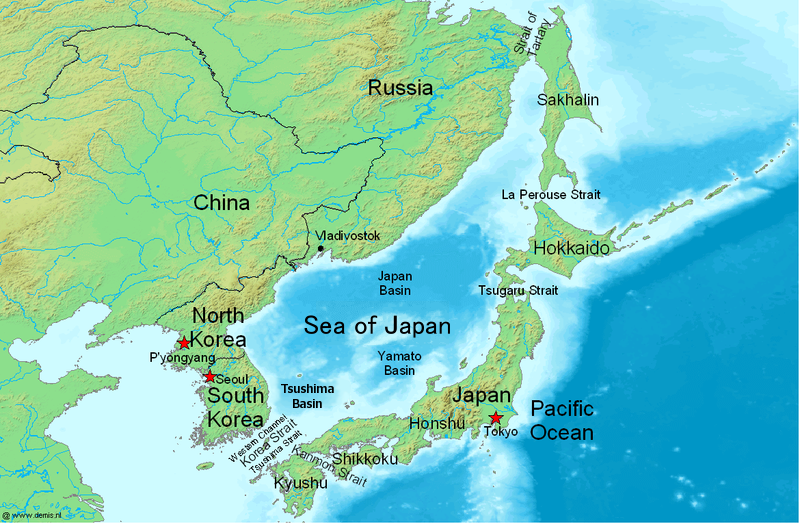
    [caption id="attachment_1899" align="aligncenter" width="300"]Where is Korea? Where is Korea?[/caption]

    Whenever I met new kids at school, they would always ask me whether I was Chinese or Japanese. For those that knew a tad bit more about Asia would even ask me if I was Mongolian. My response, “I’m Korean” would baffle them. They had never heard of Korea (south or north) and so they would simply assume I was from a remote country somewhere in the Far East. This continued throughout the ‘90s until people began recognizing Korea as a developed country. But the one thing they truly found interesting/weird about Korea was…

  2. Eating dogs

    [caption id="attachment_1897" align="aligncenter" width="259"]Cucumbers - the best seasoning to go with a bowl of dog. Cucumbers - the best seasoning to go with a bowl of dog.[/caption]

    Middle school proves a difficult time for young adolescents. Social cliques begin to form, kids start becoming moodier, and norms, to which all kids must adhere (lest they become social pariahs), are established. On top of that, Korean kids would have to suffer accusations of dining on man’s best friend. I highly doubt any Koreans would eat dog in the U.S. For one, it’s probably illegal to eat your dog there. Second, Koreans don’t eat their pets. However, the only thing kids saw was the consumption of dogs. If I went over to any of my American friends’ house, they would play “keep the dog away from the dog-eating Korean kid.” They were semi-joking of course, but still, they didn't leave me and their dogs alone in the room. If I confronted them about this, they would try to avoid a fight with me because apparently, I knew…

  3. Martial arts

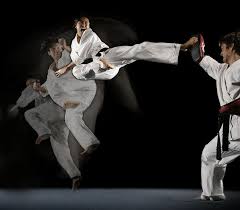
    [caption id="attachment_1898" align="aligncenter" width="240"]Don't mess with Asians - they'll jump kick you in the face Don't mess with Asians - they'll jump kick you in the face[/caption]

    Thanks to Jackie Chan, Bruce Lee, Jet Li, and many other Asian martial artists/actors, people thought Asians could do kung-fu or karate. I had never taken any self-defense classes, but people always thought I could pull out a can of karate-whoop-ass on anyone if I so chose to do so. I had once gotten into a fist fight with one of the other kids during recess. One of the onlookers encouraged me to “karate-chop his ass.” To please the crowd, I attempted what I thought was a legitimate martial art move. It proved, but after the fight, everyone thought I had awakened my latent Asian martial abilities. If the kids weren't asking about my martial arts abilities, they were asking me about homework because…

  4. Asians are really smart
    Now it’s true that I may have achieved above average grades in school, but that’s because I applied myself to my studies. However, that doesn't mean all Asians are smart. Everyone in school automatically assumed I would do well in courses like math or science. I actually knew more than a handful of Koreans that were terrible at math or academics in general. When it came to assigning lab partners, everyone wanted to pair up with the Asian kids. Of course they would. Our intellectual oriental brain would help them get better grades. Another stereotype I truly despised was…

  5. Chinky eyes

    [caption id="attachment_1896" align="aligncenter" width="300"]Just look at those small chinky eyes. It's a wonder how Asians walk around without stumbling. Just look at those small chinky eyes. It's a wonder how Asians walk around without stumbling.[/caption]

    It may be true a majority of Asians have smaller eyes, but it still stung when the other kids pulled back their eyes to make fun of Asian people. When it came to portraying Asians, the only thing that other people could come up with was squinting their eyes. Sometimes, people would ask me if I could see well, what with my small squinty eyes. I would pay dearly if I made any mistakes concerning visual observation. The rant would pour down about how my small eyes limited my vision. When the staring game was still popular, all the kids played against each other, trying not to blink. Whenever it was my turn, the kids would say I would cheat. They said because my eyes were so small, they couldn't tell if I was blinking or not. Ouch.


The world has culturally developed so that these stereotypes aren't as present as they were 10 – 20 years ago. That doesn't mean they have completely disappeared. Asians, along with other cultures, face many stereotypes, and it’s our job to look past them and embrace the different backgrounds and cultures of people. The world and its citizens have become more international, and that’s great. But without understanding the truth and more importantly, the non-truths that have spread, becoming international has no real meaning. Thus, the next time you encounter a Korean or Asian, please don’t judge them based on what you have heard from someone else. I’d love to write more about this topic, but I have to go solve some math problems and eat a bowl of dog stew.

Thursday, May 1, 2014

What I Learned from the Amish

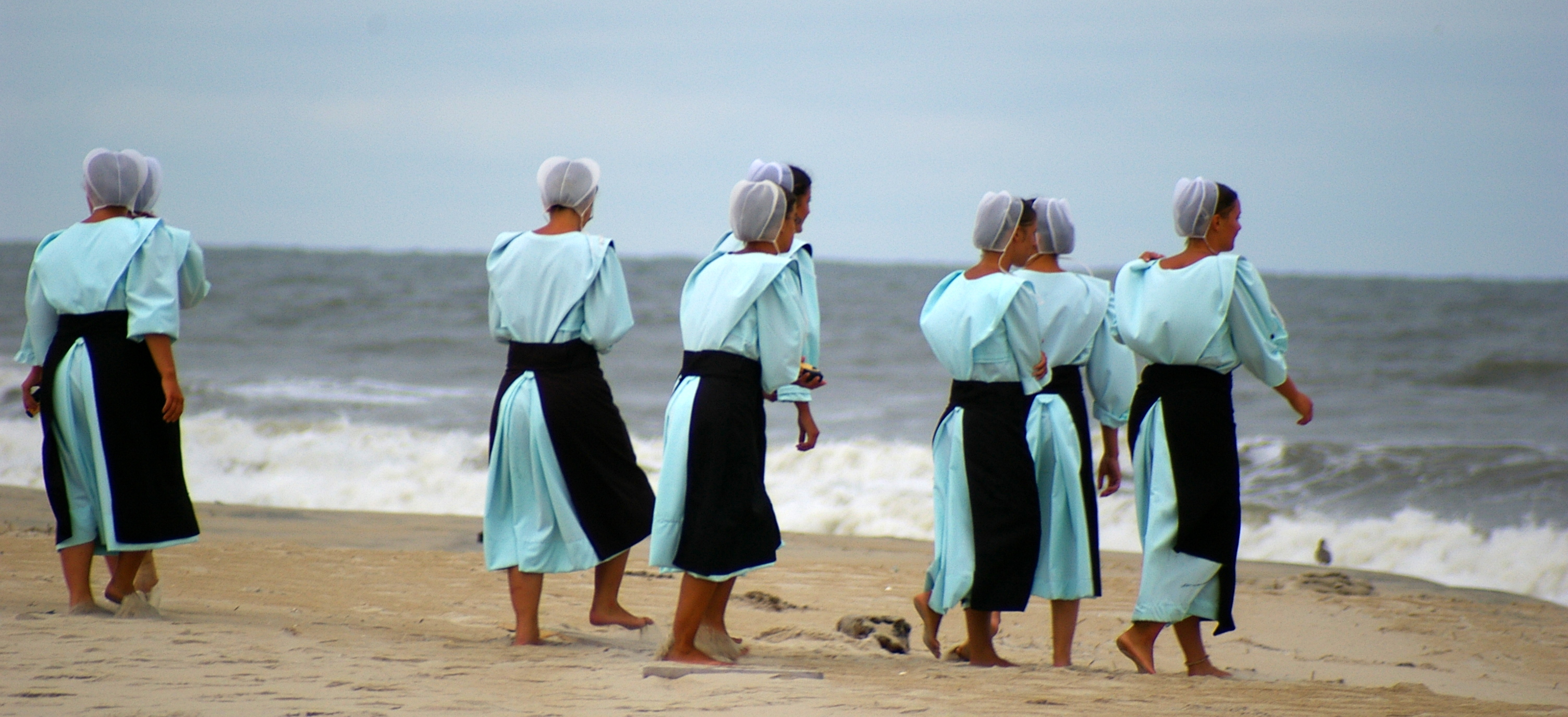
Femmes-Amish

Whilst waiting in a long line to board onto the Chicago AmTrak train one afternoon, I couldn’t help but to study and enjoy the presence of a large Amish family nearby. The bearded man wearing suspenders was accompanied by three adult women and four absolutely adorable small children.  They had suitcases of various vibrant colors and sipped from just-purchased plastic water containers. The line of travelers started to descend as everyone was loaded onto the train. To my surprise, I would be surrounded by the Amish family on the seats to the left and front of mine.

The little children would stare at me, and we would have smiling contests. I did not have much to share with the children or show them. Trying to respect the culture’s preference of a non-technological lifestyle and the choice to avoid excessive dress and style, I was somewhat nervous to show them things I had with me. My worries of what the children could be exposed to could somehow affect the rest of their lives. They were so innocent and sweet. I instead wanted them to show me their things, and learn more about their way of life.

They spoke in a language I could not decipher, but could only assume it to be of Dutch origin. They also spoke in English, but not as often. The women would read to the little children in their preferred language rather than in English, although the books were written in the latter. The books appeared to be youth primers for their religion, and they included songs, poems, stories, pictures, and coloring pages. One adult sat in a separate section and allowed the children to walk back and forth to the different seats and would all sit on the adults' laps. I wondered if the family practiced polygamy because the man had so many adult women with him and all of the children were clinging to each adult, especially the man. However, the Amish do not practice polygamy, and these families were just working together like a small community.

Their dress is plain and simple, and they sew their own fashions. How do they acquire the dark blue, black, and brown materials? Rural markets and dry goods stores. The women do not cut their hair, and the men, once married, do not cut their beards. Bonnets cover the heads of the baptized women and little girls, while males sport a traditional hair cut fashion and are forbidden to have mustaches. Men are not allowed to wear mustaches in Amish communities because it is thought to resemble men in the military. The Amish do not partake in violence and therefore are not forced to join the military.

The woman sitting to my upper left seemed to be much more confident with the children. She looked to the man often to tell him a feeling or thought with her eyes, and also using their unique dialect. The woman sitting to my left, however, sparked my curiosity even more. She was quieter, younger, and wore glasses. She would cuddle the visiting children and would read to them.  When she wasn't taking care of the children, she would look at her surroundings and seemed to be philosophizing about what and why things were. She would stare out of the train window and take in all of the urban outside life. Was she wondering what life was like for the "modern folk"? Did she want to walk in the old abandoned buildings to investigate and dream up a place for the family’s sofa? Did she want to experience driving a car? Or was her faith so deeply rooted that none of things crossed her mind as they would mine? Perhaps she just loved and enjoyed the life she was blessed with and was content with what she already had. Either way, it somehow felt really special to witness that Amish woman looking out of her window.

A funnier experience was when one of the Amish women accidentally walked in on me using the train's restroom. As the door opened and our eyes met, she looked almost horrified and said, “Oh! Sorry!” I really could only laugh about the situation.

The sweetest experience was noticing two sleeping children sprawled all over their father figure. I had just gotten up to leave as the train had reached its destination. I looked at the man and he gave me a smile and nod as I whispered, “They are so sweet."

Since my experiences among the Amish family, I have become much more interested about the Amish and even Mennonite culture. What a beautiful and simplistic way to live.