Showing posts with label stereotypes. Show all posts

Thursday, November 20, 2014

Pop Culture: Enjoy... But Be Cautious

Stuck in Stereotypes

I once read that the majority of Americans don’t have a passport. As a European, I thought this was an incredibly shocking, if not dismaying, piece of trivia. On the other hand, presumably even those without passports know that Italians eat pizza and pasta and the typical French person cycles around with a baguette, wearing a black beret. An Irish citizen wears green and stumbles drunk down the street. Australians throw boomerangs at kangaroos. All the classic stereotypes.

These examples seem perhaps quite harmless at first glance, but what about the others---all Arabs are Muslim, all Blacks are poor, all Jews are greedy.

Stereotypes influence our decision making and are difficult to unlearn. Where do we form these ideas? How do we come to know---or think we know---so much about countries and cultures we have never experienced firsthand? The answer is through popular culture – the media of film, books, magazines, music and videos.

Mass Media: The Importance of Popular Culture

We cannot underestimate the power of mass media and pop culture in shaping our perceptions, ideals or prejudices of another culture. When it comes to ‘exporting culture’, there is both “High Culture" and "Low Culture" (a.k.a. Pop Culture). High Culture includes opera and ballet but reaches a smaller audience. Pop culture is much more ubiquitous and as a result arguably more influential. Let’s look at the most popular example---violence on our screens.

It is well documented that watching violence in film and on television could negatively influence the viewer. There is evidence to suggest this is true. Recently, a young man in the USA killed and dismembered his girlfriend after being inspired by a popular show about a serial killer, Dexter. On the other hand, Norway is regarded as a very peaceful country with low internal conflict. Is it a coincidence that the same country attempts to control, avoid and limit negative influences from its media? Crime is not sensationalized, television has little violence, boxing is banned from television. Even E.T. was rated too violent for viewers under 12.

Violence on television is a widely debated topic in the public eye. Why then, is less thought put into monitoring and researching the power of pop culture? Most people would look down at the importance of studying pop culture, believing it to be insignificant. Pop culture can be fun and educating but at the same time, it is a major factor in building prejudices and creating stereotypes. When original content is made by one culture and exported to another, we need to examine it carefully and make an educated decision on whether or not it is accurately portraying a culture’s image.

[caption id="" align="aligncenter" width="329"] How are Asians usually represented in film? The men traditionally played the role of the villain such as Ming in Flash Gordon. On the hand, women tend to be painted as soft, feminine and desirable.[/caption]

Film: Learning about Cultures without Personal Experience

While I have yet to visit most of the countries in the world, it seems that I already know so much about them. You probably feel the same. Those who have yet to visit Paris, New York or London all have wonderful images and notions of their streets and alleys. Bustling Asian markets, piranhas in the Amazon and tribes in Africa. We are all constantly learning about cultures without firsthand personal experience. This increases the risk of misshaping our attitudes.

Through mass media, I know that India, for example, is a colorful place with a rich history, delicious food and with wonderful landscapes and locals. I do however, also know that a series of high-profile rape cases have tarnished the country’s image over the past few years. This has lead to a decrease in tourism. I know this from reading the news or watching a documentary but often it is film that is the most widespread channel in delivering gateways into other cultures. Looking at India again, the film Slumdog Millionaire was criticized by Indians for showing the country in such a dim light. Yet friends who have visited there can’t speak highly enough of such a beautiful place. Who to trust more, media sources or those who have been there and done that?

[caption id="" align="aligncenter" width="556" class=" "] Slumdog Millionaire presented the slums of Mumbai in a brutal but honest light. Still, it would most likely turn viewers away from India.[/caption]

Taken, the Hollywood blockbuster about human trafficking in Paris, apparently led to a decline in annual tourism in France. Parents told the movie’s leading front man Liam Neeson, “I’ll never send my kids to Europe.” To Asia, after the movie The Beach was released showing Leonardo Di Caprio’s adventures in Thailand, tourism soared there. People saw what an interesting culture Thailand had to offer with friendly locals, crazy parties and pristine beaches. They also expected shots of snake blood, shark infested-waters and drugs growing out of thin air on their arrival.

Heading north, to eastern Asia and Korea, a French actress Brigitte Bardot highlighted that Koreans eat dog in the French media prior to the 2002 FIFA World Cup. This spread across the global media and painted Koreans in a barbaric way, despite their huge advances in modern technology and innovation. The eating of dog, although a separate topic, is a custom that has lasted centuries and is ingrained in local culture here. We shouldn't compare cultures as being right or wrong, simply different. On a better note, Korean dramas have recently become huge in Cuba, of all places.

[caption id="" align="aligncenter" width="488"] Phi Phi island in Thailand. Since the Beach, the area has received an incredible boost to tourism but local culture and the surrounding environment have taken a battering.[/caption]

Media: Objective or Subjective?

In general, we often believe that the media---whether a newspaper, a television show or a documentary---is objective and reflect their subjects much like a mirror would do. However, in fact the media is more like a window. It is mostly subjective and only offers us one viewpoint. Another window from the same building may cast a different light. This is to say that when we consume foreign pop culture we must do so with an open mind. What we are seeing, reading and hearing may not represent the true culture of a nation. The media is usually affected by local constraints that we are not aware of such as religious, political, historical or gender differences.

Korean director Kim Ki-Duk has had great success at international film festivals but his movies have never been widely appreciated in his homeland. If someone was to watch just one of his films, they would have a misrepresentation of Korea. Traditionally African-American women were portrayed as domestic stereotypes like in Tom and Jerry (which now carries a racial warning to viewers). Often media that is ‘factual’ or ‘based on a true story’ is only telling one side of a tale. Others rewrite history altogether; Disney’s Pocahontas, for example, all but overhauled the tragic history between natives and European adventurers.

[caption id="attachment_3259" align="aligncenter" width="250" class=" "]Media framing - what we see may not be a true reflection Media framing - what we see may not be a true reflection[/caption]

Keep an Open Mind

As technology improves, culture is spreading more and more. However, there is also a major global imbalance. Individuals from less populous cultural groups tend to import huge amounts of foreign content as it isn't plausible to consume only their own. Societies that watch too much foreign media may lose touch with their own. On the other hand, major nations like America, tend to view or consume little or no foreign content.

Finally, for many of us, some cultures and some nations exist only through popular culture. Mass media and pop culture are major powers in building our perceptions of other cultures and can often be only somewhat correct and educational. Those who do use media as their primary source of learning about other cultures thus need to consume as much as possible with an open mind in order to see a wider, probably more accurate picture of a nation, group or culture. Still, the best way to learn is still to get out there and mingle with real people.

Saturday, September 20, 2014

The Mean Things We Say about People from Other Countries

[caption id="attachment_2306" align="aligncenter" width="960"]Original image courtesy of FreeDigitalPhotos.net. Why can't we all just get along?[/caption]

As a foreigner to Chinese, Korean, and Japanese friends, I seem to incite conversations on international topics more often than would seem the norm in strictly native circles. And, perhaps as some perverse gesture of solidarity with the Westerner in the room, these conversations quite often turn into xenophobic venting sessions directed at East Asian neighbors. The catharses usually begin as polite self-deprecating observations on one’s own society and then morph, with varying degrees of speed and completion depending on the drinks being served that night, into stronger and more earnest insults to the reputations of nearby countries.

What strikes me most about the content of such conversations is not just that the participants have generally realized that I lived for almost three years in China and developed several friendships along the way, have a Korean boyfriend and a close relationship with his family, and have made a few Japanese friends in both Chinese and Korean language classes and am thus very likely judging their xenophobia with some critical scrutiny, but that the comments, whether they be made by Chinese people about Koreans, Japanese people about Chinese, Korean people about Japanese, or any permutation thereof, are all pretty much the same.

[caption id="attachment_2312" align="alignright" width="300"]Regardless of whether we're red, green, blue, or purple, we might just tend to insult our neighbors in similar ways. Regardless of whether we're red, green, blue, or purple, we might just tend to insult our neighbors in similar ways.[/caption]

A few close Chinese friends in Beijing once told me over lamb kebabs and beer that they considered Koreans “很吵,没有礼貌,不太聪明 (loud, rude, and unintelligent).” A few months later, I had a similarly sized group of Korean friends confiding to me over banchan and fish that Chinese tourists struck them as “시끄럽고 예의 없어 (loud and rude).”

Similarly, a Chinese friend complained to me several times that I should watch myself around Koreans, who are cold-hearted business-minded folks who will befriend you for personal gain and, once you cease to be of use to them, “只把你扔掉了 (just toss you away).” Perhaps, though, I shouldn’t heed that advice, as, according to a Korean acquaintance, Chinese people are “물질만능주의자 (exclusively materialistic).”

The hate doesn’t stop at bashing each other’s aptitudes and principles. A close Korean friend once told me that she thought that compared with Chinese and Japanese, 우리 나라 여자들은 가장 예뻐 (our country’s girls are the prettiest).” This  declaration ironically called to mind an offhand comment once made by a female Chinese friend that Chinese girls had bigger eyes and were naturally prettier than Korean and Japanese individuals.

Multiple Chinese and Korean people have also complained to me that people from the other country "always" try to seize everything important in East Asian history as their own invention. The Chinese end of this argument is humorously depicted in one of my favorite Youku videos, which alleges that a Korean professor claimed that Sun Yat-sen and Yao Ming had Korean ancestry and that Korean academics have before concluded that Confucius, Xi Shi (legendary beauty said to have lived in the 春秋 period), and Li Shizhen (Ming Dynasty doctor and polymath) had Korean blood and will soon declare that the universe itself was created by Korea.

Such xenophobic sentiments have not been limited to close friends in intimate quarters. The head of my office in Beijing once told me after some slight inebriation at a company banquet that he considered the smartest and most accomplished people in the history of the world to be Chinese, German, English, and Japanese, but “对不起,不是韩国人 (sorry, not Koreans).”

This comment was countered and perhaps topped by the Yonsei KLI Korean teacher (and my absolute favorite teacher at the program, so I take her comments in a benign context) who asked our class if we didn’t think that Korean students were “다른 나라 학생보다 더 똑똑하지않아 (just smarter than students from other countries)?”

It might be easy to think so when surrounded by fellow Koreans, but I have a feeling that some people from the other 195-odd countries around the tip of this tiny peninsula might disagree.


This post is adapted from an article originally appearing in Strolling Toward a Mountain of Tigers, the author's personal blog on life, science, and how those two words together are redundant.

Monday, May 19, 2014

5 Asian stereotypes in the 1990s/2000s

South Korea (along with its neighbor in the north) gained fame throughout the world for its K-pop, food, and internet. However, Korea only recently made its appearance on the international stage. For those that lived in the 1990s and early 2000s, not many people knew or even heard of Korea. I grew up in America and I, as well as other Koreans, faced a lot of stereotypes during my childhood. Among them, the most frustrating was…

  1. Chinese or Japanese?

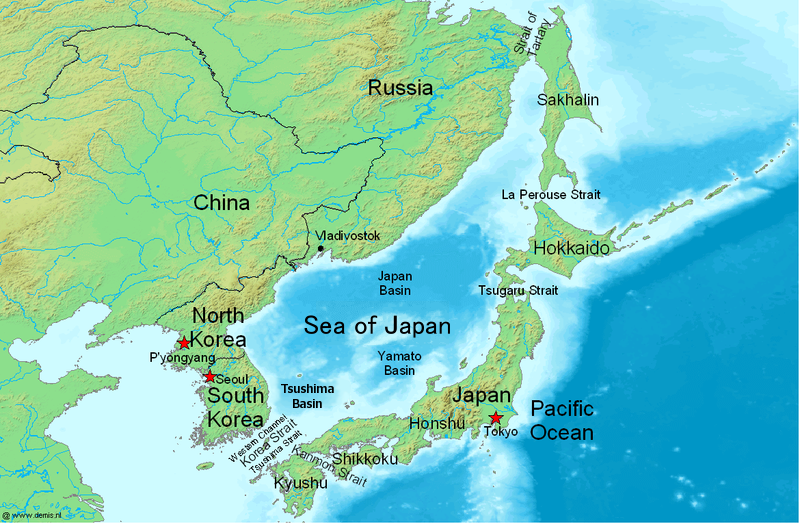
    [caption id="attachment_1899" align="aligncenter" width="300"]Where is Korea? Where is Korea?[/caption]

    Whenever I met new kids at school, they would always ask me whether I was Chinese or Japanese. For those that knew a tad bit more about Asia would even ask me if I was Mongolian. My response, “I’m Korean” would baffle them. They had never heard of Korea (south or north) and so they would simply assume I was from a remote country somewhere in the Far East. This continued throughout the ‘90s until people began recognizing Korea as a developed country. But the one thing they truly found interesting/weird about Korea was…

  2. Eating dogs

    [caption id="attachment_1897" align="aligncenter" width="259"]Cucumbers - the best seasoning to go with a bowl of dog. Cucumbers - the best seasoning to go with a bowl of dog.[/caption]

    Middle school proves a difficult time for young adolescents. Social cliques begin to form, kids start becoming moodier, and norms, to which all kids must adhere (lest they become social pariahs), are established. On top of that, Korean kids would have to suffer accusations of dining on man’s best friend. I highly doubt any Koreans would eat dog in the U.S. For one, it’s probably illegal to eat your dog there. Second, Koreans don’t eat their pets. However, the only thing kids saw was the consumption of dogs. If I went over to any of my American friends’ house, they would play “keep the dog away from the dog-eating Korean kid.” They were semi-joking of course, but still, they didn't leave me and their dogs alone in the room. If I confronted them about this, they would try to avoid a fight with me because apparently, I knew…

  3. Martial arts

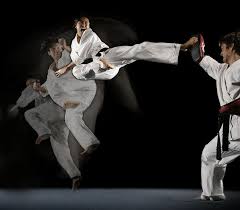
    [caption id="attachment_1898" align="aligncenter" width="240"]Don't mess with Asians - they'll jump kick you in the face Don't mess with Asians - they'll jump kick you in the face[/caption]

    Thanks to Jackie Chan, Bruce Lee, Jet Li, and many other Asian martial artists/actors, people thought Asians could do kung-fu or karate. I had never taken any self-defense classes, but people always thought I could pull out a can of karate-whoop-ass on anyone if I so chose to do so. I had once gotten into a fist fight with one of the other kids during recess. One of the onlookers encouraged me to “karate-chop his ass.” To please the crowd, I attempted what I thought was a legitimate martial art move. It proved, but after the fight, everyone thought I had awakened my latent Asian martial abilities. If the kids weren't asking about my martial arts abilities, they were asking me about homework because…

  4. Asians are really smart
    Now it’s true that I may have achieved above average grades in school, but that’s because I applied myself to my studies. However, that doesn't mean all Asians are smart. Everyone in school automatically assumed I would do well in courses like math or science. I actually knew more than a handful of Koreans that were terrible at math or academics in general. When it came to assigning lab partners, everyone wanted to pair up with the Asian kids. Of course they would. Our intellectual oriental brain would help them get better grades. Another stereotype I truly despised was…

  5. Chinky eyes

    [caption id="attachment_1896" align="aligncenter" width="300"]Just look at those small chinky eyes. It's a wonder how Asians walk around without stumbling. Just look at those small chinky eyes. It's a wonder how Asians walk around without stumbling.[/caption]

    It may be true a majority of Asians have smaller eyes, but it still stung when the other kids pulled back their eyes to make fun of Asian people. When it came to portraying Asians, the only thing that other people could come up with was squinting their eyes. Sometimes, people would ask me if I could see well, what with my small squinty eyes. I would pay dearly if I made any mistakes concerning visual observation. The rant would pour down about how my small eyes limited my vision. When the staring game was still popular, all the kids played against each other, trying not to blink. Whenever it was my turn, the kids would say I would cheat. They said because my eyes were so small, they couldn't tell if I was blinking or not. Ouch.


The world has culturally developed so that these stereotypes aren't as present as they were 10 – 20 years ago. That doesn't mean they have completely disappeared. Asians, along with other cultures, face many stereotypes, and it’s our job to look past them and embrace the different backgrounds and cultures of people. The world and its citizens have become more international, and that’s great. But without understanding the truth and more importantly, the non-truths that have spread, becoming international has no real meaning. Thus, the next time you encounter a Korean or Asian, please don’t judge them based on what you have heard from someone else. I’d love to write more about this topic, but I have to go solve some math problems and eat a bowl of dog stew.