Showing posts with label Visual arts. Show all posts

Thursday, November 20, 2014

Pop Culture: Enjoy... But Be Cautious

Stuck in Stereotypes

I once read that the majority of Americans don’t have a passport. As a European, I thought this was an incredibly shocking, if not dismaying, piece of trivia. On the other hand, presumably even those without passports know that Italians eat pizza and pasta and the typical French person cycles around with a baguette, wearing a black beret. An Irish citizen wears green and stumbles drunk down the street. Australians throw boomerangs at kangaroos. All the classic stereotypes.

These examples seem perhaps quite harmless at first glance, but what about the others---all Arabs are Muslim, all Blacks are poor, all Jews are greedy.

Stereotypes influence our decision making and are difficult to unlearn. Where do we form these ideas? How do we come to know---or think we know---so much about countries and cultures we have never experienced firsthand? The answer is through popular culture – the media of film, books, magazines, music and videos.

Mass Media: The Importance of Popular Culture

We cannot underestimate the power of mass media and pop culture in shaping our perceptions, ideals or prejudices of another culture. When it comes to ‘exporting culture’, there is both “High Culture" and "Low Culture" (a.k.a. Pop Culture). High Culture includes opera and ballet but reaches a smaller audience. Pop culture is much more ubiquitous and as a result arguably more influential. Let’s look at the most popular example---violence on our screens.

It is well documented that watching violence in film and on television could negatively influence the viewer. There is evidence to suggest this is true. Recently, a young man in the USA killed and dismembered his girlfriend after being inspired by a popular show about a serial killer, Dexter. On the other hand, Norway is regarded as a very peaceful country with low internal conflict. Is it a coincidence that the same country attempts to control, avoid and limit negative influences from its media? Crime is not sensationalized, television has little violence, boxing is banned from television. Even E.T. was rated too violent for viewers under 12.

Violence on television is a widely debated topic in the public eye. Why then, is less thought put into monitoring and researching the power of pop culture? Most people would look down at the importance of studying pop culture, believing it to be insignificant. Pop culture can be fun and educating but at the same time, it is a major factor in building prejudices and creating stereotypes. When original content is made by one culture and exported to another, we need to examine it carefully and make an educated decision on whether or not it is accurately portraying a culture’s image.

[caption id="" align="aligncenter" width="329"] How are Asians usually represented in film? The men traditionally played the role of the villain such as Ming in Flash Gordon. On the hand, women tend to be painted as soft, feminine and desirable.[/caption]

Film: Learning about Cultures without Personal Experience

While I have yet to visit most of the countries in the world, it seems that I already know so much about them. You probably feel the same. Those who have yet to visit Paris, New York or London all have wonderful images and notions of their streets and alleys. Bustling Asian markets, piranhas in the Amazon and tribes in Africa. We are all constantly learning about cultures without firsthand personal experience. This increases the risk of misshaping our attitudes.

Through mass media, I know that India, for example, is a colorful place with a rich history, delicious food and with wonderful landscapes and locals. I do however, also know that a series of high-profile rape cases have tarnished the country’s image over the past few years. This has lead to a decrease in tourism. I know this from reading the news or watching a documentary but often it is film that is the most widespread channel in delivering gateways into other cultures. Looking at India again, the film Slumdog Millionaire was criticized by Indians for showing the country in such a dim light. Yet friends who have visited there can’t speak highly enough of such a beautiful place. Who to trust more, media sources or those who have been there and done that?

[caption id="" align="aligncenter" width="556" class=" "] Slumdog Millionaire presented the slums of Mumbai in a brutal but honest light. Still, it would most likely turn viewers away from India.[/caption]

Taken, the Hollywood blockbuster about human trafficking in Paris, apparently led to a decline in annual tourism in France. Parents told the movie’s leading front man Liam Neeson, “I’ll never send my kids to Europe.” To Asia, after the movie The Beach was released showing Leonardo Di Caprio’s adventures in Thailand, tourism soared there. People saw what an interesting culture Thailand had to offer with friendly locals, crazy parties and pristine beaches. They also expected shots of snake blood, shark infested-waters and drugs growing out of thin air on their arrival.

Heading north, to eastern Asia and Korea, a French actress Brigitte Bardot highlighted that Koreans eat dog in the French media prior to the 2002 FIFA World Cup. This spread across the global media and painted Koreans in a barbaric way, despite their huge advances in modern technology and innovation. The eating of dog, although a separate topic, is a custom that has lasted centuries and is ingrained in local culture here. We shouldn't compare cultures as being right or wrong, simply different. On a better note, Korean dramas have recently become huge in Cuba, of all places.

[caption id="" align="aligncenter" width="488"] Phi Phi island in Thailand. Since the Beach, the area has received an incredible boost to tourism but local culture and the surrounding environment have taken a battering.[/caption]

Media: Objective or Subjective?

In general, we often believe that the media---whether a newspaper, a television show or a documentary---is objective and reflect their subjects much like a mirror would do. However, in fact the media is more like a window. It is mostly subjective and only offers us one viewpoint. Another window from the same building may cast a different light. This is to say that when we consume foreign pop culture we must do so with an open mind. What we are seeing, reading and hearing may not represent the true culture of a nation. The media is usually affected by local constraints that we are not aware of such as religious, political, historical or gender differences.

Korean director Kim Ki-Duk has had great success at international film festivals but his movies have never been widely appreciated in his homeland. If someone was to watch just one of his films, they would have a misrepresentation of Korea. Traditionally African-American women were portrayed as domestic stereotypes like in Tom and Jerry (which now carries a racial warning to viewers). Often media that is ‘factual’ or ‘based on a true story’ is only telling one side of a tale. Others rewrite history altogether; Disney’s Pocahontas, for example, all but overhauled the tragic history between natives and European adventurers.

[caption id="attachment_3259" align="aligncenter" width="250" class=" "]Media framing - what we see may not be a true reflection Media framing - what we see may not be a true reflection[/caption]

Keep an Open Mind

As technology improves, culture is spreading more and more. However, there is also a major global imbalance. Individuals from less populous cultural groups tend to import huge amounts of foreign content as it isn't plausible to consume only their own. Societies that watch too much foreign media may lose touch with their own. On the other hand, major nations like America, tend to view or consume little or no foreign content.

Finally, for many of us, some cultures and some nations exist only through popular culture. Mass media and pop culture are major powers in building our perceptions of other cultures and can often be only somewhat correct and educational. Those who do use media as their primary source of learning about other cultures thus need to consume as much as possible with an open mind in order to see a wider, probably more accurate picture of a nation, group or culture. Still, the best way to learn is still to get out there and mingle with real people.

Monday, October 27, 2014

Korean Memes vs. American Memes

Meme – n. a cultural item in the form of an image, video, phrase, etc., that is spread via the Internet and often altered in a creative or humorous way. (dictionary.com)

Memes are designed to make us laugh. But depending on where you’re from, some memes will have you gasping for air, and some will simply not resonate. While some cultures have different perspectives on what's funny or not, some memes just simply have people xD/MDR/ㅋㅋㅋ/LOLing anywhere in the world. I’ve had a lot of trouble getting Korean people to laugh at some of the memes from America, and vice versa, but sometimes I would hit the jackpot and have both the East and the West bursting out in laughter. Let's take a look at  some of the similarities and differences I found between Korean and American memes, and how the Korean and American people are wired when it comes to comedy.


  1. Pop culture


    The biggest contributors to memes are figures from pop culture. In Korea, celebrities such as Yoo Jae-Seok (유재석) or Park Myung-Soo (박명수) are used to deliver image-based memes. They're the icons of Korean comedy, and their notorious for their starring roles in Infinite Challenge (무한도전). Viewers really like the show. And when I mean "really like the show," I mean eight years worth of liking the show. The first episode aired in 2006, and the program has been running nonstop ever since.
    In America, a series has seasons like Seinfeld, Modern Family, or Community. But Korea doesn't have seasons. They just run the show every week until it finally dies out on its own.
    As the title says, Infinite Challenge has endless obstacles for the cast to overcome, and in their quest to overcome these challenges, they often find themselves in humorous situations. In their horror specials (much like The Treehouse of Horror on the Simpsons), they go through a maze filled with ghosts and other scary monsters, hoping to complete the tasks assigned to them. One of the more memorable episodes had a member of the cast try to balance himself on a surfboard, but he failed miserably. Koreans especially love laughing at comedians performing body humor, so when they see some of their favorite comedians getting hit on the head, falling down, or making weird funny faces, they can't help but laugh.

    [caption id="" align="aligncenter" width="320" class=" "] "Shut up" - Yoo Jae-Seok[/caption]

    At one point, Chuck Norris was all the rage in America, and recently, Jonathan Goldsmith is the biggest image for memes in America. While Korea loves slapstick comedy, Americans can't help but poke fun at almost anything which can range from politics to celebrities. America doesn't rely heavily on body humor, and thus, anything can be used for satire or parodies. Go ahead, name anything in America that people haven't already tried to make fun of. There are thousands of videos about racism, even when human rights activists try so hard to promote equality. Just watch an episode of South Park, and you'll have a general idea of how anything can be used for humor. I didn't think anyone could or would use Christopher Reeves (Superman) as the butt of their joke, but alas, I stood corrected.
    The Daily Show and the Colbert Report are really popular because they can find the humor in anything such as mainstream news medias like Fox News. And there are many other shows that satirically comment on social issues like racism and politics which show Americans generally find humor in situations that don't seem to be funny on the surface. But when American humor digs under that surface, they can laugh at what they find.

    [caption id="" align="aligncenter" width="320" class=" "] Chuck Noris just got served, which is funny 'cuz he's the one that's supposed to be serving.[/caption]

    Though the content may be different, the fact remains pop culture plays a big role in memes. It’s the biggest common factor to which almost everyone can relate. It’s easy to recognize and deliver to audiences, which in turn, goes viral. However, the same cannot be said about…


  2. Video-based memes


    Vine, an app that allows users to shoot a 6 second video, is one of the most popular mediums to deliver short funny videos in America. Koreans, however, rarely use the app. Instead, they cut out certain scenes from sketch comedy programs like Gag Concert or dramas. There aren't many original videos Korean people make. In fact, many of the memes Korean people share are actually ones from abroad, and even then, they're usually videos about people getting hurt or some form of slapstick. There is only so much slapstick people can do without landing themselves in a hospital ward. Thus, most video memes go viral in Korea if they can provide body humor, to which Koreans are so accustomed.
    [youtube http://www.youtube.com/watch?v=0itk4pUcIvA]
    On the other hand, a lot of the video memes in America are shot by average people hoping to go viral. They have a lot of material to their advantage such as other videos taken from movies or even news footage. One of the most famous to spread throughout the Internet at the moment is the P-O-P clip, in which a young woman leaves a message for her mom and crew as she is hauled away by the police. It's funny because she tries to act tough while in handcuffs, but suddenly breaks down as she gives a shout out to her associates. In America, almost anything and anyone can be used to deliver humor, whereas in Korea, it would be taboo to speak out (even comically)  against social issues.
    [youtube http://www.youtube.com/watch?v=9-rVEs5RLZQ]
    Whether or not the video revolves around slapstick, parody, or satire, these clips need to be delivered. And the best way to spread these memes are…


  3. Facebook and You Tube


    I’ll admit I probably couldn't live without Facebook. I probably check my wall every thirty minutes or so. When I do scroll through Facebook, I generally find myself lost in an endless maze of videos. Sure, Facebook is popular in America, but it’s the biggest growing social network in Korea, and almost everyone has an account. Seven years ago, everyone I knew in Korea had a Cyworld account, but by 2010, they had discarded that social network for Facebook. Back then, everyone would ask for their Cyworld address, but now, they ask whether you're on Facebook or not. Another big distributor of memes is You Tube.
    [youtube http://www.youtube.com/watch?v=wLL2EAR5Yjg]
    Though the contents people watch are different in Korea and America, if anyone needs to find a video for anything, they go to You Tube. The top You Tube videos in Korea are usually clips from TV programs.
    [youtube http://www.youtube.com/watch?v=9v9sMU3FrDg]
    Americans can use almost any video to set as a meme, so there are no guarantees for what will be the next big thing to go viral. Who knew a chubby little kid would obtain notoriety as he gracefully showed the world his refined swordplay with a fake lightsaber?
    [youtube http://www.youtube.com/watch?v=HPPj6viIBmU]


Memes put a smile on our faces when we’re procrastinating at work, studying for mid-terms, or just generally when we’re faced with boredom. And they’re a great way to spread humor and laughter around the world, especially with the global connections we have today. Though memes vary in each culture, the slow yet gradual overflow of one culture’s memes into another will help us to laugh together, regardless of distance. With all the conflicts and issues throughout the world, wouldn’t it be great to have some humor to uplift this gloomy atmosphere? After all, laughter is the best medicine.

[youtube http://www.youtube.com/watch?v=-iz_mVgEzqg]

Wednesday, April 23, 2014

8 Things I Learned as an extra in a Korean Action Film

As you can see by the content on this site, there are many, many fun things to do in Korea. One activity that might not occur to most, however, is playing the role of an extra in a Korean film. If you visit Craig’s List Seoul or some social groups online, you will see a lot of casting calls for western-looking people to appear in some cinematic projects. Korean cinema is some of the best in the world, believe it or not. If you haven’t seen such films as Old Boy or Taegukgi or The Good, The Bad, and The Weird, I highly recommend giving them a screening (just make sure you get the original Park Chan Wook Old Boy). There are, however, always some straight-to-video masterpieces, and as luck would have it, I was given the chance to appear in one such production a couple of years ago. By the end of it, my knees were scraped up and my ass hurt. Lest your imagination turn to the lewd, let me explain. If you ever get cast as an extra in a Korean action film, here are eight things to remember.

 1. Be prepared to travel

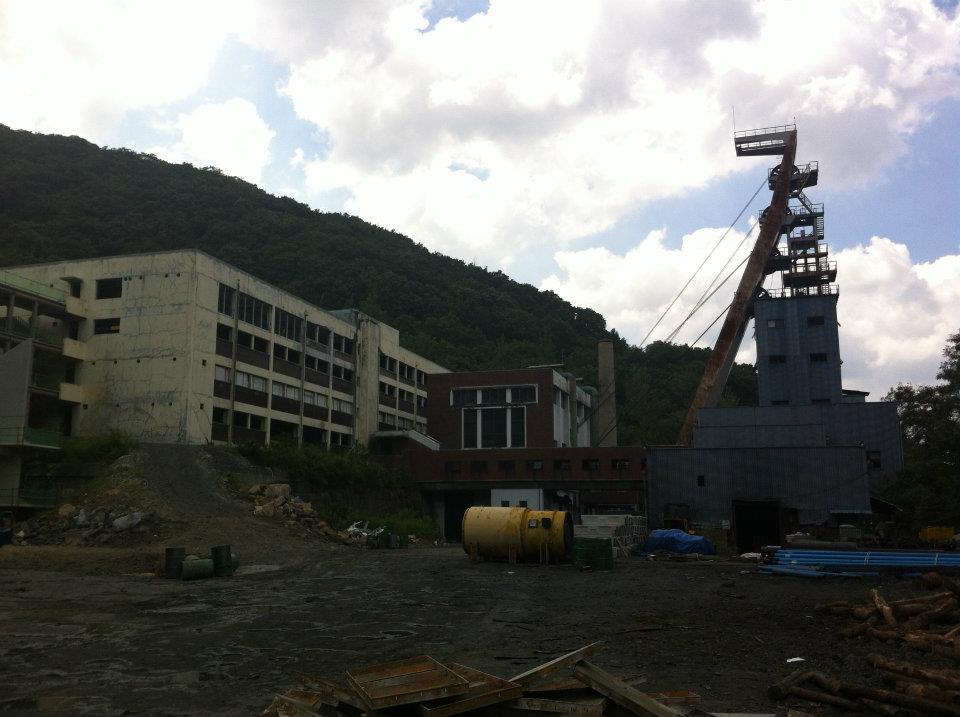
Korean films usually like to give the illusion that Korea is a bigger country than it is, and so using overly-familiar scenery is often avoided. People would get tired of always seeing Namsang Tower in the background of movies, so remote locations are often sought out for filming. I was asked to be at Sinsa Station at 2:00 a.m. as the location of the shoot was closer to the southern tip of the peninsula. I was met by two other actors and a Korean crew member who only said one word to us the whole time: “Movie?” He loaded us into an SUV and we drove for hours and arrived at our destination around 6:00 a.m. Where was this destination? I have no idea. I am sure they told me the name of the place at some point, but I was so tired after the long early-morning drive that my memory cells were not working. I had tried to get some sleep in the SUV but the GPS navigator – a common instrument in all Korean cars – kept bling-blinging and spouting out directions in Korean. All I remember about the location was that it was an abandoned mining operation that was going to be turned into some sort of museum. The sign at the turn-off to the goat path that led us into the mountains said “Art Mine.”

[caption id="attachment_1555" align="alignnone" width="300"]The abandoned mining site. The abandoned mining site.[/caption]


2. There is a pecking order

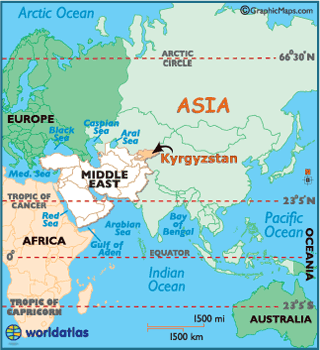
As with most jobs or other social structures in this world, there is a hierarchy within the motion picture community. First and foremost is the director. He kept a safe, regal distance from all of us during shooting, communicating, sometimes from a tower overlooking the mining complex, by way of set directors and walkie-talkies. I don’t think I ever actually met the man. The closest we came to speaking was him yelling “Bang!” at me over a walkie-talkie to let me know when my character was being shot. I’ll tell you more about that later. Next in the pecking order is the set director, who is in charge of most everything, including costumes and props. This was a girl named Crystal, and while she was very nice, she was also all business on-set. Nobody got anything without going through her. Next to her was another guy – a very young fellow – whose sole job was to tell you where to stand and where to look (and not look). Then came the actors. Believe it or not, there are some foreigners living in Korea who do not teach. A lot of them, in fact. And some of them do nothing but act in movies. I met some of these professional actors during this adventure, and they are treated with a little bit of celebrity, depending on how many movies they have been in. They tend to keep to themselves, and talk shop about previous projects they have worked on together. For a guy like me, an extra in his first film with no idea what was going on, it is a caste system, and I was on the bottom. Aside from being asked who I was and where I was from, I was not really involved in the social aspect of the job. Once they discover you are not a full-time actor, they tend to ignore you (until you have proven your acting chops). Most of these guys were from Kyrgyzstan, I found out later. Imagine that!

map

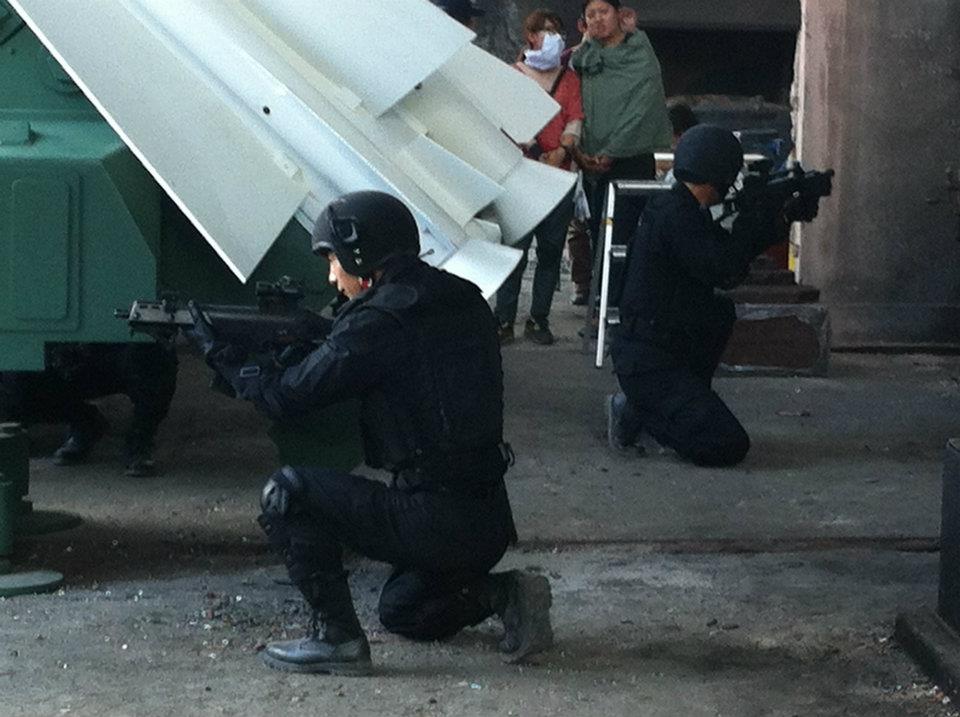
Aside from the professional pecking order, there was also a fictional one based on who you played in the movie. It didn’t take me long to figure out that I was one of the bad guys, a group of foreign terrorists slated to be taken out by the Korean heroes. The leader of our terrorist band was the lead foreign actor, and I rarely even got near him, let alone spoke to him. I found out later his name was also Matt. Maybe they kept us apart to avoid confusion? My character had no lines, except maybe “Agghh!” when I got shot in the back by a sniper, so I was on the low end of the fictional pecking order as well. Also, the good guys and the bad guys never mingled between takes. We all got our lunch from the same service truck, but we ate in separate camps, with the crew choosing sides based on their favorite actors. We weren’t told specifically not to mingle, it just came naturally.

3. You may not know the part you are playing, even when you are playing it

As I mentioned, being on the new-guy caste level, I was not spoken to unless I was being told what to do. For example: “Take gun. Go up on roof.” Other than short little commands like this, I was completely in the dark about what movie we were making, or who I was supposed to be. Even in the wardrobe tents, set up in an abandoned administrative building, the costume girls just handed me a bunch of military clothing and said “change.” They didn’t even bother to measure me or anything. Imagine my surprise when everything fit perfectly, even the combat boots. I was never even shown a script, so I didn’t realize we were the bad guys until I was introduced to the beautiful Korean hostage we were holding. You’d think I would have figured it out when I saw the big missile sticking out of a bay door in our nefarious hide-out, a-la The Rock.


[caption id="attachment_1553" align="alignnone" width="224"]Where's Nicholas Cage when you need him? Where's Nicholas Cage when you need him?[/caption]

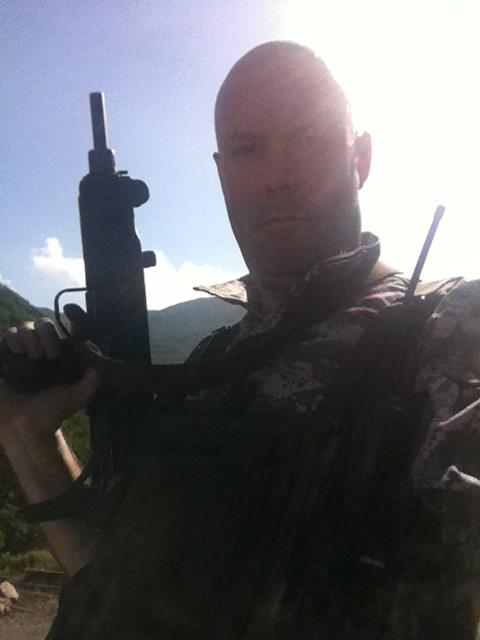
I was never taken aside, told any back story, given any emotional cues or anything. Just put on these fatigues, take this Uzi, go stand on that roof. It was August, and it was hot up on that roof, even at 9:00 a.m. And I had nothing to do up there but pace back and forth, looking mean, sporting my Uzi and trying not to lose my boots to the melting rooftop tar. All I had been told was “Keep guard. Don’t look at helicopter!” The helicopter was a remote-controlled drone that sounded like a swarm of angry Africanized bees, so I knew when not to look skyward. It was pretty easy work, except for the scalding heat, so I had a lot of time to develop my own character. I gave him a name – Biff LeGuerre – and a back story to try to make him feel more “real.” Really, I was just killing time and trying not to notice some peculiar staging choices.

[caption id="attachment_1556" align="alignnone" width="300"]Tarmac Hell, the building on which I was standing and dying. Tarmac Hell, the building on which I was standing and dying.[/caption]

4. Continuity may be an issue

The staging choices I refer to had a lot to do with continuity. Like many of you, I love movies. I don’t just watch a movie, I read it, studying camera angles, scenery motifs; the whole mis en scene of the thing. When you do this, you sometimes notice some glaring continuity mistakes and other things that just don’t make much sense. For example, I was told to stand on a hellishly hot rooftop to act as a look-out. I was given an Uzi (real but disarmed). Meanwhile, on the ground below me, the two other actors I had ridden in with stood with rifles. One of them had a scope on it – a sniper rifle. Now, I have seen enough episodes of The A-Team to know that you might want the guy with the sniper rifle to be your look-out. Why was I up there on Tarmac Hell with an Uzi while the sniper was down on ground-level? But who was I to question? We were the bad guys, and by all movie laws, we were meant to be incompetent. I did, however, raise the issue of continuity later that day when they sent me back up to the roof to shoot my death scene (spoiler alert: Biff gets killed). After they had finished getting the establishing shot and the shot of the terrorists escorting our hostage out of the building, I was brought off the roof, and they took my Uzi away. I figured I was done for the day as they moved the filming crew over near a tower near the Art Mine’s entrance. I commandeered a bottle of water from the snack truck and found some shade. Sadly, the fake world was not done with Biff just yet. The audience would want to see Biff die.

The assistant set director came over to me and told me to suit up again: Biff was going back in. I started putting on my military gear, and they handed me a gun – a plastic M-16. I was confused. Where was my bad-ass real non-functioning Uzi? They explained it had already been locked up in the props box. I wasn’t about to let Biff die with a toy in his hands. I explained that in all the other shots, I had been holding an Uzi. Now, in my dramatic close-up death scene I was suddenly going to be inexplicably holding a toy rifle? The crew mumbled, not without a little anger in their tones – it was a very hot day and by this point, everyone was getting tired. Finally, the set director got on the walkie-talkie and asked for the person with the keys to the prop box to return to the first set. We waited for an awkward five minutes, and soon I was reunited with my Uzi. It was then that I realized that I had also been wearing knee pads in the first takes, but by this time no one cared and I wasn't going to push the issue. It was their movie, after all. I didn't realize how much I would miss those knee pads.

5. Don’t be afraid to ask for proper equipment

Back up on Tarmac Hell, it was even hotter than before. This time I had a small film crew up there with me. The camera was given a parasol to keep it cool. I was left out to roast under the scorching sun. In the shot, it was explained, my character was going to be patrolling the rooftop when I would spot the good guys running toward our building – toward our beloved missile. I was to raise my Uzi, and just before I could get a bead on ‘em, I would get shot by a sniper on the tower over by the mine entrance. I was to throw myself forward in dramatic agony, landing on my Uzi on the sticky hot-tar roof. At this point, the whole roof was a quagmire of melted tar. If I stood in one spot for more than a second, I could feel my boots sinking into it, making it very hard to move. Throwing yourself forward when your feet are stuck in an inch of tar is not an easy task. Once, as I tried to fall forward, the tar held my boots. I lost my balance and fell backwards. The assistant set director explained, “No! Forward!” No kidding. I gestured to my boots, pulling them out of the hot black goo, trying to explain what the difficulty was. He thought I didn't understand when I was supposed to fall, so he put a walkie-talkie at my feet, over which the director would yell “Bang!” when I was supposed to get shot and fall. The assistant set director didn't seem to notice the walkie-talkie sinking into the tar, too. Shot after shot, "Bang!" and down I went. The crew and the good guy actors below were getting more frustrated with each missed take. I was not happy either because after just the first three takes, my knees were screaming raw. We must have done at least fifteen takes because I could not fall just right with my boots stuck in the tar. I was really missing my knee pads.

Earlier, when I had thought I was done for the day, I had given my knee pads to one of the Kyrgyzstani actors. His character was also getting shot and killed, but he had to fall dramatically backwards onto a pile of scrap metal. He had asked the director if he could fall onto some cardboard boxes instead, but the director apparently felt that the scrap metal was a more powerful image. Figuring I wouldn't be needing them, I had given the actor my knee pads. Now, back up on the roof, I sorely missed them, as without the knee pads I was now falling onto scraped, bloodied knees. It was agony. Finally, they said “Cut! Wrap!” I don’t know if they ever got the shot they wanted, and at that point, I didn't care. The horrid heat and the constant miscommunication… well, it helps if you can speak some functional Korean as well.

[caption id="attachment_1554" align="alignnone" width="300"]Having dispatched of Biff, the good guys take the missile. Having dispatched of Biff, the good guys take the missile.[/caption]

The assistant stage director picked up the walkie-talkie, not seeming to notice the thick, stringy balls of tar goo that came up with it, and we shuffled off the roof. Once back in the shade, I removed my tar-covered costume and tended to my wounds with a bottle of water. My knees were raw and bleeding, and I had a cut on my elbow from landing on one of the Uzi’s sharper edges. One of the professional actors saw my injuries, and I had apparently now earned my acting chops. He marched right over to the set director and started yelling at her in Korean: Why wasn’t he given proper equipment! This is an outrage! Soon I was being tended to by the medical team, and I was being spoken to by the entire cast – even the lead bad-guy. They even said I should ride back into Seoul with them at the end of the day, which I did. Still, all of the falling and scraping and bleeding brings me to my next point.

 6. Be prepared to suffer for your art

From the dramatic death of Biff LeGuerre, I had suffered severely scraped knees, a cut on my elbow, and a severe sunburn. I should have thought to bring sunblock with me to the set. Days later, I was feeling the pain of all of these injuries, along with some other ones that I had not immediately noticed. My left hip and ass hurt from throwing myself onto the roof with gusto during the last few takes. At the beginning, I had been following direction to a T – falling forward (except for that one embarrassing take when I had fallen backwards instead of forwards) and landing on my knees. Without knee pads, it really had been painful. After the fourth or fifth take… well, you hit a point where your mind says one thing and your body simply refuses. My dramatic lunges had turned into pathetic crawls. To try to give the performance the energy it deserved, I had started falling onto my side rather than my knees, banging up my hip. Once back in Seoul, it hurt just to walk to the bus stop. I felt burned, beaten and bruised. Three days later, I felt like I should be looking at retirement homes. I used to think that actors were jackasses for accepting millions of dollars for playing parts in movies. Why don’t factory workers or firemen – people who deserve it – make money like that? If your job involves the word “playing,” you should not get paid as much as people who actually work. That attitude changed when Biff died… well, it changed a little. Some actors do get paid a disgusting amount of money. Then again, many of them use that money to do good things for the world, so whatever. All I know is, my body hurt for more than a week after filming had ended. Just walking made me sore all over again, and getting up out of a chair… the retirement home idea was looking pretty good. Maybe a nursing home? The experience had been worth it, however. You do get some great stories to tell out of it, and what is life but the experiences you have? It’s a good way to be cut down in your prime. And you get paid on top of the experience, so there’s that. However, a bit part for an extra with no lines doesn't pay very well. The experience is your real payment. Your monetary payment comes later. Later than you might think.

7. You won’t get paid right away

I have a confession to make. I didn’t do this movie for the love of the cinema, or to try to connect with the plight of missile-toting, hostage-taking bad guys everywhere. I did it for money. And not just any money – beer money. Yes, the sad truth is, I was broke that summer, having just returned from a trip back home to visit family. Once back at work in Korea at my dead-end teaching job, the weekends were my motivation to keep going. Funds were tight after shilling out airfare for the trip home, and my weekend was looking like there would be no libations. Unacceptable. A friend of mine put me in touch with a casting director, saying it was a good way to make some extra cash. They pay extras under the table, so I assumed I would be handed an envelope with my full payment inside at the end of the shoot: A whole 120,000 won (around $110). Not much for scraped up knees, a lacerated elbow and a busted hip, but enough for beer, and beer makes the pain go 'way. We had filmed on a Saturday, and I was told we would be back in Seoul on Saturday night. I assumed that meant with cash-in-hand. However, by the time my new acting buddies dropped me at Sinsa station, I had begun to worry that payment was not forthcoming. I hadn't wanted to ask, but no one had said anything, so rather than risk being left penniless, I asked. I was told that I was to send the casting director a text with my bank routing number (this is common practice for money exchanges in Korea – they can only put money in) and I would receive payment sometime in the next week or so. I limped to the bus stop, stopping to pick up another bottle of water at a convenience store to sooth my roof-roasted, aching body, and limped aboard the bus home, resigned to the fact that there would be no beer that weekend. But what an experience.

8. You may never see the fruits of your labor

During the filming, I had been told the working title of the film. It was something like “Inception Deception” but the director didn't like that the words sounded so similar in English, so they were going to change it to “Mr. Kim” or simply “Spy.” To this day, I have no idea what happened to the film, or if Biff LeGuerre made it into the final cut or if he was left on the cutting room floor. If anyone happens to find a copy of this film, I would be most interested to see it. I received payment deposited into my bank account about ten days after I had limped home. I never heard from anyone associated with the film again, except the casting director who had gotten me the gig. He and I are Facebook friends.

[caption id="attachment_1552" align="alignnone" width="225"]Biff LeGuerre, R.I.P. Biff LeGuerre, R.I.P.[/caption]

Monday, March 17, 2014

Lotus Lantern Festival: What a Long, Strange Parade It Is

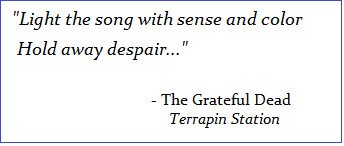
When I was a young upstart back in my college days, I was a Deadhead (for the record, I am STILL a Deadhead). What is a Deadhead, you ask? In the correct terminology, a Deadhead is one who is a fan of the music of the band known as the Grateful Dead. I attended eleven Dead Shows back in my youth, and each show was spectacular (some more so than others). What was the draw of the Deadhead community for me? That word itself: Community. Nowhere had I ever experienced a huge group of thousands of strangers all getting along like family. Peace, love, and music were the order of the day. The beliefs of many Deadheads are similar to those of Buddhist traditions, and so I was also attracted to Buddhism. The scene around any stadium headlining the Grateful Dead was surrounded and filled with drums, music, and colorful, kind people.

Lyric1


That sense of community is alive and well in the Heart of Seoul at the Lotus Lantern Festival, which is held every spring to commemorate the birth of Buddha. There really is no better time to be in Seoul as the air is fresh, the temperature is perfect, and the festival is preceded each year by the hanging of colorful lanterns all around the city. Walking around Gwangwhamun, Insadong, and the Cheonggyecheon stream (all centrally located) during the springtime just makes a person happy – at least, it always made me happy. The colorful lanterns strung along the roadways, and the larger lanterns floating in the stream, along with Gyeongbokgung Palace, the statues of Yi Sun Shin and King Sejong, and Jogyesa Temple, one of the most significant Korean Buddhist temples… there is a lot to see in this part of Seoul. And the Lotus Lantern Festival ties it all together just beautifully.

Pic11


The festival officially begins on April 8th of the Lunar Calendar, and commences with the traditional lighting of the Jangeumdang at Seoul Plaza. This large lantern symbolizes Buddhism and the enlightenment of the Buddha. The festival features weeks of programs in which anyone can participate on any given day, including cultural performances, traditional dances, foods, and booths for making Buddhist art and your own lotus lantern. And, of course, there is the main event – the large Lotus Lantern Parade that runs from Heunginjimun Gate in Dongdaemun to Jogyesa Temple. This is easily one of the largest parades I have ever seen. It gives the Thanksgiving Day Parade in New York City a run for its money. It is preceded by Eoulim Madang (Buddhist Cheer Rally) and culminates with the post-parade celebration in front of Jogyesa Temple (near Bosingak, AKA "the Big Bell", for those of you familiar with Seoul). The festive atmosphere of this celebration draws people from all over the world, and quite a few Korean celebrities make appearances on the big stage as well. Based on my six years of attending this parade, I would say the best place to view it would be on Jongno, near Jonggak subway station on Line 1.

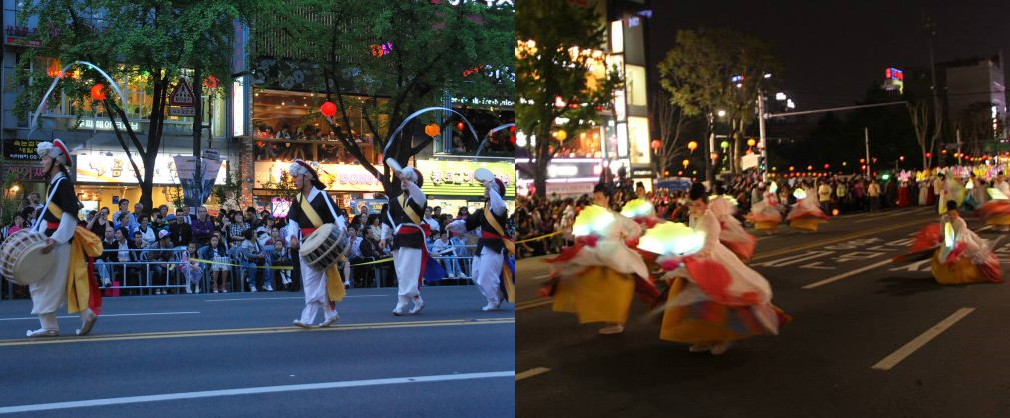
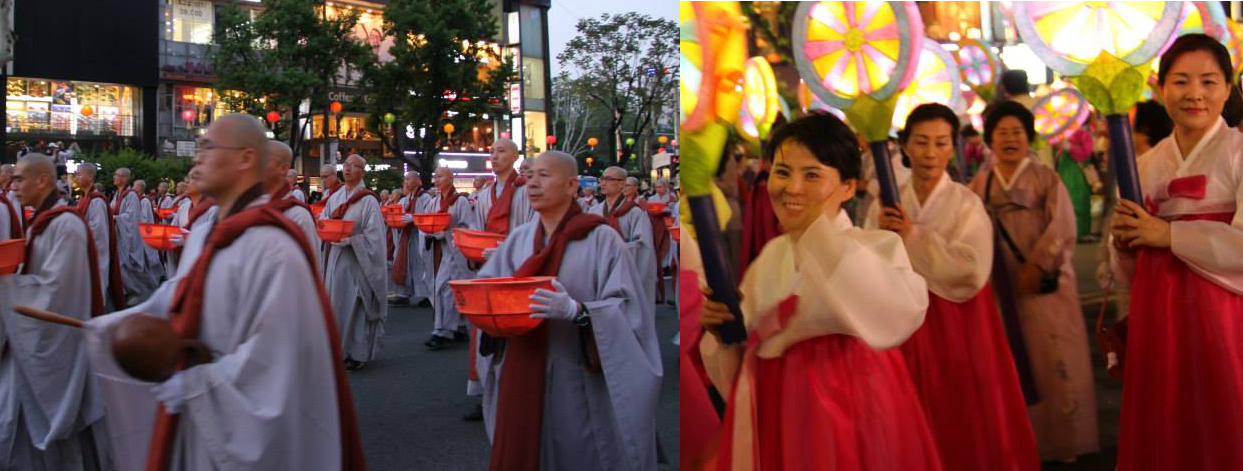
The atmosphere of this parade is peaceful, joyous and vibrant. The music, the drums, the brilliant and colorful lanterns and people, many in traditional dress… it is something to experience. There is just something about wave upon wave of Buddhist monks strolling past you, holding lanterns and smiling, some beating on gourds or drums or bells, mixed with dancers and giant lanterns of stunning colors, as drums and cymbals and other accoutrements ring in the night air, that seems to drive away any and all bad luck or ill vibrations you may have collected over the past year. You can't help but smile and wave at the parade participants as they smile and wave at you.

[caption id="attachment_1413" align="aligncenter" width="994"]pic2 Photo courtesy of www.peninsularity.com[/caption]

The lanterns are made of hanji, or hand-made Korean paper, of the most striking colors, and the warm glow of the lights within create a visual marvel with each passing sight. Each elaborate lantern float tells a story, depicting royalty, elephants, tigers, a few fire-breathing dragons and weird peacock-like birds flapping their wings and spreading their resplendent tail feathers to the delight of the crowds of onlookers. Children run down the street, trying to keep up with their favorites, and parents rush to get their cameras ready. As with most parades, the children also get to collect some candy, and the luckier children may even get a lantern or two of their own to take home.

pic3


The radiant lantern floats and the myriads of hand-held lanterns in between turn the entire road of Jongno into a seemingly endless river of colored light. You can watch from street level or go up into the buildings for an aerial view from one of the many restaurants and pubs that can be found along the parade route. The parade is long enough that you can explore and enjoy many different vantage points. As you walk down the street – the lights, music and the overall peace of Buddhism all around you – smiles abound. And if you miss a picture of a float going past, don’t worry. They are on display in front of the temple or at the end of the parade route at Jonggak, and you can get some great up-close-and-personal shots.

lyric2


The magic of the event is palpable. Even as Korea moves closer to its rainy season at this time of the year, for some reason it never rains on this parade. Deadheads would liken this to what we called "Karma Pooling" – the idea that if enough people at a concert wanted to hear a particular song, they just had to sing it in their heads and the Grateful Dead would inevitably play it. Here, at the Lotus Lantern Festival, the collective will of the people combined with the good Karma of the scene keeps the rain at bay.

pic4


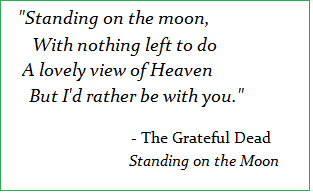
This will be the first time in six years that I will miss this event, and I have to admit, just thinking about missing it is making me sad. It is just such a beautiful thing to see, and a beautiful time to be in Seoul, and I don’t like feeling far away. So I will wrap up this article with a hope that, if you haven't already, you will get to experience this amazing event at some point.  I will leave you with one final piece of a song by the Grateful Dead:

lyric3


Watch: Video of Lotus Lantern Festival from IDC Crew


Wednesday, March 12, 2014

How I (Almost) Became a Korean Pottery Fiend---and Why You Should, Too

This is supposed to be an article about Korean pottery. To be honest, my closest association with traditional Korean pottery was posing for pictures next to the infamous kimchi pots at the entranceway to Haebangcheon, known simply as HBC to the widely diverse expat community that lives there.

pottery1

In recent times, and largely due to the foreign influence of that tiny area beneath the shadow of Seoul Tower, this neighborhood has become known as the HBC Arts Village to the Korean tourism bureau. Although I frequently encountered these familiar stacks of pots, which have become a landmark to expats in Seoul, I was fortunate enough to visit several of Korea’s museums to see the more elaborate representations of this impressive creative process.

Of all of Korea’s wonderfully innovative artistic endeavors, there is none with a richer history than pottery. It really is exceptional, and if you watch the video, you will see that it is not so easy to create. It’s not like two guys sat down at a pottery wheel and just threw some clay together. Look at that shape; the contours; the edges; the balance. Look at the design and the emotion that… well, OK, maybe not in this video. But the tradition of Korean pottery goes back for centuries, and it is a skill that has been handed down in many forms, and these forms are loosely classified into the styles of the three Korean kingdoms: Goguryeo, Baekje, and Silla.

As far back as 57 BC, the people of Korea were forming various types of ceramics in numerous kilns. Mostly they consisted of common-use houseware items, but they also included artistic pieces featuring royal figures, horses, and Haetae.

During the Silla period, pottery was simple in its design, but over the years the potters developed new styles along with new types of glazes. They also developed better types of clay to be used on their potter’s wheels and in their hand-sculpted pieces. Celadon glazes gave a greenish hue to some of the pottery that was greatly prized in many Asian cultures, largely because of the demand by Buddhist traditions. This style of ware is created by adding a bit of iron to the pottery before glazing. During the firing process, the iron interacts with the glaze, giving the finished products a wide range of green-tinted finishes. This color made this type of ceramic one of value because it not only resembled jade, but traditional beliefs held that the ceramic would change color if poison foods touched it, so there was a safety feature involved.

Over the years, different artistic styles developed, new shapes evolved such as the popular gourd-shape, and elaborate motifs featuring animals such as birds, deer, horses, or fish often adorned the pottery. Celadon versions of this style are called cheongja, while pottery made from high-grade white clays, glazed with feldspar, are called Baekja. The popularity of Baekja peaked just before the rise of the Joseon Dynasty.

pottery2

Goryeo porcelain was usually used for smaller, more stylized ceramic items, such as incense burners or tea cups, and ran the gamut of colors that included shades of brown to almost black. Celadon glazes were used to highlight various changes in the shading of these items, which were often modeled after birds, insects, flowers, and geometric shapes. The influence of Confucianism, however, lent a more simplistic style to Korean ceramics, including a rise in the amount of white porcelain produced.

The Joseon Dynasty produced some of the more spectacular works of pottery and ceramics, and the styles became much more elaborate and colorful, not only in the design but also in the decoration. These were considered the height of the culture, and many art historians today refer to this period as the “Golden Age” of Korean pottery. This is thought to be due to the use of chambered climbing kilns, a few of which can still be seen throughout Korea in traditional folk villages. As a result of new styles, glazes, clays, and kilns, Korean pottery became famous and highly sought-after, particularly in the Busan region. Many quality ceramics found their way to Japan, either through trade or outright theft. Korean pottery was so valued, in fact, that the Japanese were known to actually abduct entire families of potters in order to get their hands on these wares. Who would have guessed the Japanese were such pot-fiends?

pottery3

Several beautiful examples of the original, traditional Korean-style ceramics are on public display in Korea’s many museums. If you happen to be in town, we highly recommend taking a day or two to visit some of these places to see the many products of this amazing hand-craft for yourself. If your travels will miss the Land of the Morning Calm, you may yet have a chance to view some of these stunning works as the museums often arrange international tours of many of Korea’s cultural artifacts. But take my advice – see them in Korea. It is a place not to be missed.