Showing posts with label facebook. Show all posts

Thursday, November 20, 2014

France's Apéro Géant: Cultural Events Fueled by the Internet

Today's world is a world of our own making. It is very exciting to be a participant in globalization. We have the good fortune to see the people of the world growing closer despite geographical limitations. We are using the Internet and mass communication to reach each other in ways we never imagined before. But are we doing it right?

In 2010, the world's tallest building opened in Dubai. Chile experienced an 8.8 magnitude earthquake. Eyjafjallajökull erupted in Iceland, closing much of Europe's airspace. California's Proposition 8 was overturned.

Meanwhile, in France people were worried about the dangers of eating snacks and having a beer outdoors.

Here in “the Hexagon,” there is a really nifty custom called the “apéritif.” It's one of those not-so-easily-translated-into-English words that one sometimes hears about. The reason it isn't so easy to translate is that it refers to an event in which English speakers don't ordinarily take part. Imagine you've been invited to the home of a French friend or colleague. They tell you that you'll be having lunch, and instantly you think “Okay, I'll have a sandwich and perhaps have a cup of coffee with them.” When you arrive, they sit you down and pass around some bowls of nuts, crackers, chips, or what have you.

You feel betrayed. You wonder where lunch is.

[caption id="attachment_3294" align="aligncenter" width="530"]"I was told there would be food." "I was told there would be food."[/caption]

They start to ply you with alcohol: “Here, have some red wine. Now try the white wine. Would you like something else?” and, with your stomach being mostly empty, you start to feel the alcohol affecting you. Suddenly you are oh-so-sociable and your French is better than it has been in years. Then, everyone sits down around the table and they start serving actual food.

This is what I think of when I think of the apéro, as it is called in short. Of course, I am an outsider looking in on the customs of another culture, so don't consider me an expert. As I see it, the apéro is the moment when everyone is waiting for the chicken to finish baking. We start drinking a bit and eat some savory snacks. It's like warming up for a long run, except you'll be horribly bloated at the finish.

One day, as I did every day, I walked through the town where I was studying and approached the local castle (cool, I know). Normally on a beautiful spring day, I'd walk through the tranquil grounds, drinking in the sights and sounds of gravel crunching underfoot, birds chirping in the trees, and the sun shining on the grass outside the walls. On this particular day, however, the grounds were absolutely covered with bodies all busy drinking and snacking on treats.

While marveling at the strange and wonderful sight, I suddenly noticed an armored vehicle at the perimeter, surrounded by police officers in riot gear. I didn't know what was happening, and as far as I knew, it was the strangest riot I had ever seen, given that everyone looked so very jubilant.

Later, I learned that what I had seen wasn't a mass of people angrily protesting something. I had witnessed an apéro géant (giant apéritif). It's the same idea as the apéritif I described before, but this time, it was in public, and with hundreds of people.


4463047699_7425515639_o


A few years ago in France, young people began taking advantage of Facebook to communicate to one another the locations and times of these apéros géants.


In the US, public intoxication is a punishable offense that is taken very seriously. In many other countries around the world, however, it's just fine to drink yourself into a stupor and talk to pigeons, stare at the sky, or play a board game in the park- whatever you'd like to do, unless it isn't breaking a law like stealing or breaking-and-entering. It's also illegal in France, but I doubt that I'd be arrested for stumbling along the street on my way home here. Perhaps a more relaxed treatment of public intoxication enabled this kind of event to expand?


[caption id="attachment_3296" align="aligncenter" width="480"]"I don't care if you think it's weird; he understands me." "I don't care if you think it's weird; he understands me."[/caption]

As we communicate more easily, we can begin to see this communication affecting our cultures and the way we interact in them. This is exciting and dangerous. While the apéro géant is a nice idea- it is akin to an American college party---it does have negative aspects. Apéros géants have been used as political platforms, some of them anti-Islamic in nature. At one apéro géant with more than 9,000 participants, a 21 year old man fell from a bridge he had climbed. He later died as a result of his injuries. At a different apéro géant, three men were arrested on charges of having raped a 17 year old Irish girl.


Under current French law, apéros géants are treated as public gatherings that can be regulated according to laws designed to maintain public order. In order to host one of these events, someone must first declare her or his plan to host it and may be held responsible for the conduct of the participants. The host(s) must sign their name(s), include the names of participants, the motivation for holding the event, and might even be required to include an itinerary. Failing to comply with the law may result in a fine of up to 7, 500 euros and/or 6 months in prison.


Should the French government have the right to limit the freedom of the people to gather for these apéros géants? Should the government be required to provide security and safety at these or other public events? Is it wrong for people to use Facebook and other forms of social media to manipulate long-standing cultural traditions? In doing so, are these traditions diluted, or are they enhanced?


What do you think?


[Click on images to find their sources; the image of the apero geant has been slightly modified for better visibility in accordance with copyright restrictions.]

Thursday, October 30, 2014

Afraid of Your Smartphone? You're in Good Company

Today, it is almost strange to see someone without a smartphone in hand, uncomfortable to be in a place where there is no WiFi, and unnerving to imagine a day without Google. Humans worldwide have become so dependent on the Internet that some don’t know what to do with themselves if they are not online. It's how they get their everyday jobs done; how they learn, read, figure things out; how they connect with others in their daily lives. But while there are billions of people who heavily rely on the Internet as a main resource for jobs, daily tasks, and communication, there are hundreds of sub-cultures that do not wish to connect with others online. This article will explore some of those sub-cultures and the possible reasons that technology may not feature in their everyday lives.

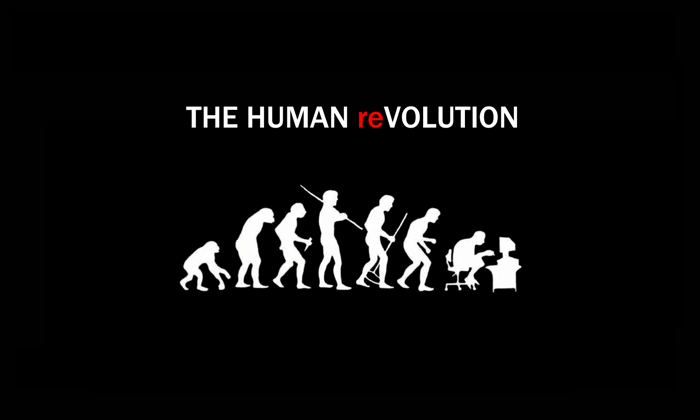
IDC - revolution

They Just Don't Know
For one, some people don’t use social media networks like Facebook or Twitter, use a smartphone or computer, or even use the Internet at all simply because they don’t know how. Some people just don’t have the resources to get onto the Internet; some have never even heard of it. Have you seen the movie Avatar? Pre-industrial societies like the Navi do indeed exist in small corners of the human world, and for them, the Internet may seem like something akin to interstellar flight or cold fusion to us. But for those who have access to the Internet and or smartphones and just don’t know what they’re doing will sometimes just give up and result back to a more simpler way of dealing with social interaction, like, you know, in person.

Private People
Some people want to protect their privacy, and, let’s face it, social media networks are essentially online phone books connected to a server. Even photo-networks such as SnapChat save your ‘timed out’ photos to their server. This might freak a few people out, especially if they are trying to apply for a new job or want to hold their current position. People will protect their privacy online by using a different name or pseudonym, different pictures to represent themselves such as anime characters or pictures of trees, etc. There are also the people who choose to get rid of technology all together to protect themselves and/or family members from a previous stalking or abuse situation. However, the small font warnings about Privacy settings that come with smart phones and online social media networks don’t always attract the human eyes. It is so important to review your current privacy settings and remember to never share too much information. Example: Don’t tweet or post “I’m home alone tonight” when you’re privacy settings are set for public viewing. People get stalked this way.

The Religious and the Anarchists of Technology
People from long ago and until this day have continued to hold various religious convictions against technology. These sub-cultures find that technology will ruin a community and mankind. Modern-day transportation and gadgetry really started taking off during the Industrial Revolution. During this time, a group of British lads and ladies known as the Luddites held social stances and techno-anarchist schemes against the engineering of technology as they longed for a simpler and more pastoral life. Machines that replaced human hands and hard work left many jobless and frustrated. Those same machines were attacked and left broken in many cases by the anarchists of technology. A more calm example of people who choose religion over technology are those of The Amish cultures of today. The Amish still prefer a life more pure and precious, one without violent media and dirty rap.

IDC - Luddites

Technophobics
People are just plain scared to get involved. Really, Technophobia is a term used to express both the fear and dislike of technology. It started with the Luddites during the Industrial Revolution. The fear of technology grew even more around the world after weapons of mass destruction were created and used during World War II. It has been depicted in films like Frankenstein, Fern Gully, Skynet, The Terminator, and Demon Seed that technology is something to be scared of. Whether it is a lightning bolt that awakes a dead man, a poisonous tractor that kills forests, a half-robot half-man that kills human beings, or a computer that becomes a human – they all mean the same thing – never underestimate the power of technology. Not only in fictional films are computers, phones, machines and digital systems taking over. In reality, all of technology has taken over the world. It has replaced the gumption in humans to sit up and find a real book. It has information upon information upon lost photos and messages stored in servers and now the Cloud! Even worldwide famous band U2’s latest album became lost in a Cloud, (yes, there are multiple Clouds) and was instantly on everyone’s smartphone, for free. Do any of us really even know what the Cloud is, or how many there are? At times, I even find myself fearful of technology; what it has done to our world, the way we communicate, and a possible future online war. Technology gives me anxiety. Am I technophobic?

Anti-Time Wasters
Some people won’t use Facebook, smart phones, or the Internet at all simply because they think it’s a waste of time.  For instance, why spend your entire vacation snapping photos and uploading them to Facebook; updating Twitter about your cat and Justin Beiber; gawking at YouTube videos for two hours… the agony! Spend time enjoying REAL LIFE happening around you! I remember becoming annoyed when I’d sit down with a group of close friends to watch a movie together, and everyone was updating their statues and posts online about it. Why?! Why does it matter to Uncle Greg and Elizabeth from ninth grade what you ate today or how your dentist has bad breath? Yes, even in the exciting world of technology and the Selfie, people still really don’t care about your every day and every minute updates. Do something for someone else instead. Get offline and smell the air, pick up a leaf, paint a picture, make up a new dance. When I say ‘People’, I guess I mean ‘I’. ‘I’ don’t always believe that the Internet benefits everyone, especially when meditating on time spent well. And at the same time, if we didn’t have the Internet, it would take so much more time to personally hand write and mail your letters and notes to others. This paradigm shift (return) leads to some really interesting possibilities, and I’d love to see what other think about the communicating through the Internet, online social media networks, and smart phones: Is it more of a time-saver or a waste of time?

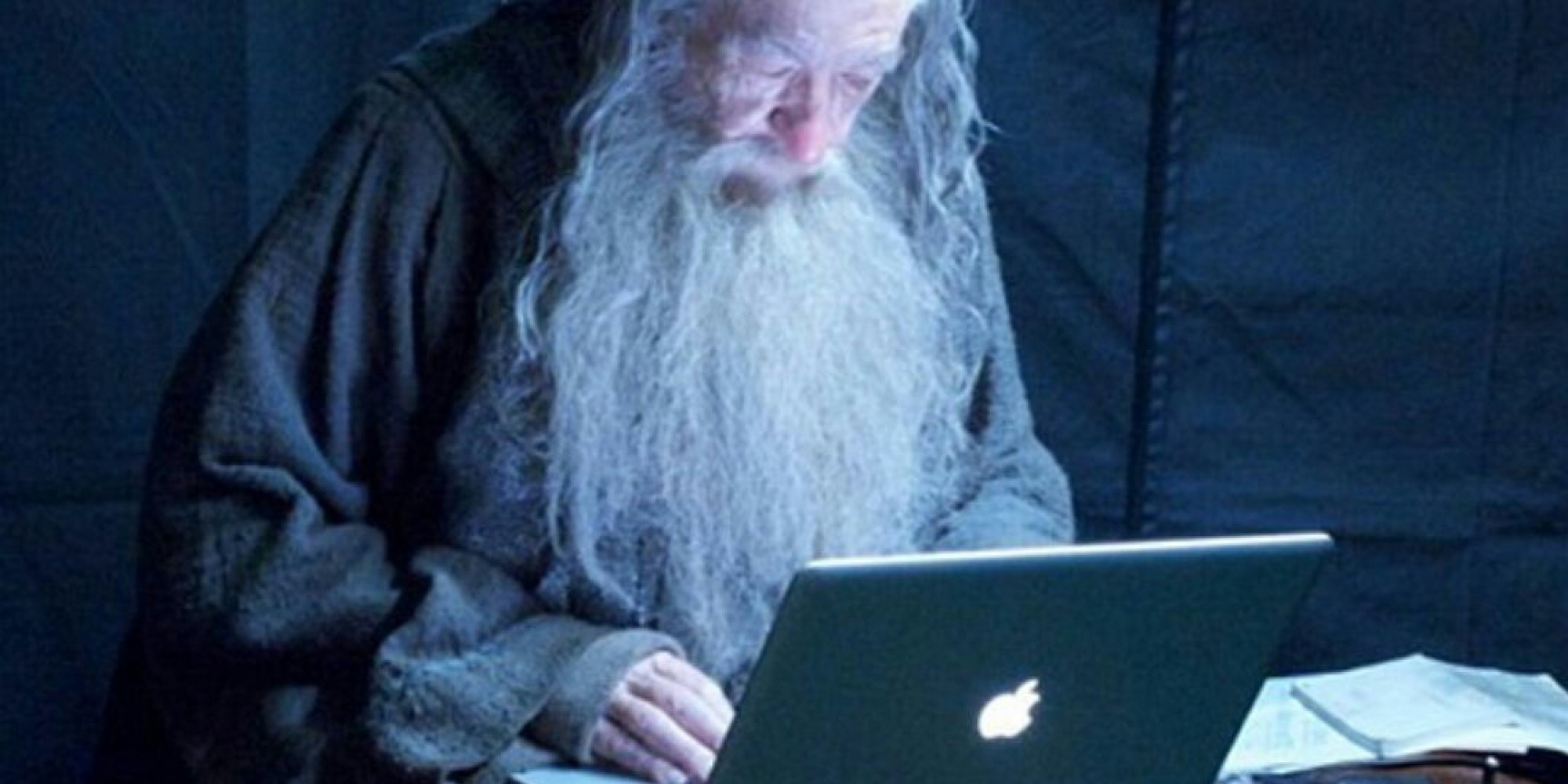
IDC - Gandolf

Do you think you could go a day without any online communication or updates?
How about going a day without the use of any technology at all?

Monday, October 27, 2014

Korean Memes vs. American Memes

Meme – n. a cultural item in the form of an image, video, phrase, etc., that is spread via the Internet and often altered in a creative or humorous way. (dictionary.com)

Memes are designed to make us laugh. But depending on where you’re from, some memes will have you gasping for air, and some will simply not resonate. While some cultures have different perspectives on what's funny or not, some memes just simply have people xD/MDR/ㅋㅋㅋ/LOLing anywhere in the world. I’ve had a lot of trouble getting Korean people to laugh at some of the memes from America, and vice versa, but sometimes I would hit the jackpot and have both the East and the West bursting out in laughter. Let's take a look at  some of the similarities and differences I found between Korean and American memes, and how the Korean and American people are wired when it comes to comedy.


  1. Pop culture


    The biggest contributors to memes are figures from pop culture. In Korea, celebrities such as Yoo Jae-Seok (유재석) or Park Myung-Soo (박명수) are used to deliver image-based memes. They're the icons of Korean comedy, and their notorious for their starring roles in Infinite Challenge (무한도전). Viewers really like the show. And when I mean "really like the show," I mean eight years worth of liking the show. The first episode aired in 2006, and the program has been running nonstop ever since.
    In America, a series has seasons like Seinfeld, Modern Family, or Community. But Korea doesn't have seasons. They just run the show every week until it finally dies out on its own.
    As the title says, Infinite Challenge has endless obstacles for the cast to overcome, and in their quest to overcome these challenges, they often find themselves in humorous situations. In their horror specials (much like The Treehouse of Horror on the Simpsons), they go through a maze filled with ghosts and other scary monsters, hoping to complete the tasks assigned to them. One of the more memorable episodes had a member of the cast try to balance himself on a surfboard, but he failed miserably. Koreans especially love laughing at comedians performing body humor, so when they see some of their favorite comedians getting hit on the head, falling down, or making weird funny faces, they can't help but laugh.

    [caption id="" align="aligncenter" width="320" class=" "] "Shut up" - Yoo Jae-Seok[/caption]

    At one point, Chuck Norris was all the rage in America, and recently, Jonathan Goldsmith is the biggest image for memes in America. While Korea loves slapstick comedy, Americans can't help but poke fun at almost anything which can range from politics to celebrities. America doesn't rely heavily on body humor, and thus, anything can be used for satire or parodies. Go ahead, name anything in America that people haven't already tried to make fun of. There are thousands of videos about racism, even when human rights activists try so hard to promote equality. Just watch an episode of South Park, and you'll have a general idea of how anything can be used for humor. I didn't think anyone could or would use Christopher Reeves (Superman) as the butt of their joke, but alas, I stood corrected.
    The Daily Show and the Colbert Report are really popular because they can find the humor in anything such as mainstream news medias like Fox News. And there are many other shows that satirically comment on social issues like racism and politics which show Americans generally find humor in situations that don't seem to be funny on the surface. But when American humor digs under that surface, they can laugh at what they find.

    [caption id="" align="aligncenter" width="320" class=" "] Chuck Noris just got served, which is funny 'cuz he's the one that's supposed to be serving.[/caption]

    Though the content may be different, the fact remains pop culture plays a big role in memes. It’s the biggest common factor to which almost everyone can relate. It’s easy to recognize and deliver to audiences, which in turn, goes viral. However, the same cannot be said about…


  2. Video-based memes


    Vine, an app that allows users to shoot a 6 second video, is one of the most popular mediums to deliver short funny videos in America. Koreans, however, rarely use the app. Instead, they cut out certain scenes from sketch comedy programs like Gag Concert or dramas. There aren't many original videos Korean people make. In fact, many of the memes Korean people share are actually ones from abroad, and even then, they're usually videos about people getting hurt or some form of slapstick. There is only so much slapstick people can do without landing themselves in a hospital ward. Thus, most video memes go viral in Korea if they can provide body humor, to which Koreans are so accustomed.
    [youtube http://www.youtube.com/watch?v=0itk4pUcIvA]
    On the other hand, a lot of the video memes in America are shot by average people hoping to go viral. They have a lot of material to their advantage such as other videos taken from movies or even news footage. One of the most famous to spread throughout the Internet at the moment is the P-O-P clip, in which a young woman leaves a message for her mom and crew as she is hauled away by the police. It's funny because she tries to act tough while in handcuffs, but suddenly breaks down as she gives a shout out to her associates. In America, almost anything and anyone can be used to deliver humor, whereas in Korea, it would be taboo to speak out (even comically)  against social issues.
    [youtube http://www.youtube.com/watch?v=9-rVEs5RLZQ]
    Whether or not the video revolves around slapstick, parody, or satire, these clips need to be delivered. And the best way to spread these memes are…


  3. Facebook and You Tube


    I’ll admit I probably couldn't live without Facebook. I probably check my wall every thirty minutes or so. When I do scroll through Facebook, I generally find myself lost in an endless maze of videos. Sure, Facebook is popular in America, but it’s the biggest growing social network in Korea, and almost everyone has an account. Seven years ago, everyone I knew in Korea had a Cyworld account, but by 2010, they had discarded that social network for Facebook. Back then, everyone would ask for their Cyworld address, but now, they ask whether you're on Facebook or not. Another big distributor of memes is You Tube.
    [youtube http://www.youtube.com/watch?v=wLL2EAR5Yjg]
    Though the contents people watch are different in Korea and America, if anyone needs to find a video for anything, they go to You Tube. The top You Tube videos in Korea are usually clips from TV programs.
    [youtube http://www.youtube.com/watch?v=9v9sMU3FrDg]
    Americans can use almost any video to set as a meme, so there are no guarantees for what will be the next big thing to go viral. Who knew a chubby little kid would obtain notoriety as he gracefully showed the world his refined swordplay with a fake lightsaber?
    [youtube http://www.youtube.com/watch?v=HPPj6viIBmU]


Memes put a smile on our faces when we’re procrastinating at work, studying for mid-terms, or just generally when we’re faced with boredom. And they’re a great way to spread humor and laughter around the world, especially with the global connections we have today. Though memes vary in each culture, the slow yet gradual overflow of one culture’s memes into another will help us to laugh together, regardless of distance. With all the conflicts and issues throughout the world, wouldn’t it be great to have some humor to uplift this gloomy atmosphere? After all, laughter is the best medicine.

[youtube http://www.youtube.com/watch?v=-iz_mVgEzqg]