Showing posts with label Technology amp; innovation. Show all posts

Thursday, October 30, 2014

Afraid of Your Smartphone? You're in Good Company

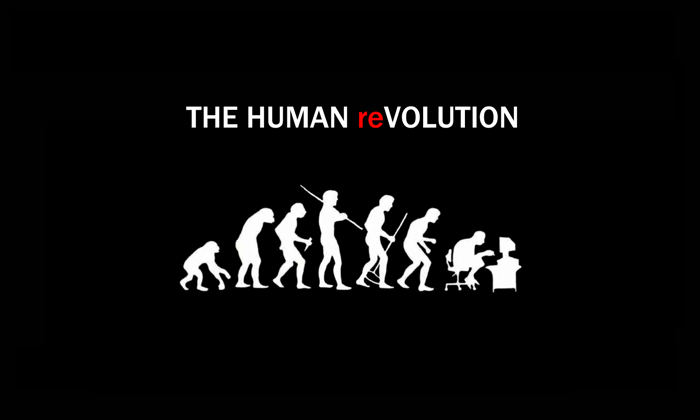
Today, it is almost strange to see someone without a smartphone in hand, uncomfortable to be in a place where there is no WiFi, and unnerving to imagine a day without Google. Humans worldwide have become so dependent on the Internet that some don’t know what to do with themselves if they are not online. It's how they get their everyday jobs done; how they learn, read, figure things out; how they connect with others in their daily lives. But while there are billions of people who heavily rely on the Internet as a main resource for jobs, daily tasks, and communication, there are hundreds of sub-cultures that do not wish to connect with others online. This article will explore some of those sub-cultures and the possible reasons that technology may not feature in their everyday lives.

IDC - revolution

They Just Don't Know
For one, some people don’t use social media networks like Facebook or Twitter, use a smartphone or computer, or even use the Internet at all simply because they don’t know how. Some people just don’t have the resources to get onto the Internet; some have never even heard of it. Have you seen the movie Avatar? Pre-industrial societies like the Navi do indeed exist in small corners of the human world, and for them, the Internet may seem like something akin to interstellar flight or cold fusion to us. But for those who have access to the Internet and or smartphones and just don’t know what they’re doing will sometimes just give up and result back to a more simpler way of dealing with social interaction, like, you know, in person.

Private People
Some people want to protect their privacy, and, let’s face it, social media networks are essentially online phone books connected to a server. Even photo-networks such as SnapChat save your ‘timed out’ photos to their server. This might freak a few people out, especially if they are trying to apply for a new job or want to hold their current position. People will protect their privacy online by using a different name or pseudonym, different pictures to represent themselves such as anime characters or pictures of trees, etc. There are also the people who choose to get rid of technology all together to protect themselves and/or family members from a previous stalking or abuse situation. However, the small font warnings about Privacy settings that come with smart phones and online social media networks don’t always attract the human eyes. It is so important to review your current privacy settings and remember to never share too much information. Example: Don’t tweet or post “I’m home alone tonight” when you’re privacy settings are set for public viewing. People get stalked this way.

The Religious and the Anarchists of Technology
People from long ago and until this day have continued to hold various religious convictions against technology. These sub-cultures find that technology will ruin a community and mankind. Modern-day transportation and gadgetry really started taking off during the Industrial Revolution. During this time, a group of British lads and ladies known as the Luddites held social stances and techno-anarchist schemes against the engineering of technology as they longed for a simpler and more pastoral life. Machines that replaced human hands and hard work left many jobless and frustrated. Those same machines were attacked and left broken in many cases by the anarchists of technology. A more calm example of people who choose religion over technology are those of The Amish cultures of today. The Amish still prefer a life more pure and precious, one without violent media and dirty rap.

IDC - Luddites

Technophobics
People are just plain scared to get involved. Really, Technophobia is a term used to express both the fear and dislike of technology. It started with the Luddites during the Industrial Revolution. The fear of technology grew even more around the world after weapons of mass destruction were created and used during World War II. It has been depicted in films like Frankenstein, Fern Gully, Skynet, The Terminator, and Demon Seed that technology is something to be scared of. Whether it is a lightning bolt that awakes a dead man, a poisonous tractor that kills forests, a half-robot half-man that kills human beings, or a computer that becomes a human – they all mean the same thing – never underestimate the power of technology. Not only in fictional films are computers, phones, machines and digital systems taking over. In reality, all of technology has taken over the world. It has replaced the gumption in humans to sit up and find a real book. It has information upon information upon lost photos and messages stored in servers and now the Cloud! Even worldwide famous band U2’s latest album became lost in a Cloud, (yes, there are multiple Clouds) and was instantly on everyone’s smartphone, for free. Do any of us really even know what the Cloud is, or how many there are? At times, I even find myself fearful of technology; what it has done to our world, the way we communicate, and a possible future online war. Technology gives me anxiety. Am I technophobic?

Anti-Time Wasters
Some people won’t use Facebook, smart phones, or the Internet at all simply because they think it’s a waste of time.  For instance, why spend your entire vacation snapping photos and uploading them to Facebook; updating Twitter about your cat and Justin Beiber; gawking at YouTube videos for two hours… the agony! Spend time enjoying REAL LIFE happening around you! I remember becoming annoyed when I’d sit down with a group of close friends to watch a movie together, and everyone was updating their statues and posts online about it. Why?! Why does it matter to Uncle Greg and Elizabeth from ninth grade what you ate today or how your dentist has bad breath? Yes, even in the exciting world of technology and the Selfie, people still really don’t care about your every day and every minute updates. Do something for someone else instead. Get offline and smell the air, pick up a leaf, paint a picture, make up a new dance. When I say ‘People’, I guess I mean ‘I’. ‘I’ don’t always believe that the Internet benefits everyone, especially when meditating on time spent well. And at the same time, if we didn’t have the Internet, it would take so much more time to personally hand write and mail your letters and notes to others. This paradigm shift (return) leads to some really interesting possibilities, and I’d love to see what other think about the communicating through the Internet, online social media networks, and smart phones: Is it more of a time-saver or a waste of time?

IDC - Gandolf

Do you think you could go a day without any online communication or updates?
How about going a day without the use of any technology at all?

Wednesday, October 29, 2014

Net Neutrality: Which Side Are You On?


Net Neutrality – the who, the what and the where


Net Neutrality is a modern phenomenon that has been under the public microscope since the term was first coined by Tim Wu, a law professor in Virginia, U.S.A, in 2003, more than a decade ago. He was aware of the growing conflict between the public and the Internet providers, each with their own motivations and intended uses for this growing technology. In a nutshell, Net Neutrality is letting the Internet remain as is---a free field of communication. However, I.S.P.s (Internet service providers) and broadband companies like Internet giants Verizon in the U.S. are trying to reduce this freedom. They want to create an uneven field in which certain, more popular websites and channels could be accessed more quickly than ones in less demand. This means that the broadband providers will fast track these routes whilst slowing down others. The users---the consumers---will have to pay for this quicker access. With this in mind, I.S.P.s could slow down or even block sites and channels according to their whims. Now (excluding money-hungry broadband providers) who on Earth wants that to happen?

What’s all the fuss about?


So what is all the fuss concerning the Net? What is there to debate? It seems most people are somewhat unaware of the conflict. Yet. I think most people just want the Internet to simply remain as it is in its current form. Humans tend to hate stuff that disrupts our lives. If Net Neutrality hadn’t been present from the start, then perhaps we wouldn’t be having this debate at all; it is because of its potential introduction that we are worried. Imagine visiting your favorite park for ten years and then being told one day that you would either have to pay to enter or else you would have to use the back entrance a few miles away. You’d be certainly annoyed, wouldn’t you? But if you knew the situation from the start, it wouldn’t be so bothering, right?

Take another example. In Ireland this year, household water charges were introduced. This means that the Irish public will have to relinquish their right to free water use at home and will now have to pay an annual cost, depending on usage. Most countries have water charges already in place, but it is the introduction that has led the people of Ireland into protest and disgust at the government.

If alcohol was invented today, would it be legal and sold in stores worldwide? Cigarettes? Of course not, but because they have been around for so long, they are enjoyed legally by potential addicts and cancer patients the world over. It’s the unwanted, ‘unprecedentedness’ of Net Neutrality that would cause debate among nations, governments and mostly their publics. When we get used to having something so good on tap, we don’t want anything to change too greatly, be it water, beer or in this case, the Internet.

Why is the debate growing?


Net Neutrality, pros and cons

After more than ten years passed since the topic first arose, we have seen the availability and uses of the Irocket. ‘Convergence’ in technology is a key aspect. This has lead to the consumer being able to use Internet not just on a PC at home, but also on her phone, laptop, in the car, in the bathroom and even on a plane. The suits need to check their email constantly. Young adults are watching Netflix and addicted to Facebook. Teens are watching porn, playing games and following celebrities. We all need the Internet.

The whole debate on Net Neutrality brings the entire role of the Internet in our lives into question. Is the it just another product akin to TV and cable? Most households in the developed world are willing to add an extra fee to their monthly cable bill in order to watch more sports and movies. Premium football games and the latest movie releases. So why are YouTube, Facebook, Skype and other mega Internet pillars any different? These sites have cost millions of dollars to develop and a vast amount of ingenious brain power to engineer. Why should we be allowed to consume these things for free? Look at Skype and Facebook: They have connected us to our families and friends at next to no cost. Should we hate Internet providers for charging us a few dollars extra for such an incredible facility?

On the other hand, is the Internet more than just a service nowadays? Is it something we could choose to live without or has it become so integral, that to disrupt it in some way, would genuinely harm people’s daily welfare? The Internet itself is arguably humankind’s greatest invention.

Although I can understand business minds want more return on such a wonderful product, personally I think it should remain as it is. The Internet has changed the world immensely. Each website should be given a fair chance of being discovered and becoming the next sensation to captures the public’s eye (case in point: idigculture.com).

[caption id="" align="alignnone" width="429"]angry ugly man! Favorite website seem a little slower? Seems we need net Neutrality![/caption]
Tuesday, October 28, 2014

Curb your enthusiasm: Korean internet is not all it's cracked up to be.

IMG_0744

Roughly two years ago I moved from a country where net neutrality is implemented by law (the Netherlands) to a country where the freedom of the Internet is under pressure (South Korea). It has been a world of difference using the Internet in both of these countries. To give a feel for how bad the situation really is in South Korea, I will first describe the situation in the Netherlands as a contrast.

The history of how net neutrality in the Netherlands came to be is a fairly recent one. I vividly remember the time when the news leaked that one of the Netherlands' biggest Internet providers had admitted to its investors it was using a technique called Deep Packet Inspection (DPI), with which they could differentiate what the customer was doing on their network. Basically it meant the company was spying on its customers. The plan was to charge extra for certain VoIP and message services because the company was losing money due to decreasing use of SMS and regular calls. The indication that they soon had to pay extra for their WhatsApp use was too much to handle for the Dutch, being the frugal people that they are, and caused such an outrage that the telecom company had to cancel its plan to use the technique. In addition, the Dutch society is also an open one where everybody has the right to express themselves and press freedom is being held in high regard. Therefore, the more informed people worried that the Internet would be controlled by several companies. With these two main arguments, the people urged the Dutch political parties to take action. On 22 June 2011 the Dutch parliament decided to include net neutrality in the new telecom law, and by ratification by the Dutch Senate on 8 May 2012, the Netherlands became one of only two countries in the world (the other being Chile) where net neutrality is guaranteed by the legal system. Thus mirroring the democratic principles of Dutch society in cyberspace.

The benefits of the Dutch net neutrality law for the consumer are many: Internet providers can't limit or charge extra for certain services, the contents of your Internet traffic can be accessed by your Internet provider only in certain extreme cases, your Internet connection can be disconnected only if you don’t pay your bills or you commit fraud, and you have to give explicit permission to let tracking cookies be installed on your computer, which in turn makes it difficult for advertisers to track your behavior on the Internet. All in all it was and is a huge victory for freedom on the Internet. Although at the time I realized to some extent that this was a big deal, since roughly two years I really know by experience how fortunate the Dutch are.

When, in August 2012, I moved to South Korea, which has a reputation of being the Internet capital of the world, I thought I was going to live in the Valhalla of the Internet. Due to several news stories, I thought positively about the South Korean Internet, which seemed to dazzle the world with not only the fastest download and upload speeds around but also nearly universal LTE and WiFi accessibility. Unfortunately, there are some aspects of the South Korean Internet that don't get the attention that they deserve in the news, because of the focus of Western media on the speed of the Internet here. I quickly found out that a new 5G network isn't the most important thing about Internet usage.

A fast Internet connection doesn't get you anywhere if you're not able to access everything you want. Sadly, like in the Netherlands, South Korean cyberspace mirrors its society as well. Internet censorship is common: blocking everything from North Korean sites and materials harmful to minors to pornography and even simple nudity. If the government deems it inappropriate, you won't be able to see it without using a workaround. Unfortunately, blocking some sites is not all the government does; commenting on the Internet isn't anonymous anymore, since you need to register with your social security number to be able to comment on any Korean Internet portal. That makes it easier to extensively monitor the Internet on anti-government comments. Sometimes action is being taken to cut of the perpetrator's Internet or even making arrests in some cases. For example Chung Bong-ju, one of the four hosts of the popular South Korean podcast "Naneun Ggomsuda" (나는 꼼수다) and national lawmaker at the time, was found guilty in 2011 of spreading false rumors, accusing then-presidential candidate Lee Myung-bak in 2007 of being affiliated with a company that forged stock prices. Critics have claimed that it was a political motivated sentence, because of its timing just before the presidential elections. The podcast was a very influential channel of anti-government views. All of this is very serious, but the by far most annoying thing on the Korean Internet ever is Active-X.

The country that has the reputation to be years ahead in technology relative to the rest of the globe relies on this archaic 90's program for its entire e-commerce economy. Forget buying something on your iMac if you're not willing to partition and install Windows as well. Not only that, Active-X is Internet Explorer only, hence the biggest market share of Internet Explorer in the world. Being the Apple fan boy that I am, this frustrates me immensely. I refuse to install Windows on my iMac and if I would, I don't want to have anything to do with Internet Explorer. Fortunately, I have a workaround: if I spot something I want, I'll ask my wife to buy it at her office where she uses a Windows machine. Also I found a bank that has Internet banking for OS X. Well, had Internet banking for OS X.

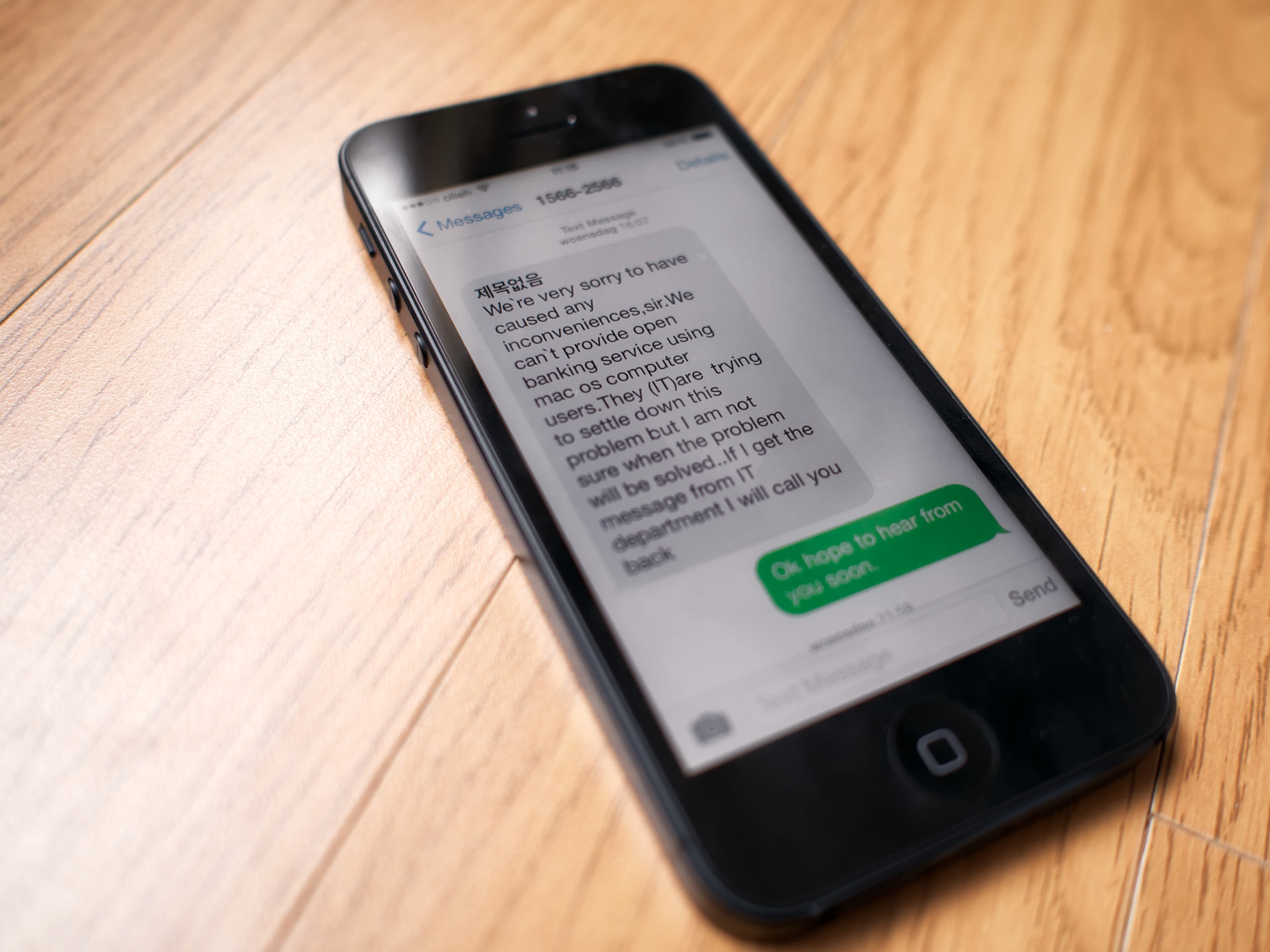
As a Mac user, you're such a rarity in this country that you're met with a lot of misunderstanding and disbelief. When my bank updated their security protocol they somehow forgot that they used to support OS X as well. As a result the site stopped working on an Apple computer and I had to contact the bank's service center. Their solution was to take over my computer to take a look by sending me an .exe file. When that didn’t work they were genuinely surprised and apparently had no alternative way to access my computer. Not much later after the service center employee promised me she would get back to me and hung up the phone, I got a message that they were unable to solve the problem. So now I have to use my workaround for my Internet banking as well.

iPhone bank message

Having lived here for two years, I now know that not South Korea, but the Netherlands is the real champion of the Internet. Although the overall Internet speed isn't as fast as that of South Korea, it's close enough. There is no monitoring, no blocking (although there was one issue with Pirate Bay being blocked), and no Active-X. All government websites have to be accessible by all major browsers and all purchases can be done with any operating system. You can criticize the government without being afraid of being cut off from the Internet. While Dutch cyberspace is a free and open world, South Korean citizens have no access to unfiltered Internet. I have not been homesick often in the two years that I lived in South Korea, but when I stumble on news of Internet censorship being used or when I get confronted by the limitations when browsing the web on my iMac, I long for the possibilities of net neutrality in my own country. I secretly wish South Korea would implement it too. Unfortunately, with democracy more and more under strain, I don’t see that happening in the near future.

Sunday, July 27, 2014

Permaculture: A Growing Alternative

A good friend of mine relocated to South America this year. He went to join a revolution. Not a local revolution, like some might picture when they think of South America. No one is sitting around a campfire with their cuerno de chivo (AK-47) slung over their shoulder, singing ABBA’s ‘Fernando’ as they drink tequila. The revolution my friend went to join is a global revolution – a revolt against the perceived rise of a global corporate dictatorship. He got tired of complaining about companies like Monsanto and GE raking in multi-billion dollar profits while the planet and the majority of the people on it were poisoned and pillaged, so he decided to try to be part of the solution.

[caption id="attachment_2138" align="alignnone" width="237"]Not th Not this time, Che, you blood-thirsty bastard.[/caption]

He has settled, for the moment, near Bogota, Colombia. He has made a wide berth in his travels, even going into the jungles of Peru to take a week-long trip on Ayahuasca. Now he is getting involved in volunteer work in the area, living on a commune with some other intrepid revolutionaries, and hoping to turn the experience into a short documentary film. It may sound almost Utopian to anyone who is fed up with the current system of corrupt global governments and their greedy corporate owners.

Is it Utopian, though? How are these communes surviving? What are they doing to make the world a better place? The answer to these questions can be found in one word: Permaculture.

Thank you for reading. Good night!

[caption id="attachment_2139" align="alignnone" width="300"]A small permaculture garden A small permaculture garden[/caption]

What’s that? You don’t know what permaculture is? Well, then, read on and I will explain what little I know.

Permaculture was originally a contraction of the words “permanent agriculture,” a term that originated as the subtitle for a book published in 1929: Tree Crops: A Permanent Agriculture by Joseph Russell Smith. In the book, Smith discussed his experiments with an integrated style of farming, using the surplus of different types of crops as animal feed that would then be recycled as fertilizer and other helpful elements of sustainable farming. The book was a hit, and its methods soon spread around the world, most notably to Japan through the efforts of Toyohiko Kagawa, who introduced the idea of forest farming to the Japanese culture in the 1930s.

The idea that permanent agriculture could be sustained indefinitely was further expanded in another book called Water for Every Farm, which was written by an Australian named P.A. Yeomans and published in 1973. This book introduced an observational approach to farming, which launched an organization called Keyline Designs. The book's insights can be studied at their website.  A slew of other advocates of permanent agriculture popped up around the world, each adding their own experiments and results to the mosaic that was expanding beyond simple farming. Influences included the works of Stewart Brand, Ruth Stout and Esther Deans, and Masanobu Fukuoka, who advocated no-till orchards and natural farming techniques. The first systematic use of the concepts of Permaculture are attributed to an Austrian farmer by the name of Sepp Holzer, who began developing the idea as a holistic approach toward farming in the 1960s.

Since then, Permaculture has grown into a social movement. The term has come to simply mean “permanent culture” – a self-sustaining way of life. It is about ethics, design, balance, ecology, economy… pretty much every important aspect of life. According to The Permaculture Association’s website, Permaculture combines three key aspects: An ethical framework, an understanding of how nature works, and a design approach. It goes on to say:

 “[Permaculture] is about living lightly on the planet, and making sure that we can sustain human activities for many generations to come, in harmony with nature. Permanence is not about everything staying the same. It's about stability, about deepening soils and cleaner water, thriving communities in self-reliant regions, biodiverse agriculture and social justice, peace and abundance.”


Sounds pretty hippie-dippy communal Utopia, doesn’t it? The difference is, this system actually works, if done properly. For more detailed information on the ethics, principles, design, and practical solutions of Permaculture, I suggest you visit their website. For the short-hand version, keep reading.

The core tenets of Permaculture are caring for the earth, caring for the people, and returning any surplus back into the self-sustaining system – whether it be surplus crops, water, or waste (even poop!). Caring for the earth entails allowing provisions for all life to continue and multiply, leaving room for everything, because everything has a place in the system. Caring for the people means allowing everyone access to necessary resources – exactly the opposite of what corporations like Nestle are doing when they privatize the Earth’s water supplies. In Permaculture, everyone gets what they need to live – even medicines. On a Permaculture commune, the local pharmacy is right outside your door, growing in the gardens or in the forest around your communal village. These gardens grow traditional remedies that have been known for centuries and yet have been hidden, buried, or outright destroyed by big pharmaceutical companies who would prefer you pay them outrageous fees for synthetic variations of these same remedies rather than just grow your own. Lastly, the return of surplus means exactly what it sounds like: Recycling everything.

[caption id="attachment_2140" align="alignnone" width="300"]Medicinal garden Medicinal garden[/caption]

There are twelve design principles at work in Permaculture societies, and you can read all of them here. For a brief overview, let’s look at some specific principles. The first principle is ‘Observe and Interact.’ This means simply spending time in nature, getting to know its methods and observing how it works as one system, and then taking what you have learned from studying and observing the natural world and using it to your community’s advantage. And to think, there are some people who believe sitting in a quiet glen, watching wild flowers grow, is a waste of time! When you live in a self-sustaining community, that’s time well spent. You are no longer going to a 9 to 5 (or worse) job every day to earn credits to purchase items you need from faceless corporations that would prefer to see you dead by the time you retire. Rather, you are growing and producing those items yourself, and the more you learn about their organic nature, the more successful you will be at growing them. Think of all of the tremendous strides of human achievement that have come from people engaging in that very pastime. Aristotle and biology, Galileo and Newton with physics, Washington and his hemp, Franklin and his electricity, Darwin and his… species.

Let’s get back to Franklin’s electricity for a moment. Living on a commune does not mean you must forego all of the creature comforts of modern life. The second design principle of Permaculture is ‘Catch and Store Energy.’ Permaculture communes use electricity from such innovations as solar panels, and wind and water turbines that produce just enough power for their community. Smaller needs, smaller devices, less pollution. They are entirely off the grid. Granted, you will not spend the bulk of your free time on a couch, stuffing your face with processed foods as you watch hour after hour of reality T.V. – but ideally, you won’t want to. You will get much more satisfaction out of spending your time contributing to your community’s shared lifestyle, which means a lot more time outdoors, being healthy. After you do your share of the chores – feeding the animals or weeding the gardens – you can sit back and watch nature and society. This is the seventh design principle: ‘Design from Patterns to Details.’ This helps you find new and innovative ideas to improve the way your self-sustaining system works, giving you more time to spend growing your vineyard for a celebratory batch of wine or other herbal rewards.

[caption id="attachment_2141" align="alignnone" width="300"]The Scandinavian Permaculture Festival. Nordic hippies! The Scandinavian Permaculture Festival. Nordic hippies![/caption]

The idea is to not divide and conquer the Earth but to combine it as it was meant to be – one living organism for your benefit, and thereby benefiting the whole planet. It is about finding how nature works together, not separating it into different plots, ‘Integrate rather than Segregate’ – the eighth design principle. Putting certain crops or resources together, you develop a relationship between those things that can benefit the whole. For example, keeping chickens next to annual beds that need occasional tilling or pest control. Droppings of pigs and other animals can be shoveled into underground containment barrels to produce usable methane gas for more energy. As The Permaculture Association’s website puts it, “A healthy vibrant ecosystem is a mass of connections and relationships. That's what we are trying to create with a permaculture system.”

[caption id="attachment_2142" align="alignnone" width="300"]Who knew a chicken could be so useful? Who knew a chicken could be so useful?[/caption]

Again, you can read and watch a video about all twelve of the Permaculture design principles here, and you can get more details about the Permaculture lifestyle from the Permaculture Association website. You can also find all sorts of educational videos about this “Quiet Revolution” online, like this one:

http://youtu.be/uG2eHQ9Q078

And while you're at it, check out this video on sustainable housing:

http://www.youtube.com/watch?v=WMNzoWkXTtc

As the world moves closer to whatever cataclysm, real or imagined, that people may or may not expect – be it all-out Armageddon or just greedy corporations trying to take ownership of and sell you things that should, by right, be yours for free – Permaculture offers an option, a choice if you care to choose it. It really does mean giving up the lifestyle you may have grown accustomed to: Driving to the grocery store to pick up a pint of ice cream to eat as you sit on the couch watching Downton Abbey or whatever the devil it is you’re into, texting and tweeting pictures of yourself to all of your friends who are doing the exact same thing… but imagine, just for a moment, the peace and serenity that may come with waking up in a little apartment in a self-sustained building on a communal farm where your schedule consists of playing with some baby goats as you contemplate the way the leaves on a nearby bush collect rainwater. Or shoveling a bunch of poop into a smelly hole (hey, Utopias don’t just happen).

Utopian? Perhaps. Necessary? Well, if current reports of impending food shortages, drought, and dwindling fuel supplies are to be believed, YES. The world is changing. How it changes may be up to us. The United Nations has been aware of this since 1992. Perhaps it is about time we took the initiative to break the cycle of destruction and constant pollution that results in an ocean full of plastic trash and an irreparably damaged food chain. Either that, or let the corporations mandate who gets to eat what and for how long. And why not? Haven’t they done a bang-up job of taking care of us and the Earth since they came into power?

Permaculture. It’s a thought. I was just chatting with my friend in Colombia, and he is very happy there. He feels he is doing what he is supposed to be doing. Sure, there is a slew of old hippies, horticulturalists and humanitarians down there doing this, but there is also a steadily growing number of young people who have just reached a point in their lives where they want to tell Monsanto and the corporate toadies in government to suck it. Similar revolutions are cropping up in other countries, in Canada and around Europe. My friend keeps encouraging me to take that step off the grid and, dammit, the more I think about it… it is a thought.


"Be not a cancer on the Earth -- leave room for nature -- leave room for nature." -- Tenet #10, Georgia Guidestones.

[caption id="attachment_2143" align="alignnone" width="300"]The Georgia Guidestones. Conspiracy or Conservationism? The Georgia Guidestones. Conspiracy or Conservationism?[/caption]