Showing posts with label Middle East. Show all posts

Sunday, February 1, 2015

Hot New Sports! Come Read All About It!

This month, I Dig Culture is celebrating Sports, a rather exciting topic to tackle. Here is an opportunity to cover the history, the physicality, the winning, the losing, the traditions, and the power of sports. But, haven't we seen all of this in previous films and live broadcasts? Remember the Titans, Miracle, ESPN, The Waterboy... Perhaps what is more important is the is opportunity to share some unique sports which exist from opposite sides of the globe. For anyone who is like me and has never really cared for sports of any sort - perhaps this short article will give you a little inspiration, a little kick in the pants to care about a new sport. So, let’s explore two very unique sports that exist on completely opposite ends of the globe, shall we?

dog dancing


Dog Dancing: A Human’s Best Dance Partner?


The sport, or perhaps the art, of Dog Dancing originated in Canada during the mid-1980's. From there, the idea of dogs’ freestyling to music with their handlers quickly spread to other countries such as England, the Netherlands, the United States and various others. The dancing participants, human and canine alike, have gained popularity for their talents, tricks, and rhythmic show of companionship. How could I forget to mention the various styles of freestyle dance that the dogs and their handlers get to explore? Some of my favorites include the Salsa, Meringue, and Swing.

Uploads of previous filming induce heart-warming feelings for the goofy and cutesy routines between handler and show dog while also leaving the viewer amazed at the almost telepathic connection between the two stars. This sport not only awards its participants with physical trophies and world recognition via the Internet, but also the feeling of becoming one with your freestylin’ doggie.

To learn more about what it takes to become a world-traveling, freestyle-competing, handling team of two, view this YouTube video of trainer Carolyn Scott and her dog Rookie performing a dance routine to a song from the classic movie ‘Grease’. 

If that isn't enough, there's also an entire website devoted to dog-dancing routines.


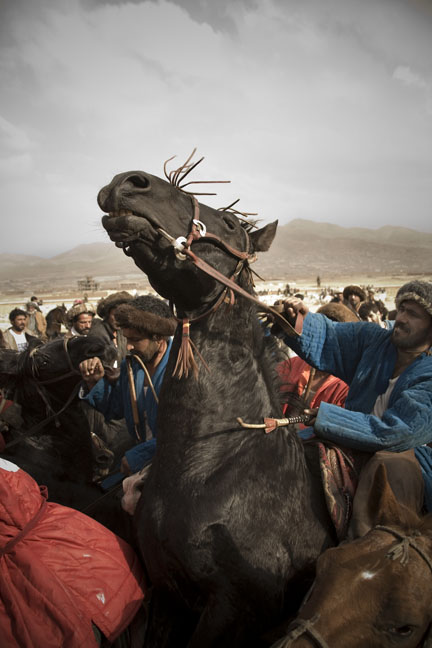
[caption id="attachment_3553" align="aligncenter" width="460" class=" "]Buzkashi Gangtas Buzkashi Gangtas[/caption]


Buzkashi: Afghanistan's Life-Threatening National Sport


Dating back to the reign of Genghis Kahn and his fellow traveling Mongols, the game of Buzkashi was born in Northern Afghanistan and Eastern Turkey. Today’s current riders of the surrounding communities treat the ‘game’ as a traditional sport with high hopes of someday competing in the Olympics. So, what is it exactly?

In the simplest terms…
a. Men ride the strongest horses they can buy; the more horses a man owns, the better and richer he is.
b. Once on the horse, the men pick up a dead carcass---usually a goat with its head and hooves cut off---from a designated circular area.
c. While holding the carcass in one hand or with it wrapped up in a whip, the man and his horse ride around until they make it around a pole and back into the circle originally containing the carcass.

Two points to remember:

  1. Buzkashi requires men and their horses to work together, either in teams or individually.

  2. Buzkashi is extremely dangerous.


It has been previously asserted that “in Buzkashi, human life counts less than the result” [1]. This is certain. Humans and their horses are battered up and even trampled at times just attempting to retrieve the stone-cold carcass of the headless goat. It is really hard to watch footage of the sport if you are not used to this type of competition.

Today the sport itself is evolving along with the Afghan culture and region itself. Since 9/11, The United States has been pouring hundreds of billions of US dollars into the country Afghanistan but also apparently its national sport of Buzkashi. One analysis from ESPN reflected on the new wealth of current riders who often make big money from their sponsors and through gambling. It was stated by current professional rider, Mohammad Hasan Palwan, that in the past, if you won, it was “for the province. Now, the sponsors have changed the allegiances, the pride. Victory is no longer for your community.” Now the sport is won for power of the individual [2]. It is apparent that today’s riders are playing the game for more than the revival of traditional sport, but for the power and money available to win. Gambling goes anywhere from $20 to $17,000. It is all seemingly aggressive and involves a lot of different high risks.

A short YouTube video which visually aides one into further understanding into the sport of Buzkashi and its dangerous reality is listed below.

Buzkashi: A Dangerous Game, The Death Game, A Real Sport

It’s apparent that these two ‘sports’ are completely different from one another. Dancing, happy dogs versus life-threatening danger and the high stakes of gambling. In Buzkashi, the rider is putting himself, his horse, other players, and even his family at serious risk. The actual sport involves a dead carcass being carried and dragged across a rugged, dirty surface.  The game itself is, safe to say, brutal versus the extremely quirky yet heart-warming groovy sport of Dog-Dancing. In dog-dancing, there are rarely any dead animals that we know of yet, and the dogs seem to be enjoying themselves for the most part. Whereas the horses, being thrown against one another and clunked amongst hard shoes and kicking.

Despite their many differences, these two unique sports can appear similar in a few ways. For instance, both require the acquisition of personal talents and the talent of a live, animal companion to get their ‘routine’ awarded and as a means to win the competition or sport. Both sports require a form of companionship. In dog-dancing, the owner and the live dog must use their companionship to work together to win. In Buzkashi, the riders use connection with their horses to work together. Their companionship has to be on a higher and more spiritual level. How the individual performs with the animal, connects with the animal, takes care of the animal, and uses the animal are all quite similar. In both sports, the riders and the dog owners must learn to accept and deal with both victory and defeat, not just the competition itself. However, those who love sports often love the thrill of a competition and thus world riders, trainers, handlers, et al, are all viewed as competitors in the end. They want to win; they want the cheese, or goat cheese.

So, there you have it. If you're not into football, soccer, baseball, volleyball, weightlifting, or any 'mainstream' sport - you can be a good sport and check out the trying and telepathic sport of dog-dancing or let yourself and horse get rustled and toughened up in a game or two of Buzkashi. Hey, it's all about learning another's culture and their interests isn't it?

Thursday, November 20, 2014

Fooling The General Public: Mass Media in South Korea & Turkey

[caption id="attachment_3261" align="aligncenter" width="300"]IMG_6872 “Naneun Ggomsuda's” (나는 꼼수다) hosts (photo by Emre Kanik)[/caption]

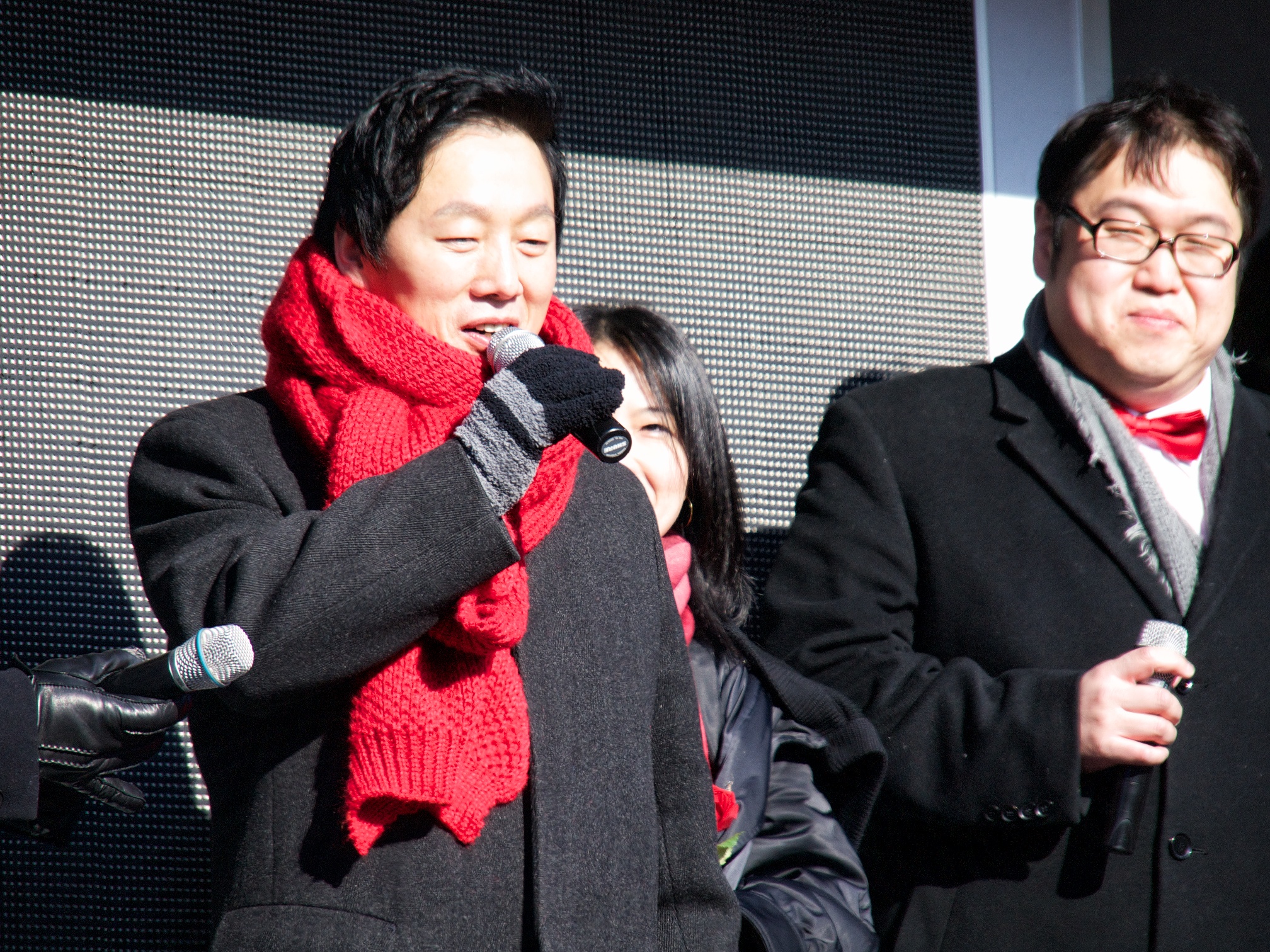
While living in the Netherlands my Korean wife followed the political situation of her country very closely. She gave me regular updates on what was discussed on the popular podcast “Naneun Ggomsuda” (나는 꼼수다) to which she listened every week. The podcast was the voice of young people in South Korea, addressing issues that wouldn't be touched by the conservative mainstream media. Allegations against government officials were frequent, and the government sought a way to stop the podcast by making the life of the hosts very difficult. For example Chung Bong-ju (정봉주), one of the four hosts and national lawmaker at the time, was found guilty of spreading false rumors in what many of his supporters have called a political process, accusing then-presidential candidate Lee Myung-bak in 2007 of being affiliated with a company that forged stock prices. My wife was outraged by the prison sentence, and I was surprised that such a claim could land you in jail, being a politician myself at the time, in a country where you still drink a beer with your greatest political enemy after a city council meeting. So when our visit to South Korea coincided with the protest against Chung Bong-ju’s imminent incarceration, my wife insisted on joining.

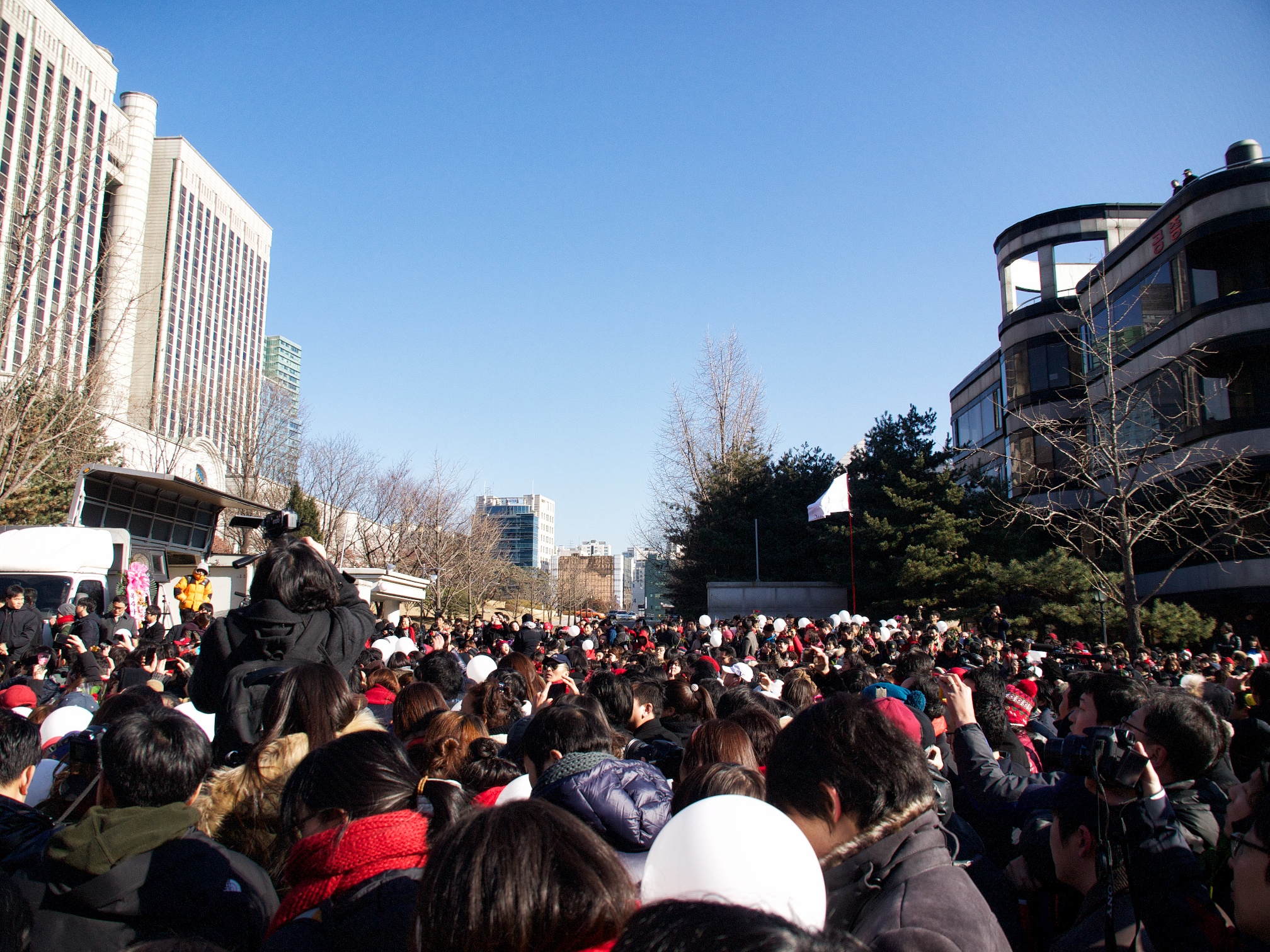
On a cold but sunny December morning, we arrived at the subway station near the courthouse where the protest was held. At the station I saw small groups of young people dressed in red, bringing signs, balloons, and roses with them. It didn’t seem like a massive protest, but when we arrived at the entrance of the courthouse, the road was full of people. A white van with a sound system was parked on the curb, playing music and occasionally someone would play the MC and say something in Korean, which I didn’t understand at the time. Cameras of the press were positioned on the roof of one of the buildings in the surrounding area and in front of the entrance of the courthouse. Even the police had someone filming the protesters, which I found kind of odd at the time.

[caption id="attachment_3229" align="aligncenter" width="1024"]The protest The protest (photo by Emre Kanik)[/caption]

The crowd was cheerful and the atmosphere was not at all aggressive. They were singing and dancing and sometimes they all sat on the ground when the MC was telling them to. I didn’t understand why this was happening, but I knew what the cause was, so I sat down as well. Sometimes my wife would translate parts for me, but most of the time she was caught up in the protest. When the hosts of the podcast arrived things got even more lively with speeches and cheers. When it was time for Chung Bong-ju to enter the courthouse, the crowd parted to make a passage and roses were thrown on the ground where he would walk while All you need is love by the Beatles was played and sung by the protesters. He went to an area behind the police line where protesters were not allowed to come, made a final statement to the media (which were surrounding him at this point) and went inside. At the end of the protest when we walked back to the subway station a small fight almost broke out. Apparently an older lady had shouted to some of the protesters that the color red is used by communists. Some curses were exchanged, but that concluded the incident.

[caption id="attachment_3228" align="aligncenter" width="1024"] Chung Bong-ju addressing the crowd (photo by Emre Kanik)[/caption]

The purpose of the protest and the situation with the old lady at the end reminded me of Turkey. It sometimes shocks me how similar the Turkish and Korean cultures are: the close family ties and friendships, how people with different opinions are immediately treated as enemies, and how losing face is one of the worst things that can happen to a person. Similar cultures make similar societies, so it is not a surprise that there are many similarities between Turkey and South Korean politics as well. Opposing political parties are each other's mortal enemies. Whoever is in power uses everything they can to destroy anybody who opposes them. One of the most commonly used tools: mass media.

In both countries the ruling party wants to control what the people see and read. Having a population that still relies heavily on newspapers and news broadcasts, they keep those under strict control. Although organized differently in the two countries, the effects of that control are the same. It is sufficient to say that high positions at TV stations and newspapers are filled by people friendly to the regime and journalists are pressured (or voluntarily) report what the high management is ordering them to. I won’t go into too much detail how it is exactly organized (Groove magazine has an excellent article on the South Korean situation), but have seen the effects firsthand. When we got home from the protest and turned on the news, we saw how state control operates by outright lying to its inhabitants. The news reported that there was little support for Chung Bong-ju at the protest, showing only the last part where he was in an area where the protesters were prohibited from entering and not showing footage from the rooftops, which would show the true number of people present. This is a mild way of bending the facts, but since then measures have been much stricter to prohibit the people of South Korea to see the truth. During the presidential elections, the Korean secret service has even been accused of trying to manipulate the discussion on Twitter in favor of the ruling party's candidate and now president Park Geun-hye by starting a smear campaign against her main rival. Another example of mass media control became clear during and after the Sewol disaster. The major newspapers and TV stations blindly published and reported government statements and press releases without checking if what they reported was true (many media outlets would apologize for this later). Public confidence in the media fell to a record low.

While state control over the media in South Korea is troubling, in Turkey it is a disaster. Ruled by the conservative Islamist Justice and Development Party (AKP) since 2002, Turkey has the highest number of jailed journalists in the world and the AKP has most major media outlets under firm control. The AKP isn’t afraid to use its control over the media for its own personal gain, a fact that became painfully apparent during the wave of protests that followed after the government violently tried to end a friendly sit-in at Istanbul’s Taksim Gezi Park in 2013. Protests engulfed the country addressing press freedom, freedom of expression and assembly, and the government's intrusion on secularism. The government replied with brutal force, teargassing and cracking down on peaceful protesters. The role of mass media in the protests? CNN Türk broadcasting a documentary about penguins. While the country burned, the state controlled media first tried to ignore it. When that didn’t work because all international media were reporting in full force (regular CNN was showing the protests) and Twitter exploded with images and videos about what was really going on, on came the fabricated lies. From reporting that protesters had entered a mosque with their shoes on and drunk beer inside to showing them burning the Turkish flag (which was actually footage from 2010), the state controlled media did everything in their power to slander the protesters. Sadly because so many Turkish people still rely on traditional media for their news, a large part of the country believes this all actually happened. In the recent presidential elections, TV stations wouldn't say anything critical about the leader of the AKP Erdoğan, while the opposition was heavily attacked. The official state channel TRT spent time only on Erdoğan and ignoring his rivals all together. That is pretty problematic in a country where less then half of the population uses the Internet and therefore relies on these broadcasts as their sole source of information.

So is there no way to get reliable information in Turkey and South Korea? As in many cases, the Internet is your friend. Although it is becoming a troubled friendship because of the government of both countries want to control information there as well, it is still possible to find the real story on what is going on. However, if so many people keep relying on traditional media to keep themselves informed it is fairly easy for the government to keep feeding half-truths and lies to the general public. Without true reform in both countries’ mass media their democracies will always be in danger of turning into something uglier. Having the power to vote is just one part of a democracy. Having unbiased information on who you can vote for is just as important.

Thursday, August 28, 2014

Female Terrorist Motivations

Terrorist Culture: Not for everyone. But for some, including myself, the study terrorism as an act of communication, is interesting.  Terrorists will bomb certain venues to get their point across in a violent way. That’s right, the act of killing and endangering hundreds of thousands of people, in most terrorist cultures, is believed to aid in the gain of group power or attention. Another spicy interest of mine is to study female terrorists, specifically those of Islamic culture. To me, a female terrorist is like a spy wearing all black, is a person who is not trustworthy as they are seeking revenge.

As Islamic male martyrs are sometimes adored and made famous, thought to be rewarded in heaven with some 80,000 servants and 72 virgin women, I have wondered, what will the women receive? Are the women motivated to become terrorists through their religion? Do women who become terrorists gain equality among their male counterparts in daily life or is their life simply put on the line serving as an advantage through security checkpoints? This article is not about terrorist equality, or about communicating as terrorists, but it is about what motivates the women of Islamic culture to become terrorists. What does it bring them?

The modern-day female terrorist is not always talked about. They actually hold negligible in today’s media. But when they are talked about, it is a big deal. Essentially, female terrorists go against any sense of femininity when acting as an instrument of destruction. They send a message to multiple publics which says, ‘I can create life, and I can terminate life’. For purposes of strategy, female terrorists often wear disguises. They will dress in a Western fashion or as Israeli women and sometimes wear revealing clothes. But this compromises their Islamic religion. Many Islamic family members do not want their women to be disguised and dressed without modesty. Islamic family members will also not be paid as handsomely if their daughter becomes a terrorist or suicide bomber, which is another reason you don’t hear of many female terrorists.  So it can’t be the fame and flashing spotlights that motivate these young, strategic women, and it isn't the small amount of money…

In all, some women are simply used in terrorist attacks while some do it for themselves. For the most part, women are motivated to become terrorists by non-political factors. It appears that women who choose to partake in acts of terrorism bring respect to their status and involvement in the terrorist group; they bring pride to their family and children, and have found eternal paradise for themselves. Many female terrorists want to seek revenge on those who killed family members or on their male counterparts which have oppressed them in the past. It is also sometimes easier to be a female terrorist, when infiltrating security checkpoints in airports. Females have that advantage over men; they are not as closely examined. Sometimes women fight as terrorists to bring awareness about causes or about poverty. But while some women can take pride in being a terrorist, some women just don’t have a choice. These women have been raped, have had their reputations tarnished, they are unable to bear children, or carry a range of hidden backgrounds. These women are then handed a suicide belt.

Whatever the motivation, these women are setting up the stage to kill. Their style of communication continues to bring more sadness and distress into the world while their message is haunting. While most female terrorists are unheard of or kept in secret, there are hundreds of female terrorists and terrorists groups to research.

Female

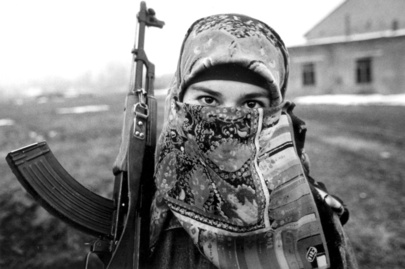
One female terrorist group that is quite popular is known as The Black Widows. This isn't me talking about the deathly-scary spiders that live in temperate regions of the world; I’m talking about the group of Chechen women who know how to kill. The Black Widows are also known as the ‘Shahdikas’ or the ‘Brides of Allah’. These women are highly trained by psychologists, other terrorists, and explosive experts. Most of the women seek revenge on the Russian government among others to fight for their husbands they have lost, while some of the group members are sold into the group, kidnapped, or tricked. Some of the women have just reached age sixteen. Don’t let their age or disguises fool you. A famous stunt performed by the Black Widows involved the deaths of one hundred and twenty-nine people in 2002 at the Moscow Theatre. The group has also been involved in over fifteen terrorist stunts in under fourteen years. I highly suggest you look these girls up.

And a question for you: If you were a spy, what would your spy-name be?

Thursday, July 17, 2014

Repent or Die: How ISIS is Changing the Gulf

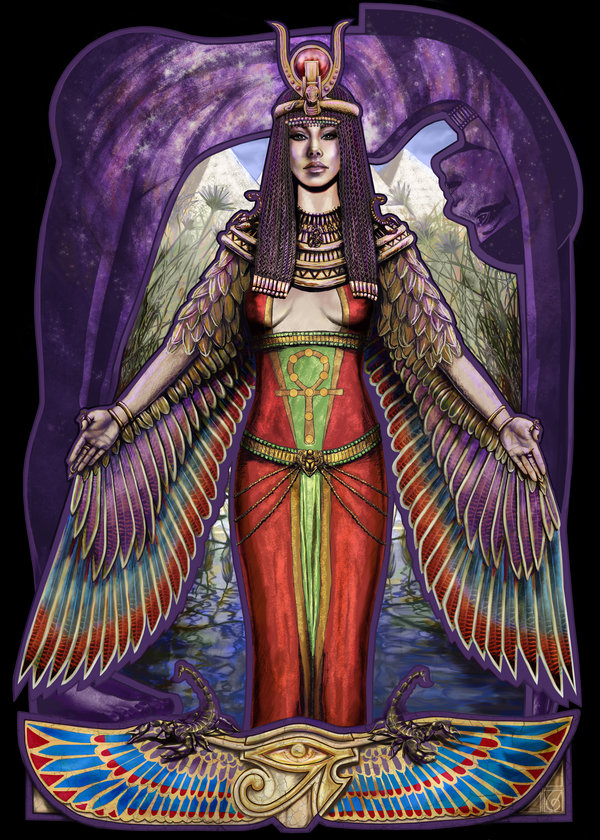
Some of you may have heard that the ancient Egyptian goddess Isis has returned to Earth and is wreaking havoc in Iraq, with plans to expand her new empire to engulf the world. Well, you heard wrong. The ISIS in the media today has nothing to do with Egyptian mythology. Who is this ISIS, then, you ask? To answer that question, first we have to look at the two main factions of the Islamic religion: Shiite and Sunni.

[caption id="attachment_2110" align="alignnone" width="214"]Egyptian Goddess Isis: Not involved Egyptian Goddess Isis: Not involved[/caption]

Fundamentally, both sects follow the same basic teachings of Islam. The main difference is one of politics and not religion, and it reaches back through the ages to the death of the Prophet Muhammad himself. Upon his ascension, there was a debate over who should carry on as the leader of Islam. The Sunnis followed the beliefs of many of the Prophet’s companions, which stated that a new leader should be elected from a group of those qualified to take up the mantle. The word “Sunni” itself means “One who follows the traditions of the Prophet.”

The Shia (Shiite) Muslims believe that leadership should have stayed in the Prophet’s family line, and should have passed to Muhammad’s son-in-law, Ali bin Abu Talib. Shiites have refused to acknowledge the leadership of elected Muslim officials. Rather, they follow Imams that they feel would have been appointed by the Prophet or by God Himself. The word “Shia” simply means a supportive group of people, but the Shiites have also gone by the name Shia-t-Ali, meaning “Supporters of Ali.”

ISIS is a Sunni group that has grown out of al-Qaeda forces fighting against the FSA (Free Syrian Army) in Syria. ISIS takes their Jihad to a whole new level, however – a level so extreme that even al-Qaeda has disowned them. After securing territories near the Syria-Iraqi border, ISIS carried its Jihad into Iraq to combat the U.S.-established Shiite government under current president, Jalal Talabani. Talabani is the first non-Arabic leader of Iraq, as he is from the Kurdish side of the tracks. He is known as “Mam Jalal” or “Uncle Jalal” among the Kurdish people. ISIS moved into north-western Iraq, where there are several disenfranchised Sunni tribes, many of whom are hoping to restore the Sunni glory days as they were under Saddam Hussein before the U.S. invasion.

Gaining support in the region, ISIS spread quickly, taking control of Anbar, the largest province in Iraq, and then securing cities, from their stronghold in Al-Qaim to places further south such as Rawa, Ana, and Husaybah, which is only 100 Km (62 mi.) from Baghdad. Recently, ISIS has strengthened its grip on this territory from Syria to Iraq so much that it has officially declared itself an independent Islamic state, calling itself the Islamic State of Iraq and the Levant.

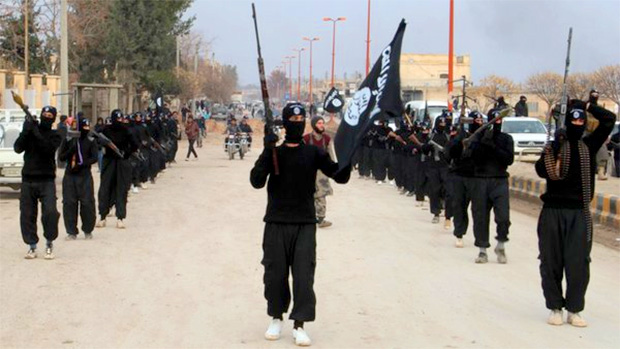
[caption id="attachment_2111" align="alignnone" width="300"]ISIS annual Black Pajama Parade ISIS annual Black Pajama Parade[/caption]

ISIS has swept across Iraq enforcing brutal control, putting down any resistance from Shiite-friendly fighters and moving itself into a position that could potentially topple the Iraqi capital and the government therein. Their ultimate goal, they say, is to bring the Muslim regions of the world under their direct control, starting with regions like Jordan, Lebanon, Kuwait, Cyprus, Palestine and even Israel. I may not know much about the geopolitical climate of the region, but I am fairly certain that if ISIS ever does attack Israel… well, suffice to say, I will be getting the hell out of this part of the world ASAP.

So what does all of this mean to the Middle East? What new sort of wackiness has the sudden rise of ISIS brought to the region? Strangely, it has proven to be somewhat of a unifying force, bringing together different (and often conflicting) Muslim peoples and governments in a unified front against the push of what they see as Takfiri militants. “Takfiri” is a term used for a Muslim who accuses another Muslim of apostasy, or the abandonment of their religious beliefs. ISIS is basically calling other Muslims infidels, and other Muslims are basically telling ISIS to shut their collective pie hole. Indeed, the CCG (Cooperation Council for the Arab States of the Gulf) is rallying together to face this sudden and unexpected threat, and it is actually kind of beautiful in a horribly bloody way. Enemies are becoming friends, which is always a good thing – and yet it is due to horrible violence, which is never, ever a good thing.

Wouldn’t it be kind of nice if ISIS’s plan the whole time was to play Devil’s Advocate with the true intention of uniting the differing factions of Islam? They play the bad guys in order to unite Muslims against a common enemy created by ISIS leader Abu Bakr al-Baghdadi in a bid to bring about peace and brotherhood through turmoil. In truth, then, their intentions would actually be kind of noble, if misguided. I would like to believe that this is the truth behind the atrocities… I would like to believe it, but I can’t. In reality, ISIS is most likely just out for blood against those they see as not being true to the faith.

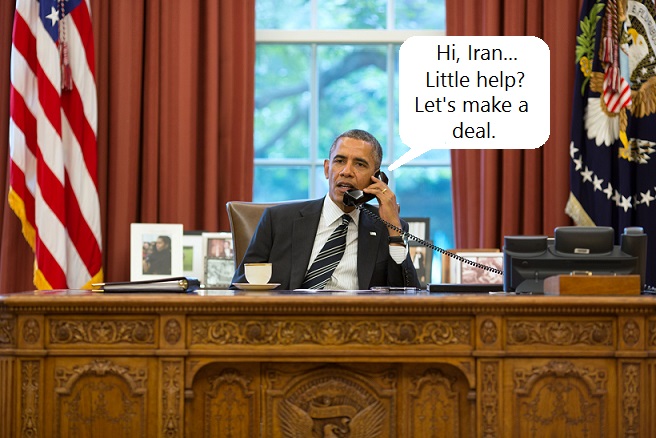
Back in reality, there is even more strangeness afoot, as the rise of ISIS is not just making new alliances among the Muslim nations, but several other nations are getting in on the mutual admiration game. Case in point, the United States – the empirical power that many see as the root cause of the unrest in Iraq – is reaching out to its old enemy Iran for two reasons that, on the surface, may appear separate, but in truth are very much tied together. The first reason is, of course, the U.S.'s ongoing battle against nuclear proliferation. Rumor has it that Iran is working on a bomb, and the U.S. and its allies – particularly Israel – take issue with that. The other reason the U.S. is reaching out to Iran is that Iran has both the military might and the ideology to be the greatest force against ISIS in the region. Iran is already placing its elite IRGC forces in preparation for an all-out assault on ISIS. The U.S. and the rest of P5+1 (AKA the U.N. Security Council plus Germany) have a vested interest in seeing Iran not only enter the fray, but to emerge victorious. To that end, the new discourse being broached by the U.S. with Iran to broker a new nuclear deal is very telling, as they may use these negotiations to get Iran to fight on their behalf against what the P5+1 sees as the REAL threat: ISIS.

Barack_Obama_on_the_telephone_with_Hassan_Rouhani

In short, the U.S. needs Iran to quell the growing influence of ISIS in the region. Iran considers this a win-win as it not only will mean more negotiating power in its nuclear deals with the U.S. but it also means greater influence over the Gulf region as it will use its sacrifice in the struggle against ISIS to establish itself as a recognized world power. This probably does not sit too well with the CCG, but they, too, are relying heavily on Iran’s strength to stop the spread of ISIS. The Saudis already have troops placed on the border they share with Iraq, but regional geopolitical experts have warned that an intervention now by the Saudis could serve only to exacerbate the situation. Some say the best path to resolving the conflict will be through an agreement between Saudi Arabia and Iran. As journalist Bob Dreyfuss wrote in an article for The Nation (14 July, 2014):
"The easiest way to resolve the Iraq-Syria civil war is through an accord between Saudi Arabia and Iran. Although Saudi Arabia supports the Sunni side in a broad, regional proxy war throughout Iraq, Syria, Lebanon, the Persian Gulf and into South Asia, and Iran supports the Shiite side, neither side tolerates either Al Qaeda or ISIS. Both Riyadh and Tehran are worried about the rise of ISIS, and the common ground is there for both countries to establish a détente and try to resolve the civil war."

Dreyfuss also states that the chances of ISIS progressing much further are zero. Still, the region waits on pins and needles, as here in the Gulf we are in the midst of the holiest month of Ramadan, and both sides are using this time to build up support for what many see as inevitable conflict. ISIS is recruiting downtrodden Sunnis in Iraq, growing their forces the same way they did in Syria, and Iran is rallying its forces and brokering deals with the West. Sides are forming for what could be a major kerfuffle here in the Gulf: A unified front of Islamic nations led by Iran and backed by the U.S. against ISIS, a terrifying and fast-growing new threat to stability in a region that is not known for its stability. Keep in mind that much of the military equipment that the U.S. left in Iraq is now in the hands of ISIS, ISIS has taken control of a large chemical weapons plant in Iraq, and they are not hurting for money as they have begun selling off the oil from fields that they have taken so far at a rate of $1 million per day. ISIS is serious, as their ultimatum/motto “Repent or die” would seem to indicate.

The climate is always changing, and there really is no way to predict on which side of the line the ball is going to drop. If the conflict in Iraq boils over, we will see a lot more bloodshed in the region. If not, then perhaps we can find a silver lining in that ISIS may have served, in a limited extent, as a blessing in disguise by opening constructive discourse and creating a path for cooperation in the region.

As it stands, the peoples of the Gulf will prepare for war, and pray for peace.

Tuesday, June 3, 2014

Pursuing Happy - Episode 5

(c) jewishvirtuallibrary

(c) jewishvirtuallibrary

[soundcloud url="https://api.soundcloud.com/tracks/146247826" params="auto_play=false&hide_related=false&show_comments=true&show_user=true&show_reposts=false&visual=true" width="100%" height="450" iframe="true" /]

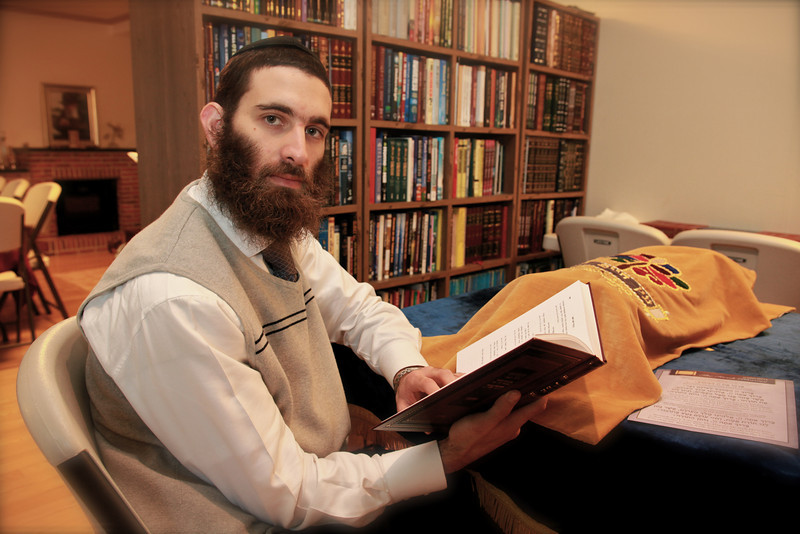
DISCLAIMER: Photo from the interwebs.

In this weeks talk, I am the one being asked a question. There is a joke. "Two Jews, three opinions."  As you will find out the Jewish method of having a discussion is asking each other constant questions. When ever I am with the Rabbi he always has the best questions and stories waiting. In this episode I have a talk with Rabbi Osher Litzman, the Chabbad Rabbi of Korea, about the Jewish perspectives, as well as his, on happiness. Enjoy, and thank you always,

Jarod

Tuesday, May 13, 2014

8 Differences between Korea and Oman

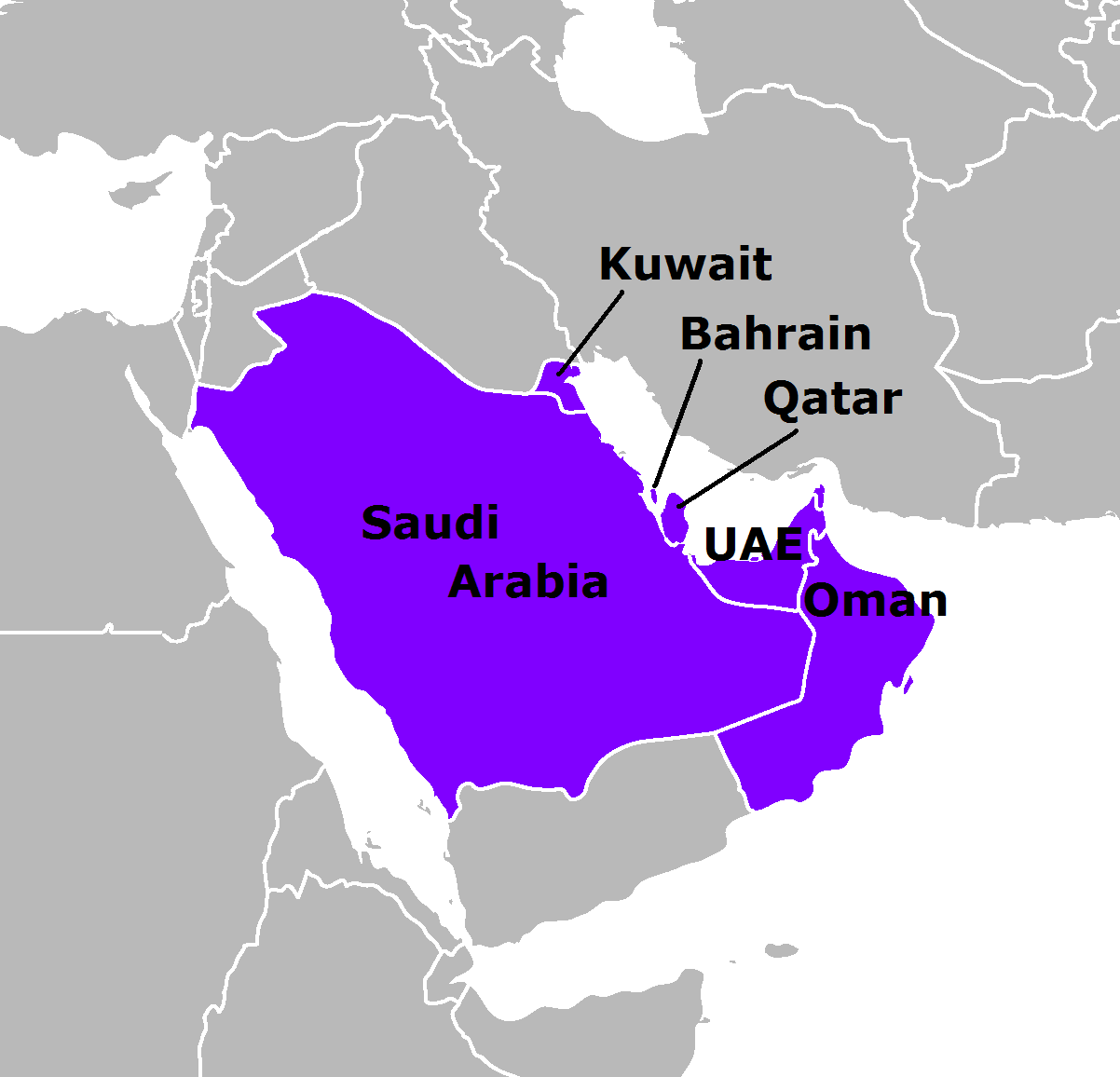
These days, word around the ROK is that the EFL field is not what it once was. Foreign teachers are less in demand as there are now so many of them there, and schools can be much pickier about whom and how they hire. Many Korean schools now prefer to hire only those with at least an F-4 Visa, teachers who speak both Korean and English, and teachers who were born, raised and educated in Korea rather than overseas. In short, it seems the golden days for the foreign EFL teachers have come and gone. Granted, many expat educators still have great positions, but for any newbies coming in, they will be hard-pressed to find a job, let alone one that pays more than 2.1 after taxes. Other expats have found themselves pushed out of lucrative positions, and are disheartened to find that they must start at the bottom rung once again despite x amount of years of experience teaching in the ROK. More and more, we see people turning to the Gulf States of the Middle East as another option. The UAE, Oman, and Qatar have been popular choices.

Persian_Gulf_Arab_States_english

Many conscience-minded expats are discouraged from working in Saudi Arabia, however, as their laws are seen as barbaric and their treatment of women is medieval. Purely from an ethical standpoint, no matter how good the money is, should you really support a society that still has weekly public beheadings? All too often the victims are innocent girls from poorer countries who take jobs as domestic servants. They may be assaulted by the man of the house, and if the girl presses charges she could be charged with adultery and face public execution. So yeah, maybe stay out of Saudi Arabia until they become a  little bit more enlightened. This may sound harsh, but talk about harshness after visiting Deera Square (A.K.A. “Chop Chop Square”) on a Friday after prayer.

phonot

Oman, on the other hand, has earned a fairly solid reputation towards its treatment of people, and so many expats are now turning their eyes to the oases, wondering what it would be like to work in the Sultanate of Oman. Lest I beat the subject to death, let me first say that this will be my last article regarding Oman. Still, before I close the subject for good, I thought some might be interested in learning the 8 Big Differences between being an Expat in Oman as compared to Korea. Let's start with the most obvious:

8. The Jobs

EFL jobs tend to differ from country to country and culture to culture. In Korea, you will most likely work Monday to Friday, and quite often be asked to work a few Saturdays as well. You may find yourself working at any end of the education spectrum, from kindergarten and elementary to universities and adult language institutes, depending on your qualifications and the employer’s immediate needs. Your salary will most likely be somewhere between 2.1 and 2.6 million won ($2000-$2500) per month, before taxes. Housing and fifty per cent of your medical are also usually provided, plus a month’s severance pay at the end of your contract. Vacation days vary from 10 days for hagwons (private schools) to two months for some universities, although you may have to work summer and winter camps during that time. If you do, you will be paid extra. Also, some schools provide at least part of your airfare.

In Oman, most EFL jobs are at the collegiate level, working either for the Ministry of Higher Education, a recruiter, or the military. Your salary will range from 950 rial to 1400 rial ($2400-$3600) per month. If your salary is in the lower end of the spectrum, housing will be provided. If you land a job with a salary closer to the higher end, you will most likely be expected to find your own place, but rent is cheap. The apartments are spacious (the one I am in now has 2 bedrooms, 2 bathrooms, living room and a big kitchen) and rent for as low as 200 rial. You may also need a car, as public transportation in Oman is not nearly as reliable as it is in Korea. You can rent little economy cars for as low as 160 rial a month, or buy your own car. You can buy new, but used cars are usually more popular with expats. Smaller used cars may cost as little as 300 rial, and larger four-by-four vehicles – such as a Jeep – will run you around 1600 rial. The latter is much more fun for driving in the mountains. Most expats who choose to buy a car will sell it when they leave to make most of that money back. More good news: All of your health care is paid, with the exception of a small co-payment that is usually no more than 500 baisa ($1.30). Also, gas/petrol is extremely cheap in Oman, and there is no tax, so you get to keep every bit of your salary. As far as jobs go in Oman, there is a saying: “They pay what they say, and they pay on time.” The paperwork is not nearly as frustrating and time-consuming as it is in Korea (at least not yet) as no criminal background check is required, and only copies of your degrees need to be submitted, no apostilles necessary. Also, your employer pays for your airfare both ways. When you leave, you tell them where in the world you want to go. If you plan to return for another contract, they provide you with a round-trip ticket. This may sound sweet, but you will need at least a Master's degree... but Korean jobs are demanding likewise these days. The working week in Oman is slightly different: Sunday to Thursday, with Friday and Saturday as your weekend. At the completion of your contract, you will receive severance pay and two month’s paid vacation. This is because no one wants to be in Oman for July and August. Why?

7. The Climate

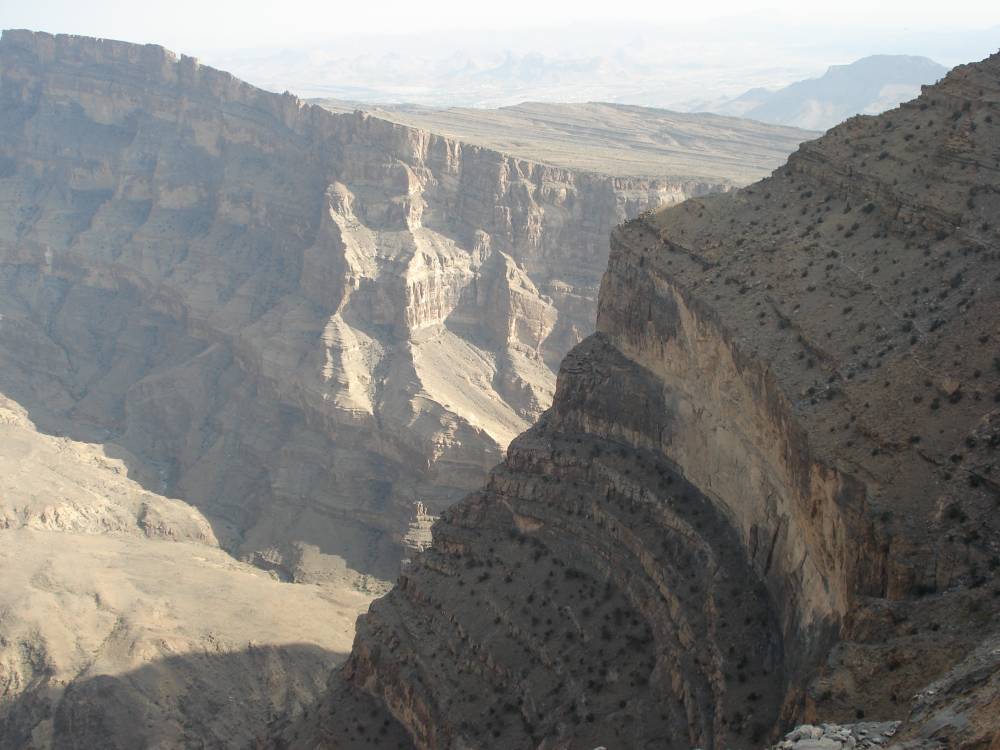
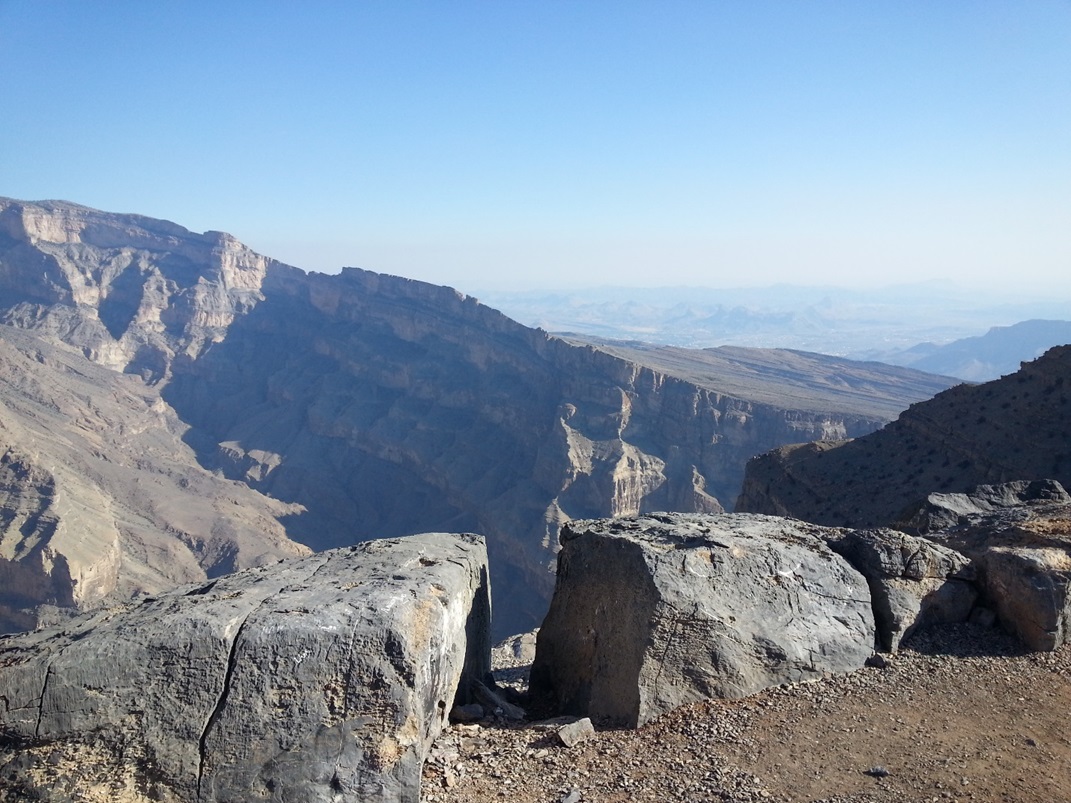
It is hot here. I mean, it is HOT. I know, Korea gets hot and humid in the summer months, but Oman is a desert. A desert that is still really, really hot at night. When I first stepped off the plane here last August, the heat was like a punch in the face. I got sunburn just walking to the terminal from the tarmac. It took a couple of months for the temperature to drop a little bit and for things to cool down to a more comfortable temperature. From November until March, the average temperature is around 28 degrees Celsius (82 F), which isn't too bad. But from April until October, you will experience temperatures as high as 54 degrees Celsius (129 F). Bring sun block and light clothing, and drink lots of water. Don’t drink the tap water, as I am not sure how clean it is, and even if you did want to drink it, in the summer you only have two temperatures of tap water to choose from: Very warm and hot. Sunglasses are a necessity as it only rains about 5 times a year here, and it is rarely cloudy. Sunglasses also keep the dust out of your eyes. Due to the lack of rainfall, it is a very, very, very dusty country. In the summer, the ground is baked to a rock-hard surface. It is very hard on shoes, so you will want durable footwear. In my first weeks here, I had a pair of dress shoes melt. Literally melt. In the rainy months in the spring, it floods at least once because the ground cannot absorb water. By far, the hottest months are in the summer. You must have air conditioning or you will die. Well, maybe not die, but you will wish you did. It is highly recommended that you just get out of the country for the summer and head someplace a little cooler for your summer break. To cool off here in the Sultanate, there is no shortage of beautiful beaches and resorts with swimming pools, but the water will always be warm. And the sun is relentless, so you will burn. The winter months are actually quite pleasant, and Oman even sees snow occasionally up in the mountains, like Jebel Shams.  The summers, however, are absolutely scorching.

[caption id="attachment_1865" align="alignnone" width="300"]Jebel Shams: You will never find a more wretched hive of scum and villainy... No, it's really quite striking. Jebel Shams: You will never find a more wretched hive of scum and villainy... No, it's really quite striking.[/caption]

6. Religion

I will let you in on a well-kept secret: Oman is an Islamic country. Most of the population is Muslim, and there are mosques everywhere. Korea, from what I recall, is largely Christian with quite a bit of Buddhism sprinkled in to make it interesting. Before you get the wrong idea and go all Fox News in your head, Islam is actually not the terror that some might suspect – certainly not here in Oman, anyway. In fact, Sultan Qaboos has even donated some of his own land holdings to other religions so that they can build churches. Many Westerners here attend Christian services in Muscat, and there are many services to choose from. Services are performed in English, Arabic, Malayalam, Spanish, Tamil, Hindi, and several other languages. Unlike Saudi Arabia, you can be openly Christian in Oman and sport whatever symbols you like. However, it is recommended that you give all religions the respect they deserve. If you are of the hard-core Atheist set and you enjoy denouncing religions, Oman may not be a good fit for you. Religious tolerance is widely practiced here, but debate about the existence of God will make you some enemies, and it may even land you in jail depending on how far you push your argument. The Islamic tradition is very much predominant, and is, of course, a very big part of the local culture in every respect.

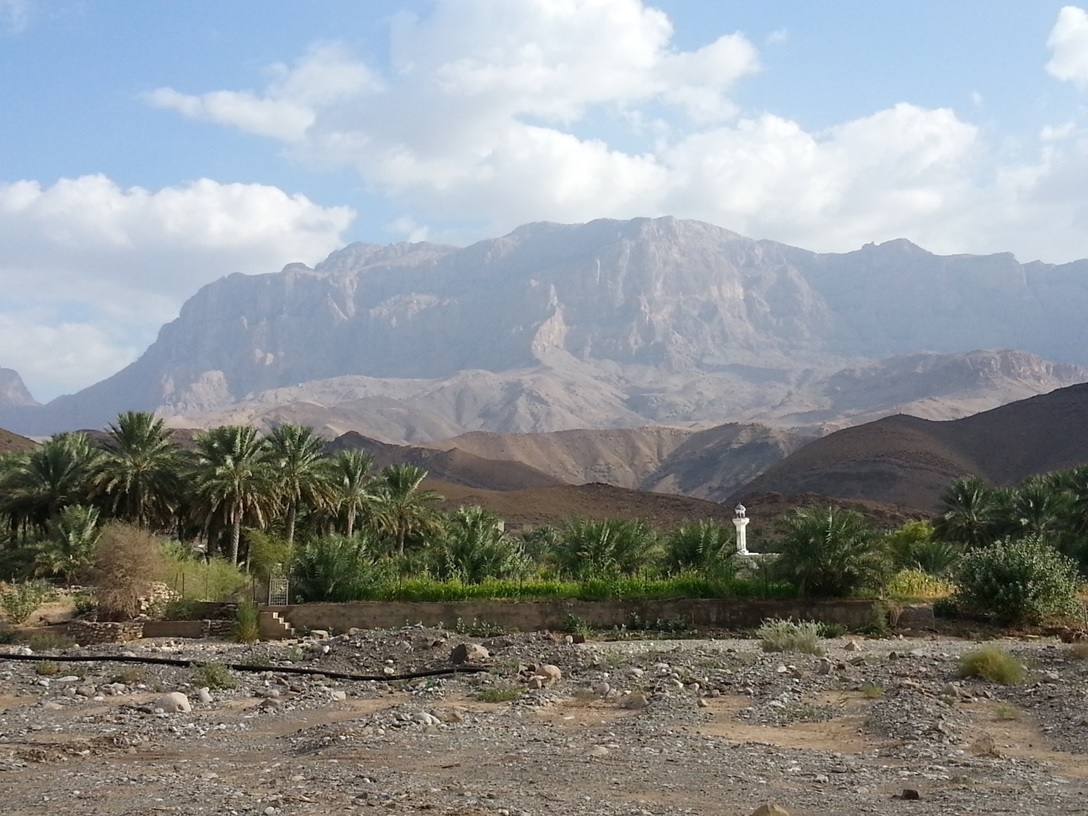
[caption id="attachment_1866" align="alignnone" width="300"]Rustaq Mosque Rustaq Mosque[/caption]

Many of the mosques here are very beautiful, and so is the religion that built them if you look at it with an open mind. Omanis are some of the kindest people you will meet, a statement which brings me to my next point.

5. Politeness

As many expats already know, it's always the little things that stand out when you are traveling from country to country. When I was in Korea, I often heard people talking about – and experienced first-hand – the bali-bali (hurry, hurry!) culture of Korea. Koreans move very fast and everyone is in a rush, as opposed to the Omanis, who do everything (except drive) very slowly. Whereas the key phrase in Korea is bali-bali, in Oman it is shway-shway, which means "in time" or "gradually; eventually." Or, if you want to really hit the nail on the head, try enshallah, which means "God willing." Use it in conversations like this:

A: Will we get into Muscat by 6:00?

B: Enshallah.

The Omanis are much more laid back and in no particular hurry, which makes dealing with them in crowded shopping malls a treat. If you have ever been pushed out of the way trying to get on a bus, subway, elevator, or escalator in Korea, then this Omani attitude will be one of the first things you notice when you arrive here. Omanis will step back, smile, and gesture "Please, you first" in these situations. After six years in Korea, it kind of caught me off guard.

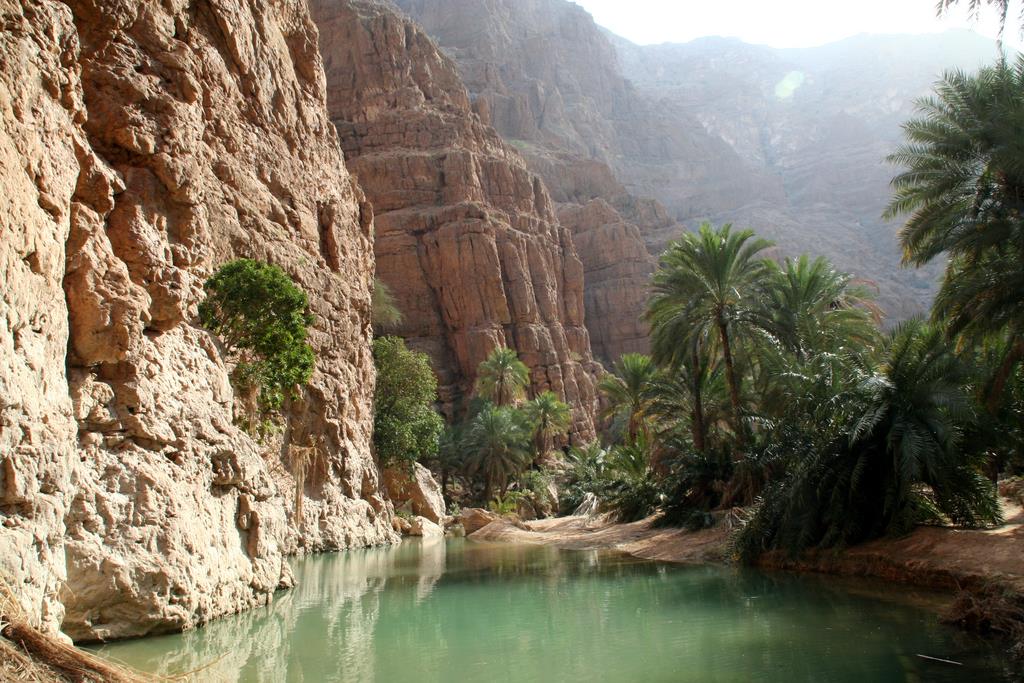
[caption id="attachment_1867" align="alignnone" width="300"]A wadi (natural pool) A wadi (natural pool)[/caption]

4. Drinking Culture

As I have mentioned in previous articles, alcohol is legal in Oman despite the Islamic prohibition of spirits. Even some of the Omanis enjoy taking a drink, but do not ask them if you can take their picture when they are imbibing as most of them like to keep it on the D.L. When in Oman – or any Muslim culture – if you have a predilection for alcohol, keep your predilection quiet. Whereas public intoxication is widely seen in Korea, it is heavily frowned upon in the Middle East. In Oman, it can get you a 48 hour layover in a jail cell, and it can cost you your job. Nonetheless, you can go to any number of hotels and pubs in Oman – usually around Muscat or Sohar – and drink to your heart's content. Just make sure you have a reliable way home that will draw little attention to you in public. As always, NEVER drive if you have been drinking. Drunken driving is treated as a serious crime here in Oman just as it should be anywhere else. If you don’t trust yourself to keep your composure in public, you can always get a liquor license, which will allow you to buy a certain amount of alcohol at discreetly located "catering shops" for personal use at home. In Korea, drinking together is often seen as a trust-building exercise, as you never really know a person until you've seen them inebriated. Here in Oman, they don't share that perspective as they tend to believe a drunken person is not the actual person, but a person possessed. Drinking is mostly left to the tourists here, but there is no reason a person living in Oman can't blow off some steam as well – just keep your wits about you and never forget where you are. You may end up with some hefty fines at the least, and according to Omani law, you cannot leave the country if you owe money to the local businesses or government. That is a good thing to keep in mind as well.

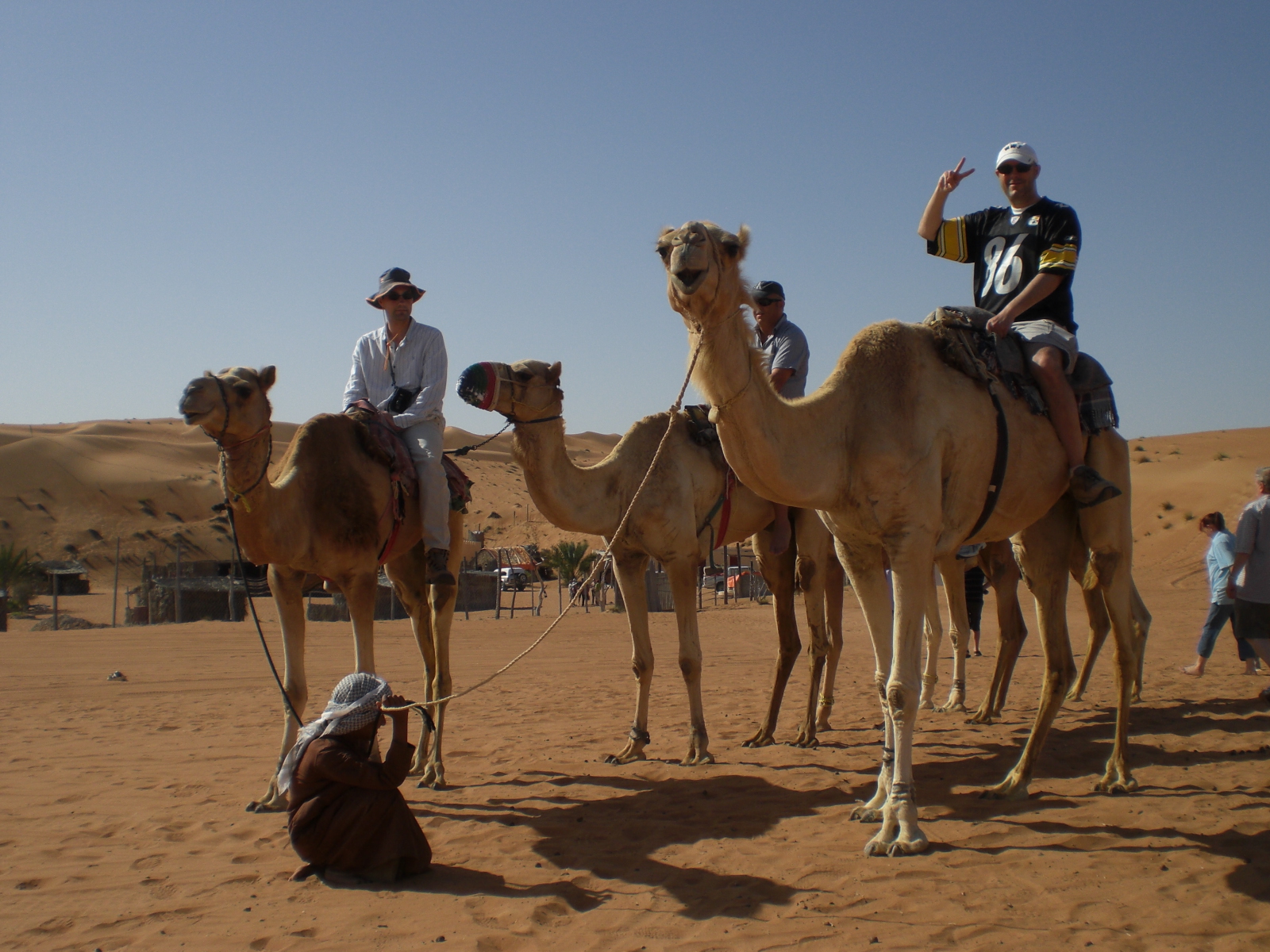
[caption id="attachment_1871" align="alignnone" width="300"]Camel rides. Camel rides.[/caption]

3. Dating

This is an interesting topic in any culture. In Korea, there is a lot of cross-cultural dating going on, and more power to it. Here in Oman, it is a different story. Women can date anyone they choose, but they may have to expect a certain amount of disapproval from an Omani man's family – and this could include his wives. Polygamy is A-OK here, so even if a guy tells you he is single, he may just mean that he is available, and you may be eligible to be his first, second, third, or fourth wife. Non-Muslim men, however, are not allowed to date Omani women. The women here are very heavily protected. They enjoy much more freedom than women in other Islamic countries, but they are not allowed to see a man without their family's permission, and not without an escort. There are a lot of Filipino and Chinese women here, but you will certainly not have the options you may have had in other countries. Before I came here, I asked a friend of mine who was already here, "Will I have to live like a monk while I am there?" His answer: "Yes." While this answer is much more one-sided than the actual truth, it is really not far from the mark. There is definitely a shortage of single women here. It is a good country to come to if you are married and like extremely hot weather. Still, there are more and more female expats each year, so don't give up all hope. Getting back to the women's perspective, while you will have more opportunities than your male counterparts to meet someone, there is still real reason for caution. Men here tend to come on very strongly when they encounter a single female – sometimes more strongly than anyone would care to discuss. In short, it is always a good idea to travel with a friend.

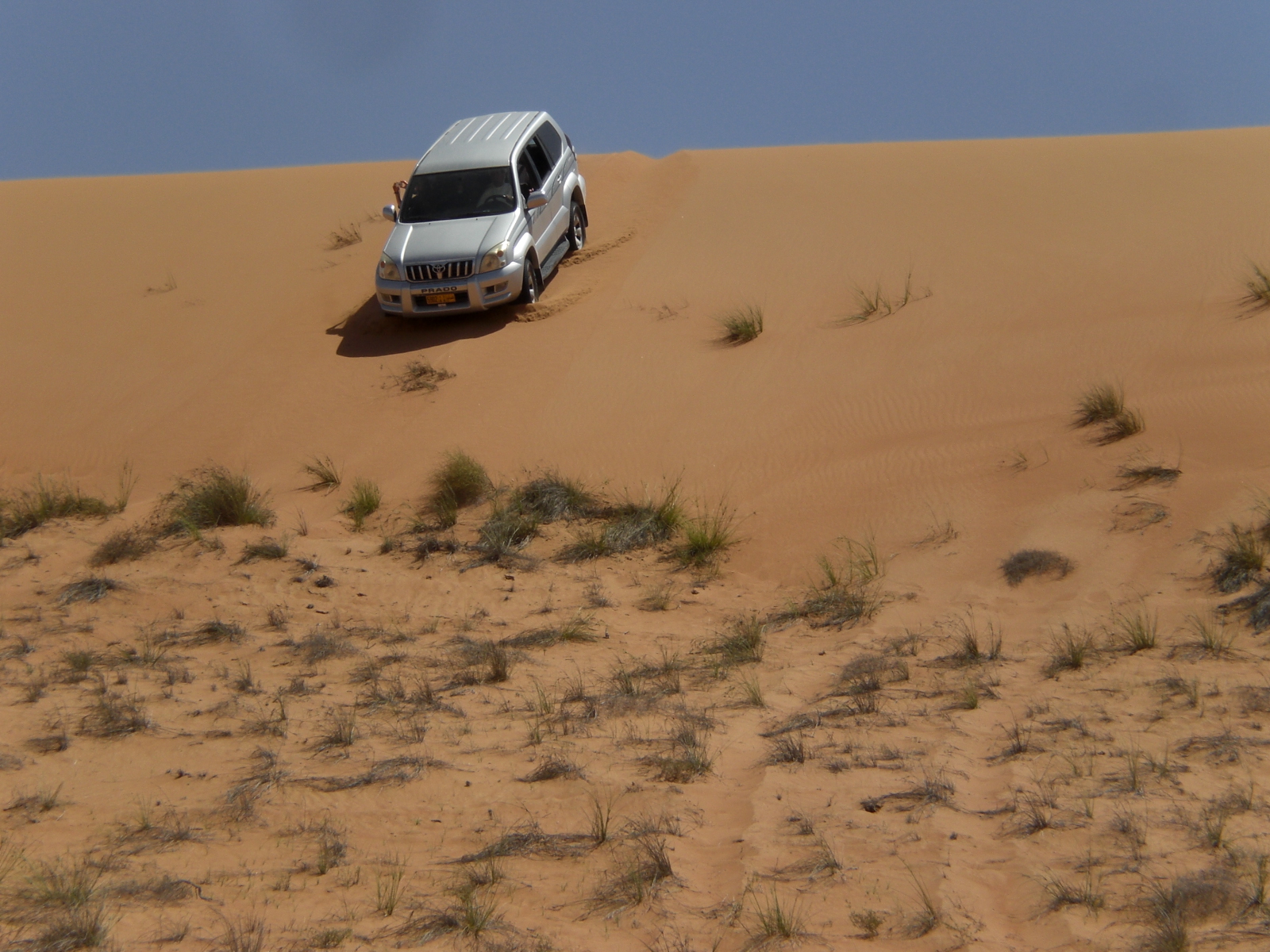
[caption id="attachment_1868" align="alignnone" width="300"]Dune-bashing in a 4x4 Dune-bashing in a 4x4[/caption]

2. Activities

Aside from the common weekend activity shared by both Korea and Oman – drinking – there is a lot more to both cultures than just that. In Korea, there are concerts, ski resorts, beaches, boat rides, camping (or as some Koreans like to call it, glamping, or glamorous camping), movies, etc. Oman is no different, and there are a lot of spectacularly fun activities you can do here that you may not get to do in other countries. Oman has miles and miles of beautiful beaches, 5-star resorts that offer everything from boat tours to snorkeling and scuba diving, spectacular mountains for hiking, thousand-year-old forts for exploring, spectacular caves for spelunking, and wadis (natural pools in the mountains) for camping. You can even attend camel races, or go on desert excursions and ride the camels yourself. Here's a funny fact: At the camel races, no one actually rides the camels. They have robots – little machines that are attached to the saddle and hit the camel with a riding crop, and the speed is adjusted by remote control. Picture that in your mind's eye.  It looks like MST3k's Tom Servo is the jockey.

[caption id="attachment_1869" align="alignnone" width="300"]Robot camel jockey Robot camel jockey[/caption]

The majority of activities in Oman take place outdoors, so it is good to remember the heat in the summer months and to dress accordingly and be prepared with lots of extra water and sunblock. The ocean here is very pristine, and pristine oceans are becoming a thing of the past. In Korea, the preferred local vacation spot is Jeju-do. In Oman, it is Salalah, which is to the south near the Yemeni border. Salalah is apparently nice in the summer months, as it remains very green. However, if you prefer something a bit more automotive, try dune-bashing or the popular Omani sport of "drifting."

http://youtu.be/cvCpBr8zxF8

  1. Food


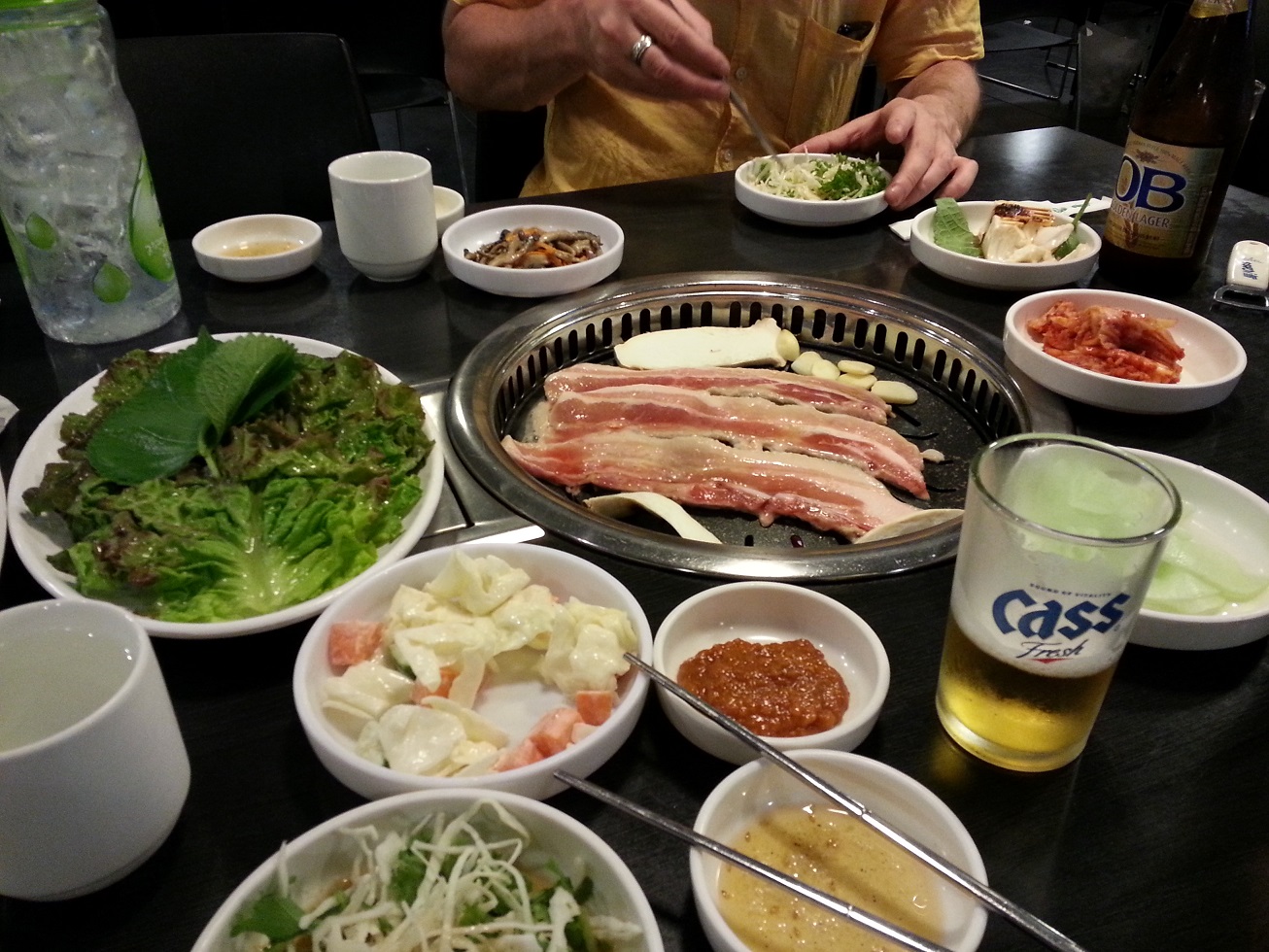
This last one kills me, because I must say that I really miss the cuisine in Korea. When I was in Nepal a little while ago, I made a point of going to a few Korean restaurants. I have found one Korean restaurant here in Oman, and it wasn't very good. When comparing Oman and Korea, Korea has definitely won the food category for me. I miss galbi and samgyupsal, the all-you-can-eat meat places, manduguk, kalguksu, doenjang jigae . . . the list goes on.  Also in Korea, there is no shortage of western-style foods, including many great Italian and Mexican restaurants. In this regard, Oman simply cannot hold a candle to Korea. Larger cities like Muscat and Sohar have a lot of western-style restaurants, including T.G.I. Friday's, Chili's, Subway, Pizza Hut, and, of course, McDonald's and Burger King. In fact, the version of Pizza Hut that Oman has is much more akin to the American version, which I like, but generally speaking, I prefer the food selections of Korea. Even the grocery stores in Korea have a better selection. Although you can get good food in Muscat, when you live out in the rural areas of Oman as I do now, there really isn't anything good to eat. You get sick of the limited selection within a month as you can only take so much curry, chicken and rice. All of the food at the grocery store is frozen and heavily processed, although the produce is good if you get there after a fresh delivery. The food out here on the perimeters is generally not as healthy for you as the food you can get in Muscat, and it is certainly nowhere near the variety and deliciousness that you can get in Korea. In Oman, T.G.I. Friday’s is the closest you will come to a four-star restaurant, at least as far as I have seen.

[caption id="attachment_1870" align="alignnone" width="300"]I miss this. I miss this.[/caption]

I hope this lengthy article has helped to illustrate some key differences in the lifestyles of these two popular expat destinations. As I promised, this is the last article about Oman I plan to write. If you have any other questions, you may contact me directly at this site.

Monday, March 17, 2014

Adventures in Oman: An Interview with A Local Expat

http://www.youtube.com/watch?v=DG1j214bHVo&feature=share&list=UUz1NiEbOmSlf8YIN-MFBxxA

Recently, some of you may have seen an excellent article posted in the ‘Society’ section of this site that discussed issues with the hagwon system in Korea (Illegal Tutoring, Millionaire Instructors, and Bad Reputations: The Real Cost of Korean Hagwons, Jan. 4, 2014). Many of my friends back in Korea have been dealing with an increasing number of problems with the hagwon system, and they largely blame it on the steady rise in the sheer numbers of expat teachers these businesses have to choose from: a wider selection of available teachers means fewer benefits from the schools. More and more westerners in Korea (and elsewhere) have been asking, “What else is available to me as an expatriated English teacher?” Well, have you considered Oman?

Yes, hot, lovely, friendly, warm in the winter, Death-Valley hot in the summer, Muslim, hot, on-the-grow Oman! More and more people are hearing of this second-world oven-roasting paradise for the expat EFL teacher. And remember: Second-world just means “transitioning to first-world”! Indeed, Oman has made tremendous strides in just the last few years alone. And so many of my friends have been asking me of late: “Hey – what’s the deal with Oman?” Well, let me give you a brief overview, and hopefully dispel a few myths.

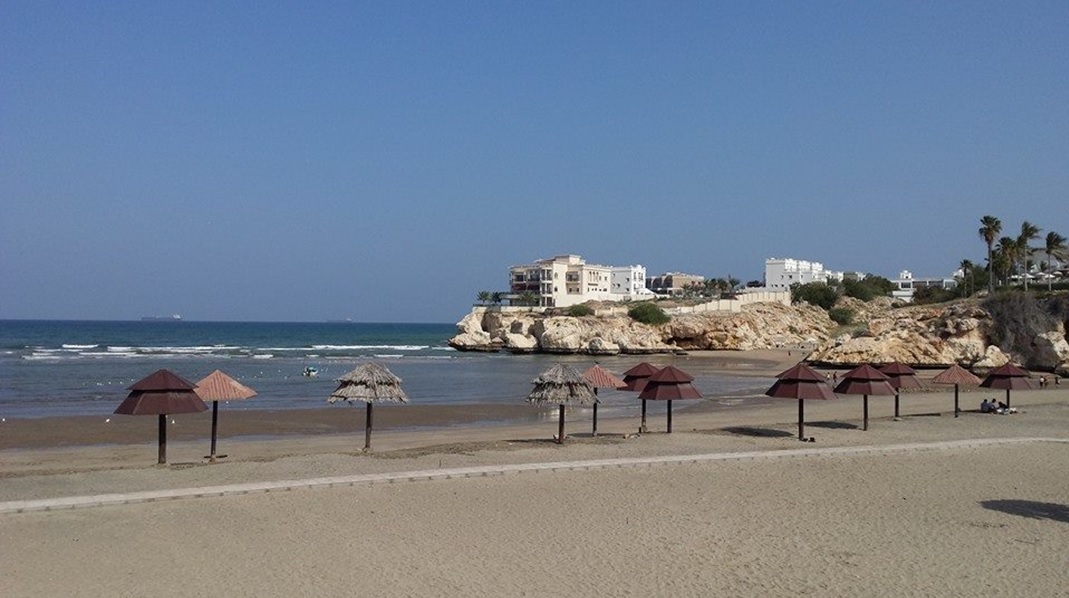
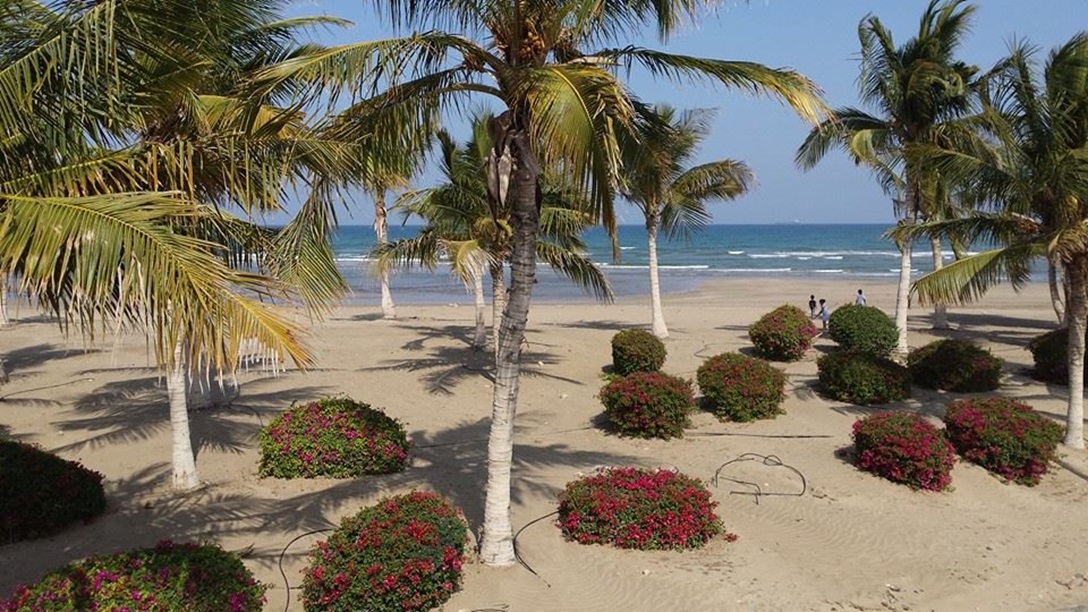
Oman is a Muslim country, but not all Muslim countries are the same. Most people ask me “How can you live somewhere where you can’t drink?!” The answer is simple: I can’t. Well, I could, but I don’t want to. Alcohol is legal in Oman, and drinking it is also legal. The tourism business here is booming, and the seaside resorts all cater to people from around the world, mostly Germany and France. You can head out to any one of the resorts in the capital city of Muscat (Qurum Beach is beautiful and lousy with such resorts), or, if you are like me and stuck in a more… rustic environment, you can head out to the more remote resorts, like the Millennium Hotel, located about forty minutes away by car from al-Rustaq, which is a good hour-and-a-half outside of Muscat. Whichever resort you choose, you will be offered a wide selection of wines, beers, and cocktails, along with some first-rate cuisine and some amazing scenery. If you want to enjoy more that these resorts have to offer (swimming pools, snorkeling, SCUBA diving, boat trips, jet skis, etc.) you can acquire a day pass. Prices range from 10 to 30 rial ($25-$75) a day, depending on which activities you care to enjoy.

[caption id="attachment_1402" align="aligncenter" width="922"]Qurum Beach Qurum Beach[/caption]

If that seems expensive, remember: The rial is a hard-hitting currency, and one rial is equal to about USD$2.60 these days. If you transfer money back home, it looks a lot better in your bank account than some currencies I could mention. And to ice the cake, Oman is tax-free! They pay what they say, and they pay on time.


In Muscat, these resorts often have nightclubs. The most popular are located in Qurum beach: Rock Bottom is one popular place, styled after their vision of an American “biker” bar (they have pictures of Harley Davidsons all over and a wooden Native American (PC) by the entrance. One side of the bar has tables and a pool room, the other side is the dance floor. Another pub is located in the lobby of the beautiful Intercontinental Hotel, and right next door to that is Trader Vic’s (I hear that is mostly salsa dancing, if that’s what you’re into). Want something a little seedier? Then Club Safari by the Hyatt is the place for you. Loaded with more co-ed mingling than any other place I have been to in Oman. But watch out, fellas: The hookers abound!

Enough said about that. While drinking is legal in Oman (many of the Omanis will hoist a pint or six with you), it is important to remember that it IS a Muslim country and public drunkenness is not well-tolerated. You can be drunk, of course, but you can’t run around like a maniac. Disruptive behavior whilst in a drunken state will land you in jail for 48 hours, and it could result in your immediate dismissal from your job. Driving drunk is even more frowned upon, so drink – but be responsible in public. Never forget where you are. That’s just good advice wherever you are. Generally, people like to drink at home. The night clubs and hotels are a special occasion, once-a-month kind of thing. However, to buy your own hooch, you will need a liquor license. These can be obtained with paperwork from your employer after your first three months. You get a little booklet in which the purveyor of fine liquors will mark the amount and date of your alcohol purchases. You are limited to anywhere from 60 to 100 rial a month, depending on the type of license you wish to purchase. During your first three months, other people will usually volunteer to pick up your alcohol for you… or, if you feel daring, you can sometimes find a black market connection. Several people outside of Muscat do this, and they even deliver! Just keep it on the DL. And remember: You do not need a license to drink in the clubs and resorts.

[caption id="attachment_1404" align="aligncenter" width="922"]Qurum Beach Qurum Beach[/caption]

Driving: You can do it! If you have a license to do so from any country at all. And yes, even the ladies are welcome behind the wheel. This isn’t Saudi Arabia. Shia Law is observed in Oman, but only in terms of marriage laws, and even they are gradually being left behind. Be VERY careful when driving here. Be aggressive and do not hesitate, as Omanis do everything very slowly – except drive. When they are behind the wheel, they fly. Car accidents are the leading cause of death in Oman. With that in mind, you can rent a small car for as little as 160 rial a month, or you can save up for a few months and buy yourself a slightly used Jeep for as little as 1600 rial. Keep in mind, the sturdy 4x4 Jeep-like vehicles are GREAT for wadi-bashing! (More on that later)

First, I mentioned the ladies. Many women worry about coming to a Muslim country. Will they have to wear the hijab? Will they have to defer to men? Is it safe to leave the house alone? You will be happy to know that Oman is very Western in its views of women. You can dress how you like (I recently learned that the hijab is a fashion CHOICE of the Omani women), you do not have to defer to the men-folk, and you can go anywhere you like unattended (except into the men’s restrooms and the men’s mosque). In hospitals and clinics, women and men sit in separate waiting rooms, so there is some division. In the classrooms, male and female students sit on different sides and are they cute to watch! So shy and awkward around each other. Still, err on the side of caution. If you are a female and you are out alone, you may get hit on relentlessly. It may be cute at first, but situations have been known to turn ugly. Just be smart and you’ll be OK. On the whole, the Omani people are some of the kindest and friendliest I have ever met. They stop to help strangers who have car trouble on the road, and will offer rides to people who need one. They won’t cut in front of you in line, and they will always smile and ask how you are doing. One guy at the bank even wished me a Merry Christmas this year.

[caption id="attachment_1405" align="aligncenter" width="922"]Jebel Shams Jebel Shams[/caption]

Which brings us to religion. Ah, religion. Religion, religion, religion… Well, I’ve said enough. I will add that the Sultan himself (a great guy by the name of Qaboos) has done a lot for this country during his reign. He has built hundreds of schools and colleges, greatly improved the roads and highway system, built a beautiful opera house where you can go see some amazing operas – he even brought Tom Jones here to sing for everybody. And he donated his own personal lands for the construction of churches and synagogues. If you have a favorite deity, feel free to sport the accoutrements of your faith. In Saudi Arabia, you’ll get slapped around for wearing a cross on the outside of your clothing. Here, someone may buy you a beer. Or not. Either way, they don’t care what religion you are. If you are Muslim, they really like that, but if not, that’s OK, too.

Let’s see… I’ve covered booze, cars, and women, and even dabbled in religion. I feel I have covered the important stuff. What else is there? Oh yes! The JOBS. The jobs vary, as they do everywhere. There isn’t much of a private “hagwon” school scene here. Most of the jobs are through TATI-Oman (Technical & Administrative Training Institute) or the Ministry of Higher Education. There are private recruiters (I am with a company called Hawthorn-Muscat and they have been good to me). You can even work for the military, teaching young recruits how to communicate with their English-speaking counterparts. Depending on how much work you want to do versus how much you are willing to take in your paycheck, you can find a good fit if you look around a bit. I was referred to my current school by a friend who came here from Korea back in 2010. He has since gone home and I have taken his place. From people I have spoken to, the military jobs in Muscat pay the best – at least 1300 rial a month – but the work is taxing and the hours are long. If you have a Master’s degree or a reputable TESL/TEFL certification, you can make around 1000 rial a month in one of the Colleges of Applied Science. The work load is light, but you might have to adjust to life in the outlands, like where I am. Whether in Ibri or Nizwa or Rustaq or Suhr or whatever, odds are you will be a good two hours outside of Muscat. There is no real public transportation here, but if you can haggle (and you don’t mind sharing a cab with some Indian fellows) you can get a pretty good deal on a ride into the big city every once in a while. Treat it like a vacation! Check into a hotel and stay the weekend. You can get rooms on Qurum Beach starting at around 40 rial a night. Split the cost with some friends and have some fun. It is kind of nice to be able to hit a gorgeous beach and have a few cocktails by the pool every few weeks. The weekends here are Friday and Saturday, and you work from Sunday to Thursday (but there are a LOT of holidays in the fall, a mid-semester break, and everyone gets July and August off with pay… most likely due to the heat).

[caption id="attachment_1406" align="aligncenter" width="922"]Jebel Shams Jebel Shams[/caption]

As for other details, some jobs provide housing and utilities (like mine) and others – mostly Ministry jobs – give you a stipend to get a place you like. Everyone has air conditioning. You would die without it. The employers are largely reliable and honest (I have heard of complaints about incompetency, but never about treatment), and the students are respectable and nice… although some are pretty rough around the edges and are very low-level.

Some final details: Shopping is great. Visit the Souks (markets) for all your touristy and traditional Omani needs. You can visit the malls at Seeb City Center or the Grand Mall near Qurum if you want to get back to western consumerism a bit. Muscat has movie theaters where you can see the latest Western films and Bollywood fare (if you’re into that) but some scenes may be edited for content. Most foreigners here rely on the internet for entertainment – and yes, the internet is good. They have made huge improvements in just the last year. It is fast, reliable, and Wi-Fi-ready, all for around 20 rial a month.

In closing, before I paint an all-rosy picture of life in Oman, I would be amiss if I did not say that it is an adjustment. Despite all the exploring there is to do, life here can be pretty boring. And it is hot… the heat alone made me want to get right back on the plane and go home when I first got here. That was in August. The winter here (November to February) is lovely. Now March is creeping in and with it, the heat. The unholy HEAT. Imagine setting your oven to BROIL, climbing inside and shutting the door behind you. Bring sun block and loose-fitting, light clothing. I am told it takes a year for your body to adjust to the heat. I am from Pittsburgh. I don’t like heat. Most of the water here comes from tanks up on the roofs of the buildings, and in the summer you can get two temperatures: Warm and scalding-hot.

[caption id="attachment_1407" align="aligncenter" width="922"]Driving out to a wadi Driving out to a wadi[/caption]

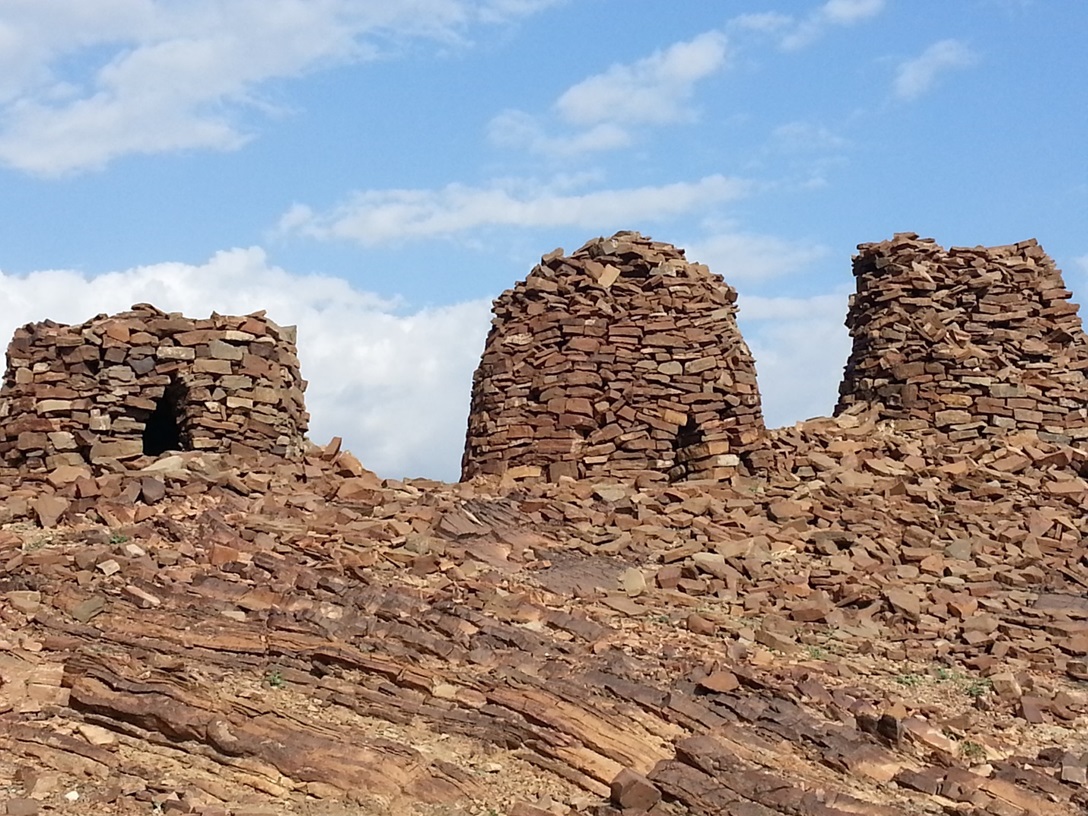
There is relief, however – the wadis (I told you I’d have more on these later). The wadis are deep valleys between the majestic mountains of Oman, and they are sometimes filled with natural pools up in the hills. It may take a rugged vehicle to get to the best of them (if you don’t have one you will make friends who do), but when you do… beauty. There’s no other way to describe it. Most have more fun swimming in the wadis, sitting ‘round campfires and sleeping under the stars than they do at the resorts. And in the mountains and deserts, there are lots of natural and Omani-made wonders to see: Forts and castles over a thousand years old; the Beehive Tombs; a massive canyon out by Jebel-Shams that gives the Grand Canyon a run for its money. And down by the sea, there is even more, including traditional wooden-ship building yards that look like a scene out of the Bible. And everywhere, friendly people: Omanis and other foreigners like yourself. And lots of camels and goats. In short, there is a lot to discover on this little edge of the Arabian Peninsula… IF you can survive the heat.

[caption id="attachment_1408" align="aligncenter" width="922"]The Beehive Tombs (AKA The Honeycomb Hide-out) The Beehive Tombs (AKA The Honeycomb Hide-out)[/caption]

Oh GOD, the heat.

[NOTE: I also do not want to paint too rosy a picture because…well, it may meet the same fate as Korea and become over-run with expats, which will bring the job quality and pay scale down]